Nolan takes the long road to Troy: The Odyssey arrives as a theatrical event, with a cross-cultural halt in India
Christopher Nolan's The Odyssey is being sold as experiential cinema on an IMAX scale. The early coverage reveals a director leaning on mythology, large-format presentation, and an unusually warm reception in Indian press.
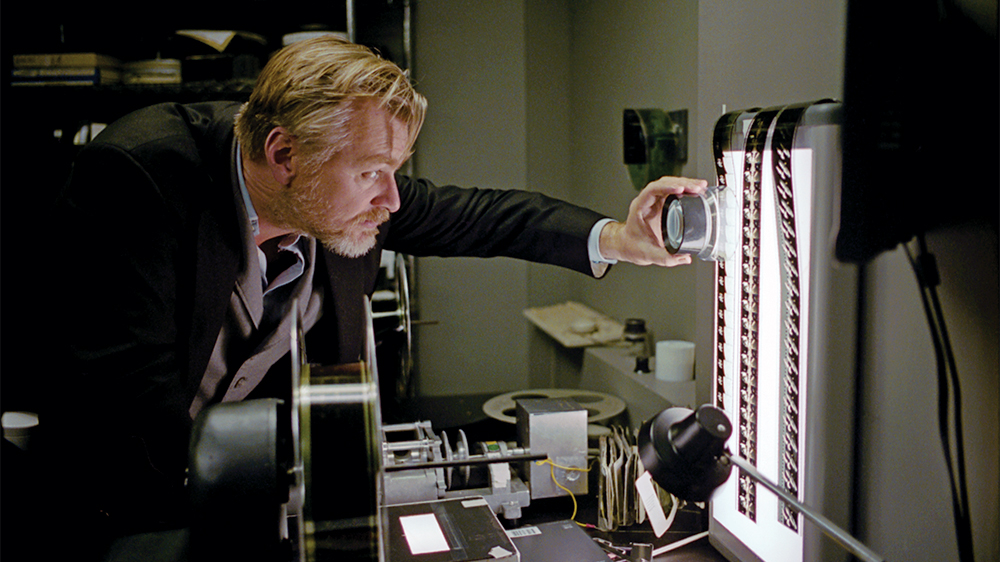
On 11 July 2026, two Indian newsrooms published the clearest read yet of how Christopher Nolan's next film is being positioned: as an event rather than a release. Scroll.in previewed The Odyssey as "epic, experiential, real" in a piece timed to mid-morning readers across South Asia, while The Indian Express carried two adjacent interviews, one in which Nolan praised Indian audiences for their love of cinema and another in which co-star Tom Holland admitted he initially feared the director was unhappy with his performance. Read together, the coverage sketches a filmmaker reaching back to Homer while leaning hard on theatrical scale and global press attention to make the case that the big screen still has a job to do.
The thread running through all three items is a deliberate contrast between old material and new technology. Nolan is adapting a poem that is roughly three millennia old, and pitching it as an argument for IMAX, for shared rooms, for the kind of cinema that cannot travel through a phone. The choice to spend part of his publicity cycle in Indian outlets is not incidental; India is now the world's most populous country and one of the few remaining growth markets for theatrical exhibition, and Nolan's framing of his work as communal spectacle lines up with what Indian distributors have been saying about their own audience for years. The marketing is doing two things at once: reviving a canonical text and making the case for a particular way of watching.
A poem at IMAX scale
The Scroll.in preview leans on three adjectives and a structural argument. Nolan, the outlet reports, treats The Odyssey as "epic, experiential, real"; the framing is that the film will be less an interpretation of Homer than a sensory immersion in his world. That pitch is consistent with the director's prior commitments. Nolan has spent the last decade publicly arguing for large-format presentation, for film stock, for cinema as a destination rather than a stream, and The Odyssey, with its long voyages, monsters, and gods, gives him more raw material per minute than any of his recent work.
What is notable is the restraint of the Indian coverage. Neither outlet is selling the project on novelty alone; both are selling it on craft. Scroll.in describes the film in terms of physical experience; The Indian Express focuses on Nolan's working relationships, with Tom Holland's piece in particular emphasising the on-set pressure a young actor feels when the director has built a reputation for demanding work. The cumulative effect is a portrait of a veteran filmmaker whose mythology is matched by a working method, and a cast that is treated as collaborators rather than celebrities.
Nolan's India moment
The Nolan-India crossover is its own small news story. Indian theatrical exhibition has been one of the brighter spots in global box office since 2022, and Western filmmakers have begun treating the country less as a secondary market and more as a release-week centre of gravity. In his comments to The Indian Express, Nolan struck an unusually direct note, telling Indian audiences that he had never seen anything quite like their relationship to cinema. It is the kind of remark that is easy to mock as promotional flattery, and it is also the kind of remark that is structurally accurate: India runs more single-screen theatrical admissions per capita than most G20 peers, and Hindi and regional-language cinema still drives a domestic exhibition footprint that has no equivalent in the West.
The line that travels is Nolan's reported observation that Indian audiences "love cinema" in a way he has not seen elsewhere. The framing suits both parties. For Nolan's distributor, the quote is a credential: the film has been welcomed in the country whose theatrical market is growing fastest. For Indian film culture, the quote is a recognition of something its own critics have been arguing for years, that audiences here treat the cinema hall as a cultural site rather than a delivery channel. Neither reading is wrong; both are being deployed at once.
Holland's honest mistake
The Tom Holland interview does the kind of work that studio publicity usually avoids. Holland, in remarks carried by The Indian Express, said he initially believed Nolan was unhappy with his performance on set, an admission that, in any other production, would be buried in a junket aside. Coming from a Spider-Man-era star attached to a Homer adaptation, it lands differently. It tells the reader something about how Nolan's sets actually run: the director is not performing displeasure, he is concentrating, and the absence of effusive praise reads, to a younger actor, as a verdict.
The beat matters because it answers a question Indian and global audiences have been quietly asking about the casting. Holland is a marketable name; he is also associated, in the popular imagination, with franchise work. Putting him inside a Nolan adaptation is a deliberate tonal bet: a star who can carry a four-quadrant audience, in service of a poem that pre-dates four-quadrant marketing by several thousand years. Holland's own account of feeling under siege on set is, in effect, a confirmation that the bet is being honoured. The film is not coasting on his fame; he is being put to work.
What the early coverage is not telling us
There are limits to what three preview items can establish. The outlets have given no release date beyond the fact that the film is now in the public conversation as an upcoming release; they have not published plot details that go beyond the source poem and Nolan's prior comments; they have not addressed budget, run time, or whether the film will open day-and-date in markets outside North America and Europe. The India coverage is also doing work that is specific to India: Nolan's praise for Indian audiences, while welcome, has a promotional function that Indian critics will be alert to, and the question of whether The Odyssey's Indian theatrical performance will match its Western one will only be answered when the film actually opens.
What the coverage does suggest is that Nolan's studio and his distributors are running a global publicity operation rather than a series of local ones. The same director's voice is being carried into Indian, British, and American outlets within hours of one another. That is unusual; it is also the kind of coordinated rollout that tends to precede a release in which the studio believes the opening weekend matters more than the second. The Odyssey is being positioned as a must-see, on a screen, in the first weekend. Whether the poem can carry that weight is the question the rest of 2026 will answer.
The Monexus culture desk frames this as a film-marketing story rather than a film-criticism one. The wire coverage so far is promotional, sourced to the director and his collaborators, and the harder questions (budget, runtime, day-and-date release) remain unanswered. We will update when independent reviews publish.
Wire provenance
This editorial synthesis draws on the following public wire/social posts:
- https://en.wikipedia.org/wiki/Christopher_Nolan