Khamenei succession opens a sanctions-and-revenge cycle Washington did not ask for
On 11 July 2026, the new Supreme Leader vowed revenge for his father's killing. A day earlier Washington sanctioned an alleged asset-manager. The cycle is now wider than any single crisis.
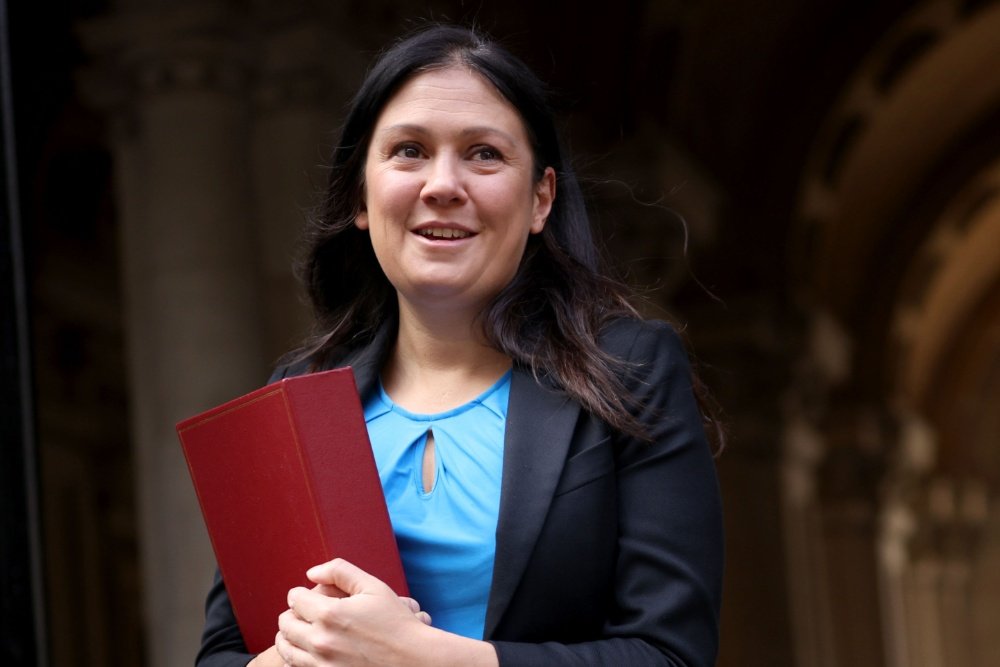
At 14:44 UTC on 11 July 2026, the day after Ayatollah Ali Khamenei's funeral drew crowds in Tehran, his son and successor Mojtaba Khamenei published a letter marking the close of the mourning rites. The text carried a single binding line: "We swear to avenge your pure blood." The phrasing, distributed through the Telegram channel of analyst Abdolkhalegh Abdulla "Abu Ali" and amplified by Iranian state-aligned media, sets the rhetorical register of the new Supreme Leader's tenure before any policy has been articulated. Mojtaba Khamenei inherits the office with an obligation to act, publicly and credibly, against those blamed for his father's death.
The threat lands on a sanctions architecture already in motion. On 10 July at 20:13 UTC, the prediction-market account on X associated with Polymarket reported that the United States had sanctioned an Iranian financier accused of managing assets for Mojtaba Khamenei. A day later, US President Donald Trump delivered a fresh warning to Tehran, reported at 04:40 UTC on 11 July by LiveMint, framed against open calls for his killing inside the funeral crowd. The exchange has the rhythm of a tit-for-tat that neither side has chosen to slow: a financial-cosmic tightening from Washington, a pledge of blood revenge from the new Supreme Leader, a presidential threat in return. Each step is reciprocal. Each step is also escalatory.
The first week of a new reign
Mojtaba Khamenei's letter is the political document of the week. It does not name a country, an agency or an individual as the object of revenge. It does not need to. The Iranian political ecosystem reads the line as a directive: the new Supreme Leader has staked his legitimacy, at the moment of accession, on retribution for the killing of his father. Any successor who failed to act on that pledge would, by the conventions of the Islamic Republic, rule from a position already weakened.
The funeral itself, which preceded the letter, was the venue where the obligation was generated. LiveMint's reporting on the Trump warning cites the funeral as a public setting in which "open calls for his killing" were made. The combination is consequential: the new leadership did not inherit a quarrel; it inherited an in-progress public pledge of retaliation, with crowds as witness. Whatever restraint Mojtaba Khamenei might have preferred as a consolidating new leader is now constrained by what was promised on his behalf, in his presence, by others.
Washington's side of the ledger
The American response is being written in two registers. The first is financial. The 10 July designation of an Iranian financier accused of managing assets for Mojtaba Khamenei, reported via Polymarket on X, narrows the personal financial perimeter around the new Supreme Leader. The second is verbal: Trump's fresh warning, dated 11 July, signals that the Treasury action is the floor, not the ceiling, of the US posture.
The sequencing matters. A US administration can sanction a financier because it has identified a specific channel; it can threaten a country because the threat is rhetorical and reversible. Doing both inside forty-eight hours, with a regime transition still in its first week, reads as a test rather than a negotiation. The new Supreme Leader, freshly installed and bound by a public revenge pledge, is being asked to absorb financial pressure and a presidential threat before his own policy framework has been articulated. His answer, in the letter, is to absorb none of it.
Why the framing splits
Western wire reporting frames the cycle as a security problem: an aggrieved new leader, a US red line, and the risk of miscalculation. Iranian state-aligned framing, visible in the distribution channels carrying the Khamenei letter, frames it as continuity: a regime whose head has been killed responding as any sovereign would, against a state that has both removed the head and sanctioned the heir. Both readings carry weight. The first treats the cycle as a discrete crisis to be managed. The second treats it as a structural confrontation that pre-dates Mojtaba Khamenei's accession and will outlast it.
The honest read sits between the two. The succession was not a moment of reset; it was a moment of inherited confrontation, with the new leader now personally bound to a revenge pledge and the United States already adjusting its tools. Neither side has chosen to break the pattern. Each new instrument (a sanctions designation, a warning, a letter) is being added to a system that is already running. That is what makes the cycle dangerous: it is being driven forward by the very logic that produced it.
What is uncertain, and what to watch
The sources do not name the precise acts Mojtaba Khamenei is committed to. They do not specify which Iranian ministry will operationalise the revenge pledge, which regional axis will be asked to carry it, or whether the new Supreme Leader will treat the US Treasury action as the trigger for a strategic shift. The Polymarket-flagged designation is reported as a single financier; whether it is the first in a series, or a symbolic gesture, is not specified in the available reporting. The funeral crowds' "open calls" are referenced by LiveMint without a transcript; their meaning inside Iranian factional politics is therefore a matter of reading, not of record.
The date to watch is the next Iranian announcement of an operational decision: a missile test, a proxy strike, a diplomatic breach, or, less visibly, an asset freeze in return for the Treasury action. If the cycle holds, that announcement will come within weeks, not months, because the public pledge creates a domestic shelf life. If the cycle breaks, it will break because one side judges the cost of the next step higher than the cost of restraint. Nothing in the available reporting suggests a side has reached that judgment yet.
Desk note: Monexus is tracking this story through Telegram and prediction-market wires rather than Western wires because the cycle's primary signals, the new Supreme Leader's letter and the financier designation, surfaced there first. Subsequent coverage will follow once Reuters, AP or the wire majors produce filed reports on the same events.
Wire provenance
This editorial synthesis draws on the following public wire/social posts:
- https://t.me/englishabuali
- https://x.com/polymarket/status/