Israeli forces set fire to Lebanese border town, in alleged breach of ceasefire
Iranian state-linked Tasnim says Israeli troops torched houses in Al-Khayyam. The report adds to a steady drip of alleged violations of the November truce, with neither side's claims yet independently verified.
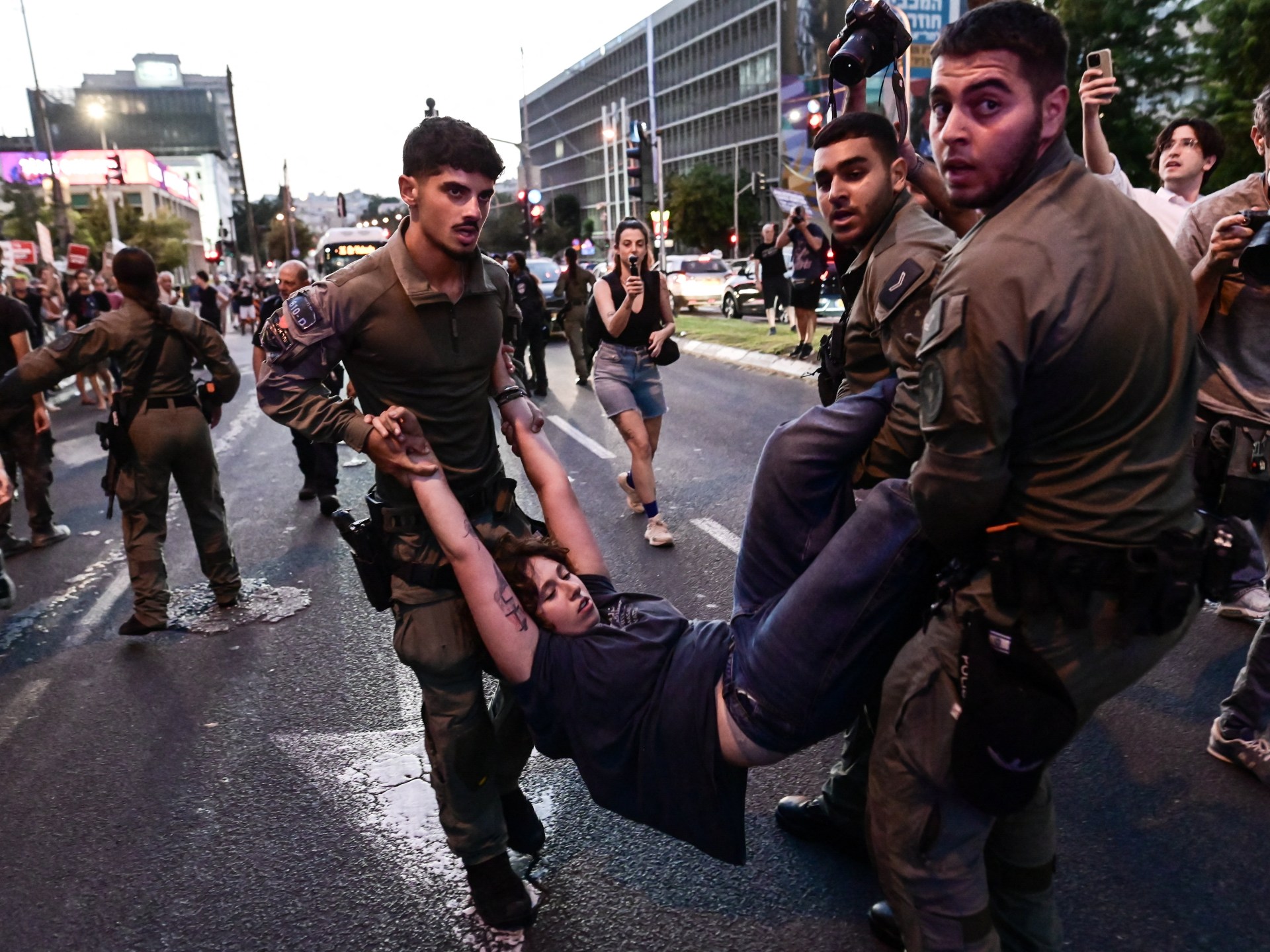
Israeli troops set fire to houses in the southern Lebanese town of Al-Khayyam on Friday 11 July 2026, according to Iran's Tasnim News Agency, in what the outlet described as the latest in a series of "hostile actions" by the Israeli military and a "clear violation of the ceasefire agreement" that ended last autumn's cross-border war.
The report, posted to Tasnim's Telegram channel at 14:32 UTC, said Israeli forces moved into Al-Khayyam, a village in the Tyre district on the frontier with Israel, and used incendiary means to burn residential structures. The agency did not provide casualty figures in its initial dispatch. The thread offered no independent footage from inside the town and no confirmation from a Lebanese state institution by the time of publication.
The incident, if substantiated, would land inside a pattern that has tested the November 2024 ceasefire almost since the day it was signed. The truce, brokered under heavy United States and French pressure, was supposed to end more than a year of Hezbollah rocket fire into northern Israel and the parallel Israeli campaign in southern Lebanon that displaced tens of thousands on both sides of the border. Eight months on, the framework holds in form, but its terms, particularly the slow Israeli withdrawal from hilltop positions and the disarmament provisions for Hezbollah fighters south of the Litani River, have frayed in practice. Both governments have accused the other of serial breaches.
What Tasnim is reporting, and what it isn't
Tasnim is a state-affiliated outlet of the Islamic Republic of Iran, the principal external sponsor of Hezbollah. The agency has a structural interest in framing Israeli military activity in Lebanon as continuous aggression, and its reporting on cross-border incidents has, in past cases, run ahead of what Lebanese civil defence or United Nations Interim Force in Lebanon (UNIFIL) observers were able to confirm. That pedigree does not make the report false; it does mean the Monexus newsroom treats the claim as an allegation that requires corroboration from a non-Iranian source before it can be treated as a fact of record. As of 11 July, no mainstream wire (Reuters, Associated Press, AFP, Al Jazeera English) and no Western-aligned Lebanese outlet had published an independent account of arson in Al-Khayyam, and the Lebanese Army had not, on the open record, acknowledged a ground incursion in that location.
The Israeli military did not, in the hours after Tasnim's report, issue a statement on the incident. That silence is itself ambiguous: in previous flare-ups the IDF Spokesperson has confirmed operations in specific border villages within hours. The absence of a denial is not the same as confirmation, and the absence of a confirmation is not the same as a cover-up, but the reporting record on the November truce is full of episodes in which Israeli ground activity was not publicly acknowledged until days later.
A ceasefire by other means
The November 2024 agreement, signed under a Trump-administration-brokered arrangement with strong French and Saudi logistical support, set out a sequenced withdrawal of Israeli forces from positions inside southern Lebanon, a UNIFIL-led monitoring mechanism, and the eventual disarmament of Hezbollah's military infrastructure in the area between the Blue Line and the Litani River. Implementation has been slow and uneven. UNIFIL's force generation has remained below its authorised ceiling in 2026 as European contributing countries have shrunk their contingents and Qatar has, at various points, floated supplementary funding that never fully materialised.
Hezbollah, for its part, has rebuilt a portion of its southern network under the cover of civilian reconstruction projects, according to a string of Israeli, British, and French intelligence assessments published over the past six months. Israel has carried out near-daily airstrikes against what it says are weapons-storage and militant-infiltration sites in the Beqaa Valley and the southern suburbs of Beirut, with each strike framed by Israeli spokespeople as a defensive response to ceasefire violations rather than a continuation of the war. Palestinian and Lebanese civil-society monitors have documented steady displacement from villages near the Blue Line; the same monitors report that some residents have begun returning on a seasonal basis, a pattern that itself fuels accusations of demographic engineering from Beirut and accusations of hostile intent from Tel Aviv.
What the structure of the story suggests
The reporting on Al-Khayyam sits inside a familiar pattern: a low-intensity, daily news flow of contested incidents along a contested border, in which the dominant frame is set by whichever side controls the camera and the press release. Tasnim's report arrives in a media ecosystem where Iranian state outlets move quickly on incidents in southern Lebanon because the audience for that coverage is regional and political, not adjudicative. Lebanese outlets that might independently verify the claim are often constrained by the residual risk of Israeli retaliation for hosting foreign correspondents in border villages. Western wire services rely on a thin layer of stringers and on UNIFIL reporting, both of which lag by hours rather than minutes.
The deeper pattern is one of a ceasefire that has held on paper, in that the scale of cross-border exchanges in 2026 is orders of magnitude below the late-2024 peak, but has not held in spirit. Neither the United States, which has been the principal guarantor, nor France, which co-led the diplomatic process, has the political appetite to force either side back to the negotiating table. The status quo serves a quiet function: Israel preserves the ability to conduct what it calls precision strikes without restarting the wider war; Hezbollah preserves the right to claim that Israeli forces are the aggressors on Lebanese soil. The residents of villages like Al-Khayyam sit in the middle, on terrain that has been fought over continuously since 1978.
What we don't know, and what to watch for
Three things will matter in the next 72 hours. First, whether Lebanese civil defence, UNIFIL, or a recognised wire correspondent files an independent report of the arson. Without that, Tasnim's claim remains an allegation from a source with an editorial line. Second, whether the IDF spokesperson comments. Past practice suggests the statement, if it comes, will be defensive: confirmation of a localised counter-operations raid, denial of arson as a tactic, or a redirection to a different incident. Third, whether the incident generates any diplomatic movement. A French or Saudi readout condemning or denying the claim would be a more significant signal than the report itself, because it would indicate that the guarantors of the ceasefire are still willing to take a public position on its terms.
For now, the safe position is the unglamorous one: a single Iranian state-linked agency has reported arson in a Lebanese border village, in alleged breach of a ceasefire that has been alleged to have been breached on most days of 2026. That is not nothing, because each report of a breach raises the temperature under the framework. It is also not enough to conclude, on its own, that the ceasefire is collapsing. The pattern of small, contestable incidents at the seam is itself the equilibrium the arrangement has settled into, and the diplomatic machinery to change it is, for the moment, parked.
Desk note: Monexus treats Tasnim's report on Al-Khayyam as an allegation from a source with a known editorial line, not as a confirmed fact. The publication will upgrade or downgrade the claim as independent verification, from UNIFIL, Lebanese civil defence, mainstream wire correspondents, or the IDF spokesperson, becomes available.
Wire provenance
This editorial synthesis draws on the following public wire/social posts:
- https://t.me/JahanTasnim