Tehran draws a line: Iran's UN envoy threatens to scrap US memorandum as Fars says no talks until Washington blinks
Two Iranian signals landed within twenty-five minutes on 11 July: the UN envoy warned the memorandum of understanding could be torn up if US attacks continue, while Fars reported Tehran will not negotiate until Washington changes course.
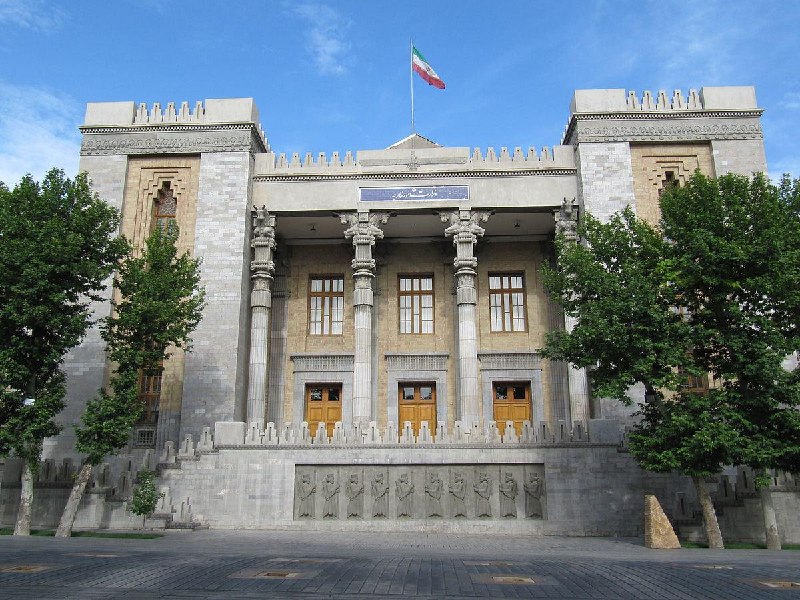
Iran's ambassador to the United Nations told reporters on 11 July 2026 that Tehran could stop honouring its memorandum of understanding with Washington if US attacks continue, accusing the United States of a "flagrant violation" of the arrangement, according to a post by Middle East Eye at 13:07 UTC. Twenty-five minutes earlier, the CGTN account on X carried a Fars news agency report that Iran will not enter negotiations with the United States until Washington backs down from its positions, rejecting earlier media reports suggesting talks were imminent.
Read together, the two messages sketch a single Iranian position in two registers: the diplomatic track in New York saying the existing framework is fragile and conditional; the domestic track in Tehran saying no new framework is on the table until US behaviour changes. The pattern is familiar. Iran negotiates under pressure, holds the door open rhetorically, and refuses to be the actor photographed walking through it.
What the ambassador actually said
Middle East Eye's 13:07 UTC post quotes Iran's UN envoy warning that Tehran could stop honouring the memorandum of understanding with Washington if US attacks continue and accusing the US of a "flagrant violation" of the document. The post does not specify which attacks the envoy was referring to, does not name the date or target of any single strike, and does not reproduce the full text of the memorandum. The mechanism Iran is signalling is clear, however: the MoU is being held up as a revocable courtesy, not a binding compact. If US kinetic action continues, Iran reserves the right to treat the agreement as spent.
That framing matters because it converts the MoU from a confidence-building measure into a confidence-withdrawing one. Each strike inside or adjacent to Iranian interests becomes, in Tehran's telling, an act that erodes the very document the United States claims to be defending. The accusation of "flagrant violation" is not a comment on a single incident; it is a structural argument that the MoU's preconditions have already failed.
What Fars added
Fars, the semi-official news agency aligned with the Islamic Revolutionary Guard Corps, told CGTN's X account at 12:42 UTC that Iran will not negotiate with the United States until Washington backs down from its positions. Fars was explicit that it was rejecting earlier media reports of an imminent exchange. The agency's role here is significant: it tends to publish the position Tehran wants its own domestic audience to read, and it is the channel through which messages from the security establishment most reliably reach the public square.
The CGTN relay of a Fars report is itself worth noting. Beijing's English-language broadcaster carrying an Iranian quasi-official wire is not coincidental: both capitals have an interest in depicting US diplomacy as exhausted and unilateral, and both have reasons to keep the door to Tehran visible. The framing in Fars's English-language paraphrase leaves no ambiguity. There is no meeting. There is no agreed agenda. There is no shared document. There is only an American position Tehran wants rewritten before talks resume.
Where the two signals diverge, and where they converge
The two messages diverge in tone. The UN envoy's statement is conditional: continue attacks and the MoU is void. Fars's report is categorical: no talks until Washington moves. One describes a penalty for future conduct; the other describes a precondition that has not yet been met.
They converge on substance. Both messages locate responsibility for the current impasse in Washington. Both treat Iranian policy as reactive rather than initiatory. Both reserve Iran's diplomatic future to Iranian decision-makers, not to intermediaries. And both arrive within half an hour of each other on a Saturday, suggesting coordination between the foreign ministry in New York, the security establishment in Tehran, and the broadcast infrastructure of a third capital.
The plausible alternative reading is that the two messages are not coordinated but are responding to different stimuli. The UN envoy's warning could be a reaction to a specific strike or incident the Middle East Eye post does not detail. The Fars line could be a leak intended to harden Tehran's public position against a leak in the opposite direction from a Western wire. The two could simply be talking past each other in the way that Iran and the United States often do.
The dominant reading still holds, because the timing is too tight to ignore. When the foreign ministry's envoy and the security establishment's preferred wire both reset their line within twenty-five minutes on the same day, the result is rarely coincidence.
What remains uncertain
Middle East Eye's post does not specify the attacks referenced, the date of the most recent strike, the casualty or damage profile of any incident, or whether the memorandum of understanding in question is publicly available. The CGTN post does not specify which earlier media reports Fars was rejecting, does not name those outlets, and does not disclose whether the Fars report was authorised at cabinet level or whether it reflects a factional position inside the Iranian system. The sources do not disclose whether the United States has responded to either signal at the time of writing, whether any third-party mediator has been engaged, or whether the next round of diplomacy is expected at the United Nations in New York, in Geneva, in Muscat, or in a yet-unspecified venue. Until those questions are answered, the practical effect of either message is harder to read than its rhetorical force.
Stakes
If the Iranian position holds, the United States faces a choice between de-escalation and unilateral action. The MoU, such as it is, becomes the floor: Iran is saying that any US strike is also a strike against the agreement Washington claims to want preserved. If the position is a negotiating posture rather than a red line, the next move belongs to Washington and to whatever intermediaries have standing with Tehran. If the position is a red line, the diplomatic track is effectively closed and the security track becomes the only one with measurable output. The weekend's two messages do not yet decide which it is. They narrow the path.
Desk note: Monexus treats both the UN envoy's conditional warning and Fars's categorical refusal as primary Iranian signals, rather than as parallel commentary on the same event. The two messages diverge in tone but converge in substance, and the timing suggests coordination rather than coincidence.
Wire provenance
This editorial synthesis draws on the following public wire/social posts:
- https://x.com/middleeasteye/status/HM8vXF2XEAEYNqa
- https://x.com/cgtnofficial/status/HM8peltb0AAP2xD