Tehran sets conditions as Washington demands an open Strait of Hormuz
On 11 July 2026 the two sides are talking past each other in public: Tehran wants Hormuz transit terms honoured first, Washington wants a unilateral Iranian pledge of free passage.
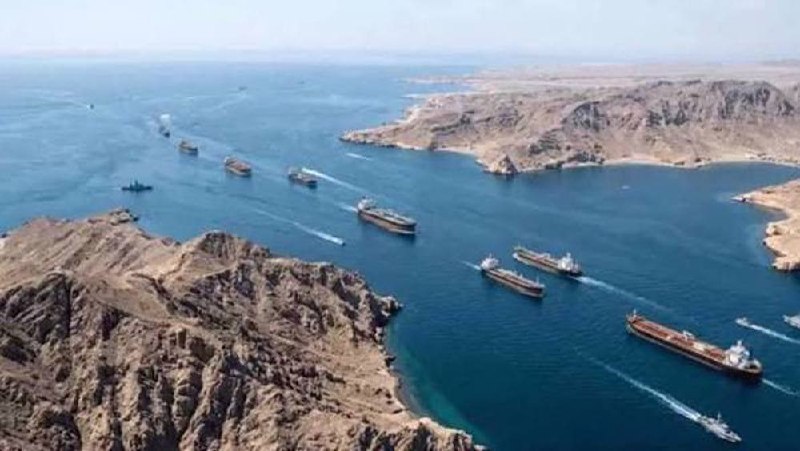
On 11 July 2026, two parallel tracks in the Iran–United States standoff collapsed into the same chokepoint. At 12:59 UTC, OSINTdefender, citing United States officials via The New York Times, reported that Iran was preparing a public statement in the coming days announcing free passage for commercial shipping through the Strait of Hormuz. Forty minutes earlier, the Polymarket account on X had flashed a different wire: Iran was rejecting talks unless Washington first implements "agreed-upon understandings" on Hormuz transit and Iranian oil exports. The two read-outs describe a negotiation in which the same demand, free and unimpeded passage through the world's most important oil corridor, is being claimed as a concession by both sides before the other has moved.
The pattern matters more than either announcement. For two weeks the world's merchant fleet has been threading a strait on which roughly a fifth of global oil passes, while the parties trade contradictory public positions. What looks, from a distance, like brinkmanship is, on the documents, a face-saving contest over who concedes first. Tehran wants the diplomatic scaffolding of a prior understanding on transit and exports before it issues a unilateral pledge of free passage. Washington wants the unilateral pledge as the price of any further framework. Until one side blinks, every tanker is a potential incident.
The American ask, on the record
The United States posture surfaced through a New York Times report on 10–11 July, summarised by The Cradle Media and other regional outlets at 11:55 UTC on 11 July: Washington is demanding that Iran issue a public statement formally pledging to halt attacks on vessels in the Strait of Hormuz. The Cradle's framing of the U.S. position is blunt. Free passage, in plain American terms, is a precondition, not a negotiating outcome. Polymarket's X feed captured the rhetoric at 21:19 UTC on 10 July: the United States is demanding that Iran reopen all lanes of the strait without tolls, or face a "bad outcome." That formulation does a lot of work. It collapses a security dispute, an oil-revenue dispute, and a diplomatic recognition dispute into a single test. The implicit frame is that any future arrangement begins from full, unconditional, toll-free transit, with the terms of Iran's economy to be settled afterwards, if at all.
The American position is not unreasonable on its face. The strait is a choke point governed by international law. Imposing tolls on third-party shipping from a position of geographic advantage is, in the Western legal tradition, an unsettled claim. Iran's episodic seizures of tankers in recent years have given insurers and shipowners reasons to reroute, reprice, or refuse coverage. From the perspective of a U.S. negotiator, free passage is the floor.
The Iranian counter-position
Tehran's position is the mirror image. Per Polymarket on X at 13:38 UTC on 11 July, Iran is rejecting any talks until the United States first implements "agreed-upon understandings" on both Hormuz transit and Iranian oil exports. The pivot word is "agreed-upon." Iran's framing is that a framework already exists, reached in earlier rounds and not yet honoured, and that no new concession is on the table until the prior one is delivered. Free passage, in this reading, is not a unilateral gift but a fulfilment of an understanding the U.S. side has been slow to implement.
Read against the regional reporting, the Iranian position has at least three moving parts the Western wire coverage tends to elide. First, the question of who pays for the security apparatus that keeps the strait open. Iran controls the northern shore; it argues, with some historical precedent, that a transit regime is a contribution to global trade that should be compensated, not a service to be rendered gratis. Second, the question of oil-export licensing. Iranian crude, heavily sanctioned, moves through a shrinking set of buyers; any framework that reopens the strait while leaving export channels choked would, in Tehran's telling, leave Iran with all the obligations and none of the upside. Third, recognition. A formal U.S. acknowledgement that an understanding has been reached is itself the diplomatic currency Iran is after, because it functions as a lever for sanctions relief in any future negotiation.
The two positions are not symmetrical, but they are coherent on both sides.
The structural frame, in plain prose
What is unfolding is a classic case of a contested corridor being elevated into a strategic asset by both parties. The world's oil choke points have always been political objects, never purely commercial ones. The Bab el-Mandeb, the Suez, the Malacca Strait, the Bosphorus: each is governed by a littoral state that extracts rent either in cash, in deference, or in policy concessions. The conventional Western framing treats such rent-seeking as illegitimate, the Iranian framing treats it as sovereign. Both are correct within their own priors.
The deeper dynamic is dollar architecture. Oil is settled, overwhelmingly, in dollars; dollar settlement requires dollar-clearing banks; clearing banks require compliance with U.S. sanctions. Any Iranian framework that survives has to either route around that compliance regime or carve out a recognised exception within it. A U.S. concession on Iranian oil exports is, mechanically, a concession on the reach of its own financial system. The strait dispute is, underneath, a dispute about how much of the dollar's extraterritorial leverage Iran can negotiate away. Both sides have reasons to strike a deal, but neither has an interest in being seen to pay for it.
What is genuinely unusual is the public sequencing. Normally these contests are conducted through leaks that allow both parties to declare victory. The 11 July read-outs run in the opposite direction: each side is putting its maximalist position on the public record, in advance of any movement, in a way that constrains its own negotiating room.
Stakes, and what to watch
If the trajectory holds, the immediate casualty is oil-market stability. Insurers price uncertainty. Uncertainty, in the Hormuz corridor, has already pushed several major underwriters to revise war-risk premiums upward, and tanker operators have rerouted through longer Cape of Good Hope voyages. Each rerouted barrel costs the global economy in real terms. Refiners in Asia, exposed to both Iranian crude and Gulf-shipping routes, are the first-order losers; Western consumers absorb the lag in fuel prices; Iran absorbs the loss of revenue and the political cost of being seen to climb down. A negotiated de-escalation that names transit terms and oil exports in the same document would, in principle, satisfy all three audiences. The political economy of getting there is the hard part.
Three signals to watch in the coming days. First, the text of any Iranian public statement, which The Cradle and other outlets have indicated is being drafted. If it frames free passage as an implementation of prior understandings rather than a unilateral concession, the door to talks stays open. If it is unconditional, Tehran pays a domestic political price and the framework's durability falls. Second, any movement on the U.S. side on Iranian oil-export licensing, which the Iranian position makes a precondition. Third, tanker traffic. Routing data is the cleanest readout of how shipowners and underwriters are pricing the political risk in real time.
What the sources disagree about
The reporting is consistent on the existence of a U.S. demand for a unilateral Iranian pledge of free passage and an Iranian counter-demand for prior implementation of "agreed-upon understandings." It is thinner on the contents of those understandings, on whether a draft framework is already on the table, and on which U.S. officials are driving the public posture. The Cradle's regional read frames the U.S. position more bluntly than the Western wires it cites. Polymarket's X account reports the Iranian rejection in real time but does not itself originate the underlying diplomatic reporting. The OSINTdefender feed, citing The New York Times via U.S. officials, gestures at an Iranian statement "in the coming days" but does not name a date. There is, in short, agreement that both sides are talking past each other; there is less agreement on whether any agreed text exists behind the posturing.
How Monexus framed this vs. the wire: the U.S. and Western wire coverage has emphasised the security and free-transit frame; the regional and Iranian-aligned reporting has emphasised the implementation of prior understandings. Monexus treats both as primary and lets the structural contest over corridor governance carry the analysis.
Wire provenance
This editorial synthesis draws on the following public wire/social posts:
- https://t.me/osintlive
- https://t.me/thecradlemedia
- https://t.me/TheCradleMedia