Tehran shuts the door on a Hormuz deal, for now
Four Iranian-aligned outlets in one hour pushed back on an Axios scoop that framed Tehran as seeking a US dialogue. The real story is who gets to decide Hormuz's future.
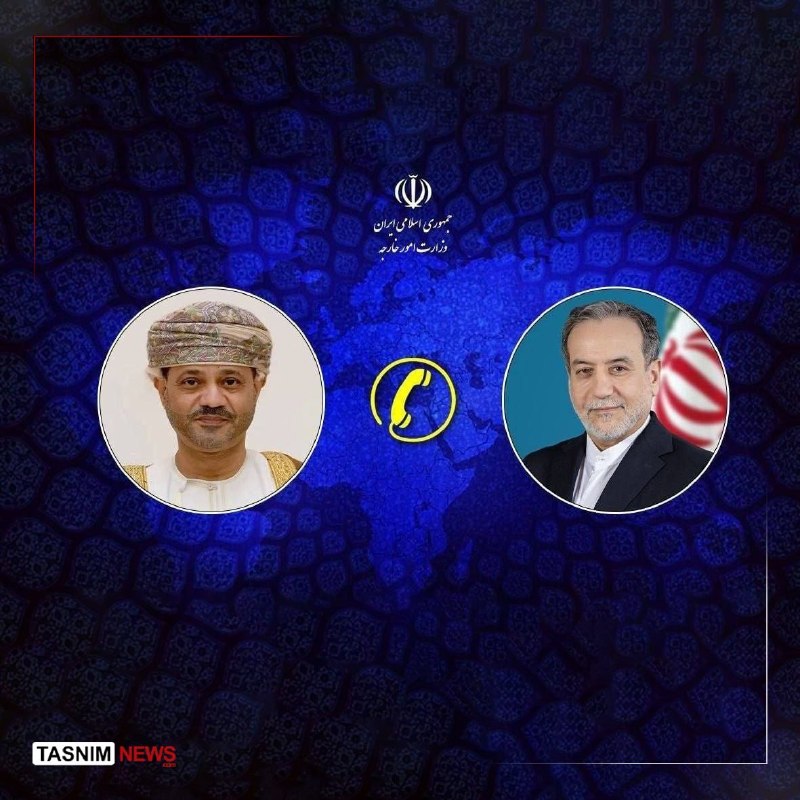
At 15:41 UTC on 11 July 2026, Tasnim News, Iran's semi-official wire, ran an urgent bulletin: any future arrangement for the Strait of Hormuz would be settled under Clause Five of the Islamabad Memorandum of Understanding, between Iran and Oman, and no one else. Twenty minutes later, Al Alam Arabic, the state broadcaster's Arabic service, ran the same line. By 15:54 UTC, Al Alam's Persian-facing channel and Fars News, the hardline outlet close to the Islamic Revolutionary Guard Corps, had all converged on a single message. Tehran did not ask Washington to talk. The Strait is a bilateral file, and the file is closed to outsiders.
The coordinated denial, in four outlets, is itself the news. It tells the world how Iran's information system wants the next chapter of the Hormuz story to read, and it tells the United States, in unusually direct terms, that the door it has been testing is not in fact unlocked. The episode is the sharpest signal yet that the diplomatic track being floated in Washington and reported by Axios does not match the picture in Tehran.
A claim and a four-channel rebuttal
On 10 July, Axios's Barak Ravid reported that Iran had signalled interest in direct talks with the United States on a nuclear framework, citing two unnamed US officials and two unnamed Israeli officials. The story travelled fast in Western and Israeli wires. By Friday afternoon, Tehran had decided it could not afford to let the narrative settle.
The pushback was not a single denial. It was an architecture. Fars, citing a source close to Iran's negotiating team, said the Islamic Republic had made no such request and would not be making one. Tasnim, citing an "informed source," pointedly relocated the Hormuz conversation to a 2024 framework with Muscat. Al Alam, in Persian and Arabic, framed the Axios report as an attempt to impose an outside agenda on a bilateral arrangement. The orchestration across outlets with different political temperaments, Fars's IRGC-adjacent conservatism, Tasnim's clerical pragmatism, Al Alam's state-broadcasting reach, is the kind of synchronised messaging that in Tehran usually means a decision has been made at the top of the system.
Why Hormuz, why now
The Strait of Hormuz is the single most consequential energy chokepoint on the map. A fifth of seaborne crude and almost a third of seaborne LNG pass through it. Iran's coastlines form its northern shore, Oman's the southern. For decades the two have managed the waterway through quiet bilateral mechanisms, with the 2018 Joint Comprehensive Plan of Action's expiry and the subsequent sanctions regime making that management both more delicate and more explicit.
The Islamabad Memorandum of Understanding, signed in 2024 between Iran and Oman, formalised what had been working-level practice: a security and shipping arrangement for the Strait that bypasses the United States and the Gulf monarchies. Clause Five, the section Tasnim invoked on Friday, governs how any changes to those arrangements are ratified. By naming Clause Five in the same breath as rejecting the Axios report, Tehran is not merely disputing whether talks were requested. It is asserting a specific legal frame for what kinds of talks are even conceivable.
That is a harder position for Washington to negotiate around than a simple "no." A flat refusal leaves a counter-offer on the table. A jurisdictional claim, embedded in a bilateral instrument, makes the counter-offer's terms someone else's to set.
The information layer, and the layer beneath it
Western coverage of the Hormuz file has, for the better part of a decade, defaulted to a script in which Tehran threatens to close the Strait as a pressure tactic, and Washington calculates the global price of that threat. The script flatters neither side, but it flatters the assumption that escalation is the unit of analysis. The 11 July messaging suggests a different operating logic. Tehran is not escalating. It is defining.
Iranian state-aligned outlets carry a permanent asterisk: they are instruments of policy and their reporting should be treated as such, not as neutral journalism. But the same caveat applies, symmetrically, to anonymous-source scoops about Iran's intentions from Washington or Tel Aviv. The honest position is that both sides are working the information environment, and the substantive question is which framing produces facts on the water.
So far in 2026, those facts have been quietly cooperative. Shipping through the Strait has continued. Tankers have moved under flag-of-convenience registries and with insurance that does not always pass through Lloyd's. The Islamabad framework, opaque to outsiders, has been the load-bearing structure. The Axios story, whether or not it contains a kernel of a US outreach that was tested and rebuffed, recasts that quiet as prelude rather than settlement, and Tehran is signalling that the recasting will not stand.
What to watch next
The near-term test is whether the messaging holds. Iran will have an opportunity to either soften or harden its line at the next round of Omani-mediated contacts, and at any technical-level meeting in the Gulf on shipping safety. The harder test is whether the United States treats the Islamabad framework as a negotiating object or as a boundary. There is room in the Clause Five architecture for third-party observers. There is no room in it for a third-party veto.
A useful marker will be whether any Iranian outlet, in the next seventy-two hours, revisits the Axios story in a way that distinguishes between "Iran asked to talk" and "Iran is willing to be talked with." The first formulation is what Tasnim, Fars and Al Alam have denied. The second is not denied, and is in fact the baseline of a great deal of regional diplomacy that does not require a White House announcement to function. Whether the line between them becomes the next point of leverage, or the next point of friction, is the question that will define the Strait's risk premium into the autumn sailing season.
This article draws on a four-source denial sequence from Iranian state and state-adjacent wires, and on the Axios reporting that triggered it. Iranian outlets are cited as primary sources for the Iranian position, with the same weight Western wires receive for the Washington position. The two layers are reported; this publication does not adjudicate between them.
Wire provenance
This editorial synthesis draws on the following public wire/social posts:
- https://t.me/wfwitness/
- https://t.me/alalamfa/
- https://t.me/alalamarabic/
- https://t.me/tasnimnews_en/
- https://en.wikipedia.org/wiki/Strait_of_Hormuz