Iran's security council hails Najaf and Karbala receptions as the Islamic world rehearses a new scale of grief
Tehran's security deputies frame the Najaf and Karbala receptions as a 'unique' event, with one official invoking a 43 million-strong funeral to argue that the burden of further bloodshed has become untenable.
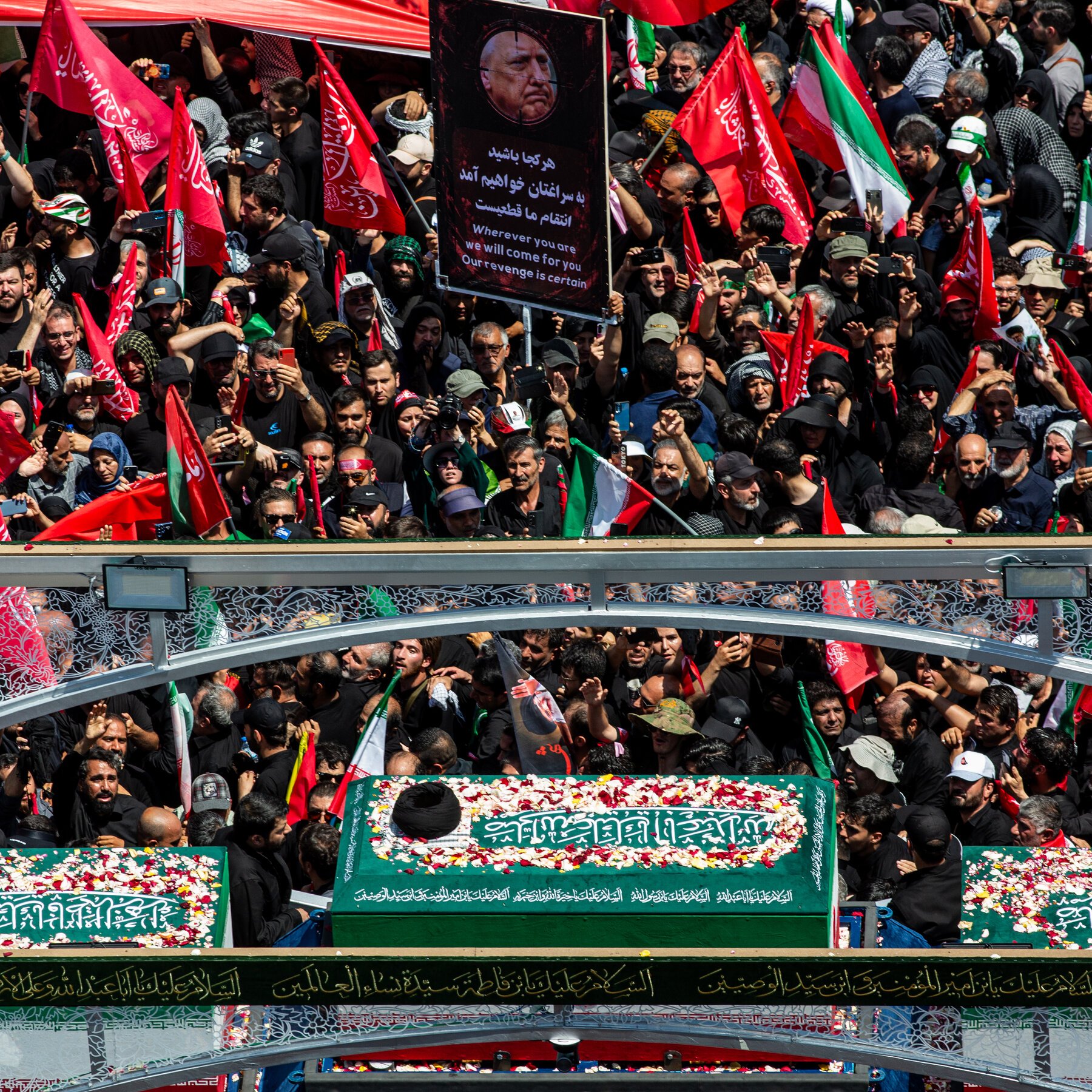
Two senior officials inside Iran's Supreme National Security Council used the hours of 11 July 2026 to send a strikingly uniform message through the country's official wire channels: the scale of the public reception accorded to a martyred leader in the Iraqi shrine cities of Najaf and Karbala has, in their telling, redrawn the moral arithmetic of any future decision involving blood. The phrasing is unusual, not because Iranian officials speak of responsibility, they always do, but because the numbers cited are not.
The first signal came at 17:22 UTC, when Fars News, the outlet closest to the Islamic Republic's security establishment, posted remarks attributed to the Deputy Secretary of the Supreme National Security Council stating that "after the funeral of 43 million people, the responsibility for bloodshed is heavier," and characterising the scenes in Najaf and Karbala as "unique." Tasnim Plus repeated the line at 17:39 UTC. Less than an hour later, at 17:44 UTC, Al-Alam Arabic ran an "urgent" item quoting the Council's Assistant Secretary, Ali Bagheri, on the same reception in Najaf and Karbala, using the same word: what happened, he said, was "unique," because the body of the martyred leader was received as a body of that rank rarely is in the modern Arab world.
The number that does the work
Forty-three million is a figure that resists casual reading. It is larger than the population of Iraq, larger than the population of Iran, and several times the combined resident population of Najaf and Karbala governorates. It can only function in the public register as a rhetorical aggregate: the cumulative mourning of communities across two countries, perhaps more, that the cortege is meant to consolidate into a single political address. The Council's two spokesmen did not explain the methodology behind the count, and the source material in circulation on 11 July does not provide one. That silence is itself part of the message. The number is not a statistic; it is a constituency being conjured in advance of whatever decision comes next.
Najaf and Karbala as political infrastructure
The choice of the two Iraqi shrine cities is not incidental. Najaf houses the mausoleum of Imam Ali, the cousin and son-in-law of the Prophet Muhammad, and is the headquarters of the Hawza, the Shia clerical establishment whose authority extends across the Iranian-Iraqi border and into Lebanon, Bahrain and the Gulf Shia communities. Karbala, roughly 80 kilometres to the northwest, is the site of the martyrdom of Imam Hussein, and its annual pilgrimage calendar is the single largest periodic gathering of Shia Muslims on earth. A cortege that moves through both cities, in sequence, on a single day, is not a funeral procession. It is a tour of the institutions that any Iranian security calculation, on Iraq, on Lebanon, on the Gulf, has to pass through. Deputy Secretary and Assistant Secretary of the Council are not in the business of religious commentary. They are in the business of measuring rooms.
A discourse of restraint, issued from the security estate
The "heavier responsibility" formulation is worth reading twice. It is not a call for war, and it is not, strictly, a call for peace. It is the public installation of a constraint: a public record, on Fars and Tasnim, that the Council knows the human scale of what it is now being held to. Iranian security rhetoric has historically swung between menace and martyrdom. The 11 July register is different in tone. It speaks in the voice of an institution that wants to be seen weighing costs, even as it leaves the question of who pays them deliberately open. The corollary, in a country where the security council sits upstream of decisions on regional partners, on the nuclear file, and on the management of allied militias in Iraq, is that the present calculus has begun to absorb the religious geography it has been speaking through for decades.
What the framing leaves out
Two omissions stand out. First, the Council's spokesmen described the receptions as "unique" without naming the political entities on the Iraqi side that made them possible: the Hashd al-Shaabi paramilitary umbrella, the political offices of the Hawza in Najaf, the Karbala provincial authorities who cleared the roads, and the federal coordination in Baghdad that gave the cortege airspace. The Iraqi contribution is the substrate of the event; in the Iranian telling, it is the atmosphere. Second, the number 43 million travels in one direction only. Iranian outlets can use it to bind a constituency; Iraqi outlets, if they choose to use it, will be quoting Tehran's arithmetic, not their own census. The asymmetry of who gets to count the mourners is the asymmetry the framing is designed to preserve.
The picture on 11 July is therefore not a thaw. It is a calibration. A security council, speaking in religious language, through religious geography, signals that the public ledger of any future decision has just grown by several million entries. The next test is not whether the line is held in private. It is whether the institutions whose rooftops and avenues the cortege crossed are treated, in the next phase of policy, as partners or as stagehands.
Desk note: Monexus has read the wire on this story through the Iranian state-aligned channels named in the source list. The 43 million figure is reported as the Council's own framing; we have not independently verified it. Western wire coverage of the Najaf-Karbala sequence on 11 July 2026 was not in our research feed at the time of filing and is not cited.
Wire provenance
This editorial synthesis draws on the following public wire/social posts:
- https://t.me/farsna
- https://t.me/tasnimplus
- https://t.me/alalamarabic