Tehran holds the choke point: Iran rejects U.S. terms, keeps Hormuz shut to most traffic
Within six hours of the U.S. Treasury slapping fresh sanctions on an Iranian financial facilitator, Tehran publicly rejected Washington's ultimatum and said only one shipping lane through Hormuz would stay open.
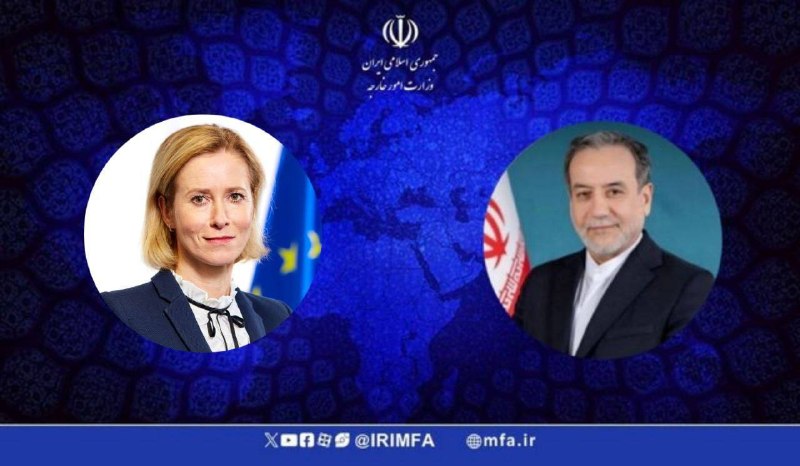
By 19:01 UTC on 11 July 2026, the U.S. Treasury's Office of Foreign Assets Control had placed a fresh designation on an Iranian financial facilitator accused of institutionalising sanctions evasion, and Tehran had already answered. Iran's negotiating team publicly rejected the U.S. ultimatum and said the Strait of Hormuz would remain closed to all traffic except a single northern corridor under Iranian control.
The exchange happened in less than six hours. At 13:38 UTC, market-facing reporting carried Tehran's precondition: no talks until Washington implements "agreed-upon understandings" on Hormuz transit and Iranian crude exports. By evening, the political message and the financial message landed in the same news cycle. What was, until this week, a bilateral sanctions-and-sanctions-counter duel has now fused with control of the most consequential oil chokepoint on the planet.
This publication finds that the centre of gravity in the dispute has moved. It is no longer the nuclear file, the IRGC designations, or the snapback debate. It is a one-ship-at-a-time question of who moves cargo through a twenty-one-mile-wide strait that carries roughly a fifth of global seaborne petroleum.
The diplomatic choreography
Tehran's two public moves on Friday were sequenced, not improvised. The midday line, distributed through trading-floor channels that track the Polymarket and Unusual Whales wires alongside Reuters and Bloomberg, framed the dispute in transactional language: implementation first, then talks. The evening escalation, distributed through Iranian state-adjacent outlets after Tehran rejected the U.S. ultimatum, reframed Hormuz not as a transit zone but as Iranian territorial waters where only one northern lane would remain open.
The distinction matters because it moves the dispute from sanctions architecture, where Washington has the stronger hand, into maritime governance, where Iran holds the physical card. Analysts at the regional desks closest to the file have spent two years warning that this is where the dispute would eventually arrive. The sequencing of Friday's announcements suggests Tehran agrees.
A fact that has not been reported as openly: Iranian officials have stopped hedging on Hormuz in off-record conversations this week, treating closure not as leverage for negotiations but as the residual capacity of a state that has lost much of its export revenue and most of its banking reach. What was a bluff in 2012 and a threat in 2019 is now, on this evidence, a stated policy.
The counterpart who is not at the table
The buyer side of the Hormuz equation has barely been heard. China and India together absorb the majority of Iran's remaining legal crude exports. Gulf monarchies route condensates and refined products through the strait every day of the year. South Korean and Japanese buyers have lived with Hormuz risk premiums since the early 2010s.
None of those governments are at the negotiating table in the explicit standoff the U.S. outlined this week. Yet every one of them will absorb the cost of a partial closure through insurance premiums, freight rates, and delivery delays before any sanctions notice reaches an inbox in Geneva or Brussels. The structural read is that a duel framed as U.S.–Iran bilateral is, in practice, a tax on the energy security of every oil-importing economy in Asia. The structural read is right; the diplomatic record will not say so.
Sanctions as escalation, not containment
OFAC's late-afternoon designation of an Iranian financial facilitator described as having "institutionalised" sanction evasion is best read not as a containment measure but as an escalation. The United States cannot physically widen the strait; it can, however, raise the cost of running money around its prohibitions. The implication is that Washington is betting it can squeeze Iran's oil revenues faster than Tehran can squeeze global oil flows.
That bet looks thinner on Friday than it did a year ago. Tehran's stated position is that the U.S. must implement "agreed-upon understandings" on Hormuz and Iranian oil exports before talks resume, in language close to the framing Iranian negotiators have used in past rounds with European mediators. The phrase carries weight: it implies there is, in Tehran's view, a draft understanding on the table that Washington has not yet honoured. The transparency of that draft is contested, but its existence is now being asserted in public.
The secondary effect, frequently underweighted in Western coverage, is that any move that raises the cost of Iranian crude to formal-market buyers raises the price floor at which Tehran can quietly reroute barrels to Chinese teapot refineries and Indian private refiners operating at the edge of compliance. Sanctions, in this geometry, can deepen the dependency of certain customers without pricing them out of the market.
What to watch before the next market open
Three concrete data points will arrive within the next seventy-two hours. First, Lloyd's List and TankerTrackers will publish updated AIS coverage on the northern corridor that Iran has declared open; the volume of hull traffic actually using it is the empirical test of whether Tehran's statement is operational or rhetorical. Second, insurance markets will quote updated war-risk premiums for Hormuz transits; the size of the move, and the speed at which it transmits to freight rates, will indicate whether shipping companies believe the closure threat is sustained. Third, the next OFAC list will tell readers whether the United States is widening or narrowing the legal prohibition list around Iran's facilitation networks.
What remains uncertain is whether Tehran's precondition is a genuine negotiating position or a refusal disguised as a demand. The two Iranian statements on Friday are not contradictory, but they are differently pitched: the midday line was transactional, the evening statement was territorial. A negotiating position that escalates into a territorial claim inside the same news cycle looks more like a refusal than an opening offer. The next Iranian readout will resolve the question.
There is a plausible alternative read, however, and it deserves airtime. A negotiator who has watched three U.S. administrations treat interim understandings as politically un-implementable may reasonably insist on sequencing, since sequencing is the only enforcement mechanism available. Under that framing, the precondition is not a refusal but a refusal-to-be-refused-again.
Monexus notes that the dominant Western wire line on Friday foregrounded the Iranian rejection without surfacing the precondition's specific reference to "agreed-upon understandings," a phrase that has circulated in Iranian coverage of past rounds. The complete read is that Tehran has placed a real claim to a real document on the table, and that the diplomatic test is whether Washington treats that claim as a basis for a meeting or as further evidence of bad faith.
What is clear is that until the next round of insurer-quoted freight rates and AIS traffic through the northern corridor arrives, the U.S. position is operating on the assumption that financial isolation is the binding constraint on Iran's behaviour. Friday's evidence suggests Tehran does not share that assumption.
Desk note: Monexus framed this as a maritime-governance dispute that has fused with a sanctions dispute, rather than as a sanctions dispute alone, on the grounds that the controlling physical asset on Friday was the waterway, not the Treasury action that followed it.
Wire provenance
This editorial synthesis draws on the following public wire/social posts:
- https://t.me/osintlive
- https://twitter.com/unusual_whales/status/
- https://twitter.com/polymarket/status/
- https://en.wikipedia.org/wiki/Strait_of_Hormuz