Tehran says Hormuz is its and Oman's. Axios says otherwise. The shipping lanes read the signal first.
A late-morning Tehran pushback against an Axios scoop has reignited a quiet but consequential argument over who actually governs one of the world's most important oil lanes.
On 11 July 2026, between roughly 15:40 and 15:54 UTC, three Tehran-aligned channels (Al-Alam Arabic, Al-Alam Persian, and Tasnim English) fired off near-identical dispatches quoting "an informed source" who declared that "decisions for the Strait of Hormuz are made only by Iran and Oman," and that any contrary reading was false. The pushback was aimed squarely at an Axios report, though the Axios article itself is not reproduced in the wire material reviewed here, and its precise wording cannot be quoted verbatim.
The story underneath the messaging is older than the day. Tehran has long argued that the Strait of Hormuz falls within the territorial waters of its coastline and that of Oman, the only two states that physically border the narrows. That claim sits uneasily with international maritime law and with the operational reality that the United States Fifth Fleet, headquartered in Bahrain, has patrolled the waterway for decades. What changed on Friday is the vehicle for the claim: not a foreign ministry statement, but a clause in a memorandum described by Tasnim as the "Islamabad Memorandum of Understanding," which, per Tasnim's informed source, assigns Tehran responsibility for "future arrangements" for the strait, to be settled through dialogue.
What the Iranian channels are actually claiming
The messaging is layered. Tasnim's English wire, posted at 15:25 UTC, asserts that any decision on management of the strait is "only by Iran and Oman." Al-Alam Arabic's 15:40 UTC post sharpens the claim: there is "no truth" to the Axios story, and the strait is within the "internal and territorial waters" of the two coastal states. A subsequent 15:41 UTC post elevates the argument from assertion to legal architecture, citing "Clause Five" of the Islamabad memorandum as the instrument by which future arrangements will be set, again through dialogue. Al-Alam Persian at 15:54 UTC completes the pattern by attributing the rejection explicitly to a "politically informed source" rather than to a named official.
Three things are worth noting about this construct. First, none of the channels name the source. "Informed" and "politically informed" are the only attributions; no ministry, no spokesperson, no commander. That is deliberate. It allows the Iranian government to denounce the Axios framing without pinning itself to a legal position that other Gulf states, Oman included, might be forced to disavow. Second, the explicit invocation of "Clause Five" of the Islamabad memorandum is an attempt to convert a diplomatic talking point into a contractual one. Whether the clause exists, is binding, and covers strait governance in the way Tasnim describes is a separate matter; it is not verifiable from the wire material available here. Third, the choice of Oman as co-claimant is strategic. Oman has historically played the role of neutral Gulf interlocutor, has maintained relations with both Tehran and Washington, and would face less diplomatic cost from being dragged into a sovereignty framing than, say, Saudi Arabia or the UAE.
Why an Axios report triggered an urgent pushback
Axios has, over the past several years, become the outlet of first resort for reporting on the back-channel negotiations between Washington and Tehran. The substance of the report in dispute is not in the sourced material here, but the trigger is unmistakable: a credible US-aligned outlet floated a framing that Tehran considered either inaccurate or politically damaging, and the Iranian state responded within hours, using multiple channels and near-simultaneous timestamps to maximise amplification. The 15:25 UTC Tasnim post, followed within fifteen minutes by Al-Alam Arabic in two variants and then Al-Alam Persian, is a coordinated information push, not a series of independent leaks.
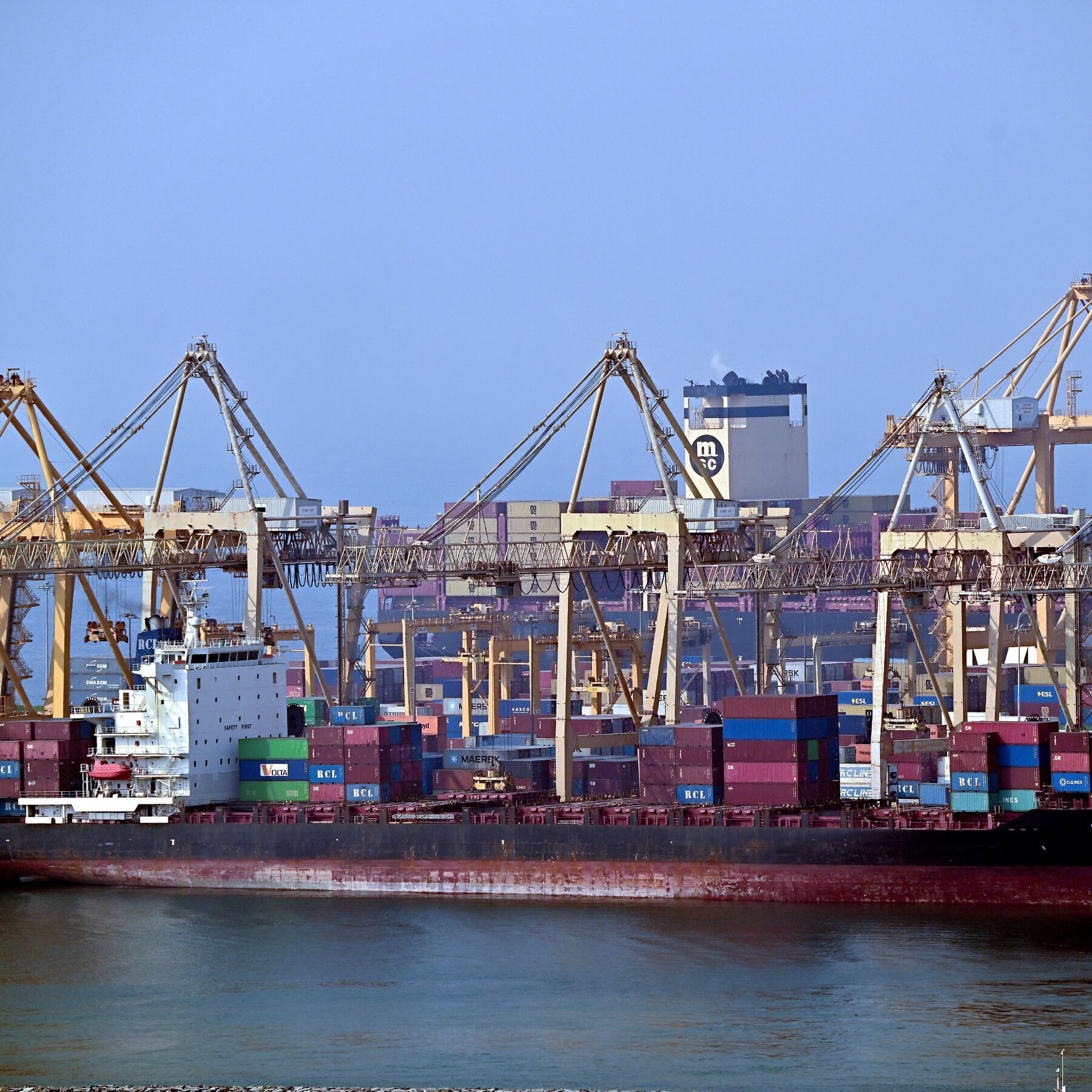
The shipping and insurance markets do not wait for the diplomacy to sort itself. War-risk premia in the Persian Gulf are sensitive to two things: who is physically present in the waterway (the IRGC Navy, the US Fifth Fleet, the Royal Navy of Oman), and who is legally recognised as having authority over transit. A claim that the strait is governed by a bilateral Iranian-Omani arrangement, even one Tehran cannot fully substantiate, has the effect of raising the legal tail-risk for any commercial underwriter not already cleared by those two capitals. That is not hypothetical. Roughly a fifth of the world's seaborne oil transits Hormuz; Lloyd's of London and the P&I clubs price that risk daily.
The structural frame, in plain terms
What we are watching is not a dispute over a single news story. It is the public-facing edge of a long-running argument about who gets to write the rules of transit through the world's most consequential energy chokepoint. The Western operational posture (Fifth Fleet patrols, freedom-of-navigation exercises, sanctions enforcement) assumes that the strait is an international waterway under customary maritime law. The Iranian counter-posture, sharpened here, assumes the opposite: that the two coastal states, by virtue of geography, have a primary say that no outside power can override. The Islamabad memorandum, as invoked, is Tehran's attempt to put diplomatic furniture under that position.
That structural argument is not settled. It may never be, in any forum that both sides accept. Which is why the messaging matters more than the legal merits: in contested corridors, the side that names the rule first often sets the price of insurance before the lawyers arrive.
What remains uncertain
Three things the available sourcing does not resolve. The full text of the Axios report, including which specific US-Iran understanding it described, is not in the reviewed material. The text of Clause Five of the Islamabad memorandum, including whether "future arrangements for the Strait of Hormuz" is its actual language, is not verifiable from Tasnim's summary alone. And Oman's position has not been articulated on the record in the dispatches reviewed here; it appears as a co-claimant in the Iranian framing, but Muscat has not, in this wire material, confirmed or denied that characterisation. Until those three points are nailed down by primary documents, the dispute is more posture than policy. The ships, however, cannot wait.
This publication's framing differs from the wire coverage in one respect: rather than treat the Iranian rejection as a routine denial, Monexus reads the near-simultaneous, multi-channel, clause-citing pushback as a deliberate attempt to convert a diplomatic talking point into an enforceable legal claim, with implications for underwriters and flag states that the daily news cycle will not resolve.
Wire provenance
This editorial synthesis draws on the following public wire/social posts:
- https://t.me/alalamarabic
- https://t.me/alalamfa
- https://t.me/tasnimnews_en