Iran Guards strike merchant vessel in Strait of Hormuz, US official says
A US official says the Revolutionary Guards fired on a passing merchant vessel in the Strait of Hormuz. The report spread within minutes across X and Telegram, but key details on the ship, crew and damage remain unconfirmed.
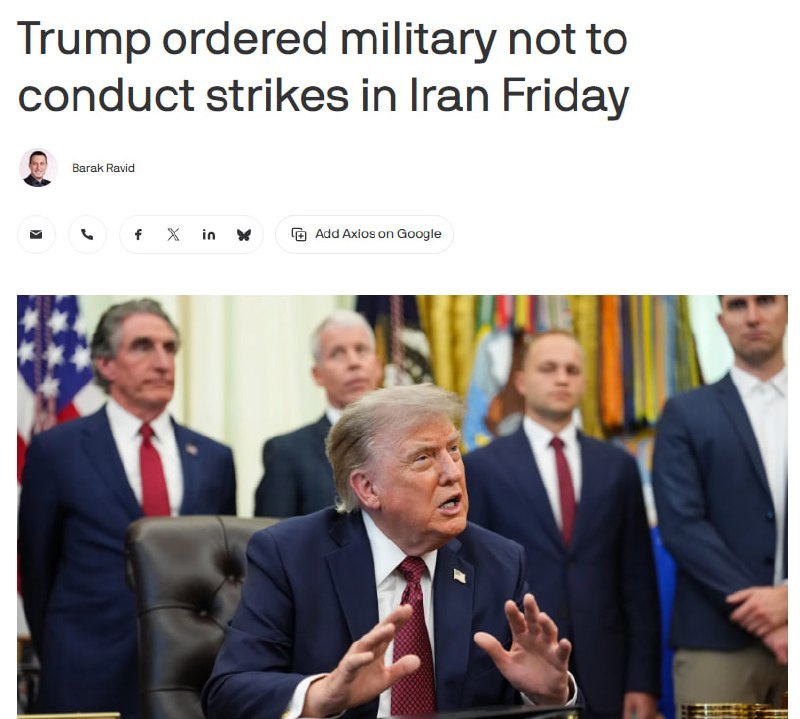
At 22:27 UTC on 11 July 2026, a post on X attributed to user @shaykhsulaiman carried a brief, two-line claim: that a senior US official had told reporters the Islamic Revolutionary Guards Corps (IRGC) had launched a missile at a merchant ship in the Strait of Hormuz, and that the vessel had been hit. Within five minutes the same wording had been reposted by the Telegram channel DDGeopolitics, and a third copy followed at 22:37 UTC. By the time the night shift on the oil desks in London and Singapore came off mute, a single unattributed sentence had travelled from one account to several, faster than any naval briefing could be checked.
What is on the record so far is narrow and unsigned. A "senior US official" told outlets, in quotes preserved verbatim by the X and Telegram posts, that the IRGC fired a missile at a merchant vessel transiting the Strait of Hormuz and that the ship was struck. No flag state, no vessel name, no casualty count and no confirmation of damage has been published alongside the claim. The sources do not specify whether the ship remains afloat, whether the crew is accounted for, or which authority has responsibility for the next hours of the response. What began as a flash bulletin is now, by sheer repetition, the working assumption of traders, insurers and regional militaries until something more solid lands.
What is actually being claimed
The text circulating on both platforms is identical. It attributes the IRGC attack to a "senior US official" and uses the construction "The Revolutionary Guards launched a missile toward a merchant ship passing through the Strait of Hormuz. The ship was hit." That phrasing carries weight: it locates the incident inside a strategic waterway roughly 33 nautical miles wide at its narrowest point, between Iran to the north and Oman and the United Arab Emirates to the south, through which an outsized share of seaborne crude and liquefied natural gas transits each day. It also names the IRGC explicitly, rather than the regular Iranian Navy or an unnamed proxy force, which is itself a political signal: Tehran is being held responsible at the level of a state paramilitary that sits outside Iran's conventional military chain of command.
What is missing is equally informative. There is no reference to a wire-service bulletin, no footage from a vessel or surveillance aircraft, no statement from the IRGC, the Iranian foreign ministry or the US Central Command, and no read-out from the United Kingdom's Maritime Trade Operations centre in Dubai, which is the usual first public recorder of incidents in the Gulf and the wider Indian Ocean. The sources, in other words, are a single attributed quote in transit. They do not yet constitute an event in the public record in the way a Reuters dateline or a UKMTO advisory would.
The counter-read
The obvious alternative reading is also the obvious one: that a senior US official briefed reporters on background, that the claim is genuine, and that the bottleneck now is verification rather than authenticity. The same corridors of information are regularly how first reports of IRGC seizures, drone interceptions and tanker incidents have surfaced over the past two years, and several of those initial reports later hardened into confirmed events once the UKMTO, the Iranian side or the ship's flag state put a name to the vessel.
The other reading is that the framing itself is part of the story. The Strait of Hormuz is one of the most surveilled waterways on earth: the US Fifth Fleet is based in Bahrain, Iran fields coastal radar and fast-attack craft along its northern shore, Oman patrols the southern approach, and commercial AIS data, satellite imagery and overflight reconnaissance make almost any vessel movement legible within hours. A missile strike on a merchant ship is not the kind of event that hides easily. If the strike happened, the corroboration should arrive within a single news cycle. If it did not, the gap between the senior-official quote and the absence of any visible response from the IRGC, the Iranian foreign ministry or regional navies will itself become the story.
What the spread tells us
Even if the underlying report turns out to be confirmed, the path it took is worth marking. A single sentence, attributed only to "a senior US official", moved from one X account to a Telegram channel with several hundred thousand subscribers in ten minutes, and from there into trading-rooms and editor-inboxes that now have to decide whether to move on it. The sources did not include any of the wires, any navies, or the UKMTO. The original poster is not a recognised defence correspondent; the Telegram channel aggregates geopolitical flash traffic. None of this makes the report false. It does mean that the loudest version of the claim, at this hour, is travelling without the institutional ballast that usually gives such claims their first round of credibility.
What to watch before the next bulletin
Three confirmations would convert this from a flash report into an event. First, a UKMTO advisory or a US Navy Fifth Fleet statement placing a vessel on a map, with a time stamp. Second, a statement from the IRGC, Iran's foreign ministry or the ship's flag state, which would either confirm or deny the attack and signal how Tehran intends to frame it. Third, commercial AIS data showing the vessel either stationary, drifting or diverted to an Iranian port such as Bandar Abbas, which has been the destination in past seizures. None of these had appeared by the time the third Telegram copy was posted at 22:37 UTC.
Until then, the Strait of Hormuz has a single sentence doing the work of an event. The oil price reaction, the regional navy positioning and the diplomatic phone calls that will follow in the next hours will be calibrated against a claim whose own provenance is, for the moment, only as solid as the network that carried it.
Desk note: This article leads with the unverified senior-official quote because that is the only verifiable factual material in the thread at time of writing. It does not assert the strike as an established event; the UKMTO, the IRGC and any flag-state confirmation would move this from report to record. Readers should treat the underlying claim as live but unconfirmed until corroborated.
Wire provenance
This editorial synthesis draws on the following public wire/social posts:
- https://x.com/shaykhsulaiman/status/1945638219075866714
- https://t.me/DDGeopolitics/47291
- https://t.me/DDGeopolitics/47293
- https://en.wikipedia.org/wiki/Strait_of_Hormuz