Iran shuts the Strait of Hormuz, and a fifth of the world's oil trade goes dark
Tehran's Revolutionary Guards say the chokepoint is closed until further notice after Iranian forces fired on a merchant ship, and Washington is demanding unconditional reopening without tolls.
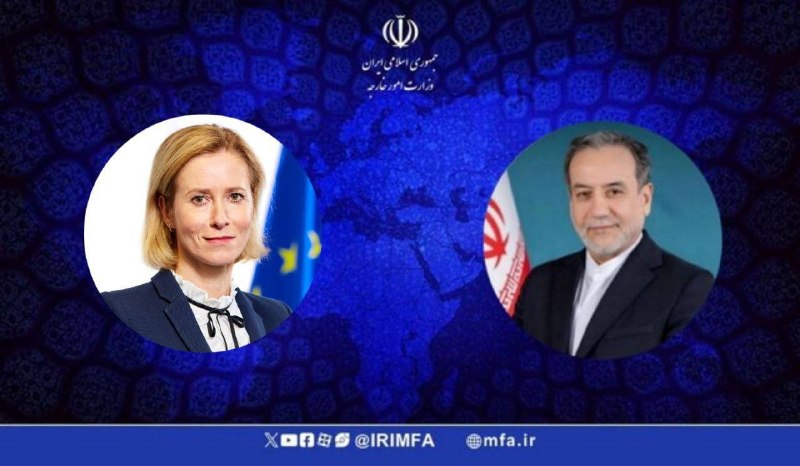
Iran's Revolutionary Guards declared the Strait of Hormuz closed "until further notice" at 22:55 UTC on 11 July 2026, hours after Iranian naval forces fired on a merchant vessel that they said had been using an "unauthorised route" through the waterway. The closure, announced by the Guards and relayed by Iranian state-linked channels, throws the world's most important oil transit corridor into immediate uncertainty, with roughly a fifth of global seaborne crude normally moving through the narrow chokepoint between the Persian Gulf and the Gulf of Oman.
The closure sets up a direct collision with Washington, which had earlier issued what amounted to an ultimatum: reopen all lanes without tolls or face a "bad outcome." Tehran's answer, delivered within hours, was to refuse talks and to insist that any future negotiation begin only after Washington implements "agreed-upon understandings" on Hormuz transit and Iranian oil exports. The episode marks a sharp escalation in a weeks-long shadow war that has moved from proxy confrontations and tanker harassment to overt military action against commercial shipping in one of the most heavily trafficked sea lanes on earth.
What happened on the water
Deutsche Welle reported at 22:48 UTC on 11 July that the Iranian navy closed the strait after firing on a vessel it accused of transiting an "unapproved route," and tied the closure to an end of what it called US "interference in the region." Within minutes, Telegram channels tracking the incident were carrying claims from a senior US official that the Revolutionary Guards had launched a missile at a merchant ship and that the vessel had been hit. By 23:08 UTC, Iran's Revolutionary Guards were asserting that the strait would remain closed to all traffic except a single northern Iranian route, a move that would in effect give Tehran discretionary control over every tanker leaving the Gulf.
The pattern is recognisable from previous Iranian pressure campaigns: a fait accompli on the water, a maximalist public demand, and an invitation to negotiate from a position of strengthened leverage. What is different this time is the speed. The window between the US ultimatum of 10 July, the rejection of talks on the morning of 11 July, and the kinetic strike later the same day was measured in hours, not days. There was no obvious de-escalatory off-ramp in the public messaging from either capital.
What each side is asking for
The US position, as summarised in the 10 July ultimatum, is austere and uncompromising: full reopening of all shipping lanes, no tolls, no carve-outs. The framing is consistent with a longstanding American view that the strait is an international waterway whose freedom of navigation cannot be conditioned by a coastal state, and that any attempt to extract transit fees or impose routing restrictions is incompatible with the existing maritime order.
Iran's counter-position is more layered. Tehran is not, on the evidence so far, demanding that the strait remain closed permanently. It is asking for two things: implementation of what it calls "agreed-upon understandings" on Hormuz transit and on Iranian oil exports, and an end to the US military and naval presence it characterises as interference in its near abroad. The offer of a single northern Iranian route is a partial concession, a controlled valve that would allow some traffic to resume while preserving Tehran's gatekeeper role. It is the kind of arrangement that would, in a less acute moment, be the basis for a face-saving compromise.
What makes the current standoff hard to unwind is that both sides have publicly drawn lines that the other has explicitly rejected. Washington has framed the toll question as non-negotiable; Tehran has framed the lifting of US regional posture as a precondition. The room for a middle ground is real but narrow, and it is shrinking as the language on both sides hardens.
Why the strait matters in numbers
The Strait of Hormuz is the single most important oil transit chokepoint on the planet. Roughly a fifth of global seaborne crude, and a comparable share of liquefied natural gas, passes through a shipping lane less than 40 kilometres wide at its narrowest point. There is no realistic pipeline alternative at scale for most Gulf producers. Even partial closure tends to move the front-month Brent benchmark within minutes, because the marginal barrel most exposed to global pricing is the one that has to move through the strait.
The economic stakes extend well beyond oil. Container traffic, petrochemical exports, and the bulk carriers that carry Gulf grain and steel imports all share the same waterway. An extended closure would not just raise the price of fuel; it would reroute global supply chains, force longer voyages around the Cape of Good Hope, and inflate insurance premiums across the maritime sector. The longer the disruption persists, the more the cost shifts from a transient risk premium into structural inflation.
What remains uncertain
Several critical facts are not yet established. The sources do not specify the name, flag, or ownership of the vessel that was struck, nor do they confirm casualties or environmental damage. The claims that the ship was hit are sourced to a single senior US official, paraphrased rather than directly quoted, and have not been independently verified by maritime tracking services or by the vessel's operator. Telegram channels carrying the report include sponsored content unrelated to the news, a reminder that war-time information environments are saturated with noise.
Equally unclear is whether the closure is total or selective. Iranian messaging distinguishes between a general closure and a partial reopening through a northern Iranian route, but the practical meaning of that distinction on the water, and whether the Guards or the regular navy is enforcing the order, is not addressed in the available reporting. The next 24 to 48 hours will determine whether this is a coercive signal intended to be reversed, or the opening phase of a sustained disruption that redraws the maritime map of the Gulf.
Desk note: Monexus frames this as a kinetic escalation in an existing coercion campaign, not as a standalone crisis. Where Iranian state-linked channels and US officials disagree on facts, both are named with their institutional role; where the public record is thin, this article says so rather than speculate.
Wire provenance
This editorial synthesis draws on the following public wire/social posts:
- https://t.me/s/WarMonitors
- https://t.me/s/bricsnews
- https://t.me/s/DDGeopolitics
- https://x.com/polymarket/status/000000
- https://x.com/unusual_whales/status/000000
- https://x.com/polymarket/status/000000
- https://x.com/polymarket/status/000000