Hormuz shuts after a third night of US strikes: what the next 72 hours decide
Iran's IRGC Navy closed the Strait of Hormuz hours after CENTCOM launched a third round of strikes inside a week, putting roughly a fifth of seaborne oil in limbo and leaving shipping, insurance, and Gulf governments to read the same signal in different keys.
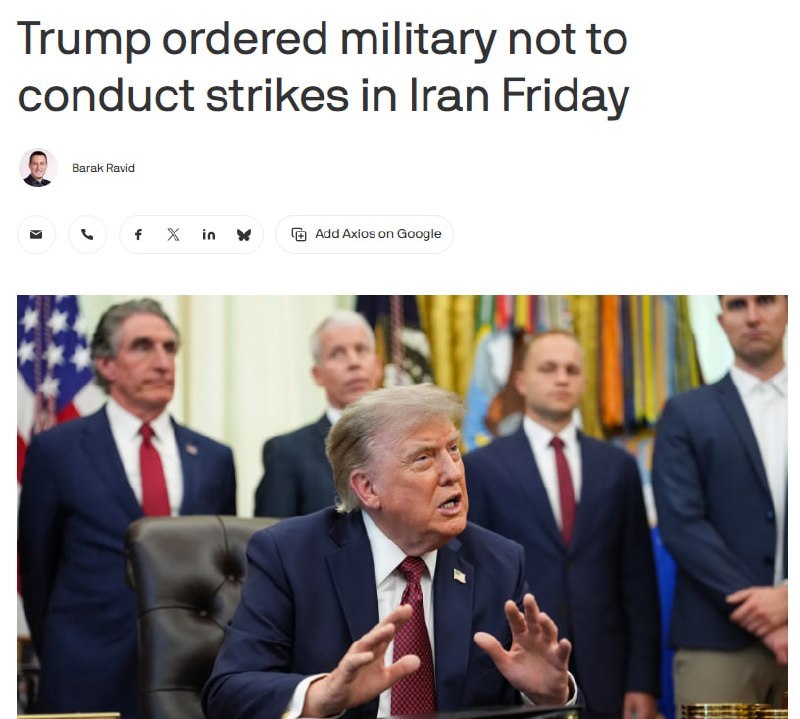
At 7:15 p.m. Eastern Time on 11 July 2026, U.S. Central Command forces began what it called the third round of strikes inside a week against Iranian targets, according to a CENTCOM statement relayed on the night by the open-source channel rnintel. Hours later, the Islamic Revolutionary Guard Corps Navy announced the Strait of Hormuz was "completely closed until further notice," with warning shots fired at a vessel that ignored orders and exited a designated shipping lane, per the IRGCN release carried by intelslava and The Cradle. By 23:41 UTC the two dispatches had collided in the same news cycle, and the world's most sensitive oil chokepoint was, on paper, locked.
What is unfolding is not a single incident but a stack of them, each tightening the next. The CENTCOM statement frames the strikes as a continuation of an operation already two rounds deep. The IRGCN statement frames the closure as retaliation for a warning that, in its telling, was defied. Both readings are true to their own speakers and unverifiable beyond them. The shared fact is geographic: the strait that moves roughly a fifth of seaborne crude is now the scene of competing claims, and the maritime traffic that would normally validate or refute those claims is, by Iranian order, no longer moving.
What CENTCOM said, and what it didn't
The CENTCOM statement, posted in full to rnintel on 11 July at 23:41 UTC, is precise about timing ("7:15 p.m. ET today") and about the operation's sequencing ("the third round of strikes this week"). It is silent on the target set, the weapons used, the assessed damage, and the rules of engagement for the hours ahead. That silence is itself a signal: U.S. military communiqués in active operations tend to confirm only what cannot be denied, and to defer targeting detail to intelligence-community products that surface, if at all, days later. The relevant editorial question is not what was hit but whether this round was calibrated to degrade, to demonstrate, or to coerce.
Two precedents sit close at hand. The January 2020 killing of Quds Force commander Qassem Soleimani was followed within hours by Iranian missile strikes on Iraqi bases hosting U.S. troops; the Strait was not closed then, and the de-escalation held. The September 2019 Abqaiq-Khurais facility attack halved Saudi output for days and produced a price spike without a kinetic U.S. response; the Strait was not closed then either. The Tehran decision to weaponise the waterway itself, rather than a target on shore, marks a different register. It moves the conflict from a sequence of named strikes and named targets to a contest over a corridor, which by definition has no single decision-maker on either side.
The Iranian framing
The IRGCN statement, carried by intelslava and by The Cradle within minutes of each other on the night of 11 July, asserts two things. First, that the closure is total and indefinite. Second, per The Cradle's text, that "US intervention has come to an end" in a sense the original Persian wording will need to clarify in the days ahead, an editorial caveat the channel did not unpack. The wfwitness channel relayed the same IRGCN announcement at 22:23 UTC and again at 23:21 UTC, noting the warning-shot incident that preceded the formal closure notice.
Read together, the Iranian communications are doing two pieces of work at once. They are presenting the closure as a lawful response to a navigation violation, which is the framing international maritime law would expect a coastal state to use. And they are presenting it as a strategic threshold, the first time in the current crisis that the regime has instrumentally closed the strait rather than threatened to. Both readings can be true. Neither is independently verifiable in real time, because the vessels that would normally feed maritime-tracking data are, per the order, no longer transiting.
What the oil market cannot yet price
The Strait of Hormuz handles a share of seaborne crude and condensate that has historically sat between a fifth and a quarter of global flows, depending on how Iranian exports are netted in. The market reaction to the closure announcement cannot be observed in the dispatches in front of this publication, and the relevant signal will not be a single print but a sequence: the next Brent and Dubai opens, the next fixing, the next Lloyd's List joint-venture advisory on war-risk premiums for the Persian Gulf, and the next statement from Saudi Aramco's trading desk on whether east-west pipeline routes can absorb the redirected barrels.
Three structural facts matter more than any single price move. First, Gulf producers have spent two decades building bypass capacity: ADNOC's Habshan-Fujairah pipeline, Saudi Aramco's Petroline (East-West Pipeline), and Iraqi flows via Turkey all pre-date the current crisis and were designed precisely for this scenario. Their combined spare capacity is real but finite. Second, the insurance market sets the temperature. A formal notice from Lloyd's Market Association listing the Persian Gulf as a listed war-risk area changes the calculus for every shipowner, including those whose flag states have no stake in the dispute. Third, China's crude import dependency on the Gulf means Beijing has both motive and leverage to mediate; whether it chooses to, in this window, is a variable that no Western wire can price and that no Chinese wire will telegraph.
Who blinks first, and what the next 72 hours decide
The pattern on the table is familiar. One side escalates to a level short of war; the other side responds with a non-military lever that imposes disproportionate economic cost; a third party, usually a Gulf state or a great-power back-channel, mediates before the lever breaks something neither side controls. The Iranian play is to make the strait's closure expensive enough that pressure for de-escalation flows toward Washington rather than Tehran. The U.S. play is to demonstrate that escalation is affordable. The mediators' play is to buy time without conceding either framing.
The next 72 hours will tell which side's bet is wrong. A shipping casualty would change the calculation overnight; so would an Iranian announcement of a partial, conditional reopening. A formal Omani or Qatari mediation, if one emerges, would suggest the closure is being treated as a negotiable price rather than a strategic threshold. A continued silence from both capitals, with strikes continuing and the strait formally shut, would suggest that neither side has yet paid enough to want to stop.
The sources in front of this publication do not specify casualty figures, target lists, or the response of any Gulf government beyond the Iranian and U.S. statements themselves. They establish a sequence: a third round of U.S. strikes inside a week; a total, indefinite Iranian closure of the strait; and no public statement, in these dispatches, from any other capital. Until that silence breaks, the markets, the shipowners, and the mediators are reading the same two paragraphs in the same two languages, and reaching opposite conclusions about which side wrote them.
Desk note: Monexus is treating the CENTCOM statement as the primary U.S. factual record and the IRGCN releases as the primary Iranian factual record, with the channels that carried them (rnintel, intelslava, wfwitness, The Cradle) named for provenance rather than analysis. Where the two sides' framings diverge, both are reported; where neither side has yet spoken, the silence is the story.
Wire provenance
This editorial synthesis draws on the following public wire/social posts:
- https://t.me/rnintel
- https://t.me/intelslava
- https://t.me/wfwitness
- https://t.me/wfwitness
- https://t.me/TheCradleMedia