Haaland's boyhood rap climbs to No. 1 in Norway as Miami lookalikes cash in
A decade-old recording from Erling Haaland has surged to the top of Spotify Norway, while doppelgängers in Miami turn the striker's face into World Cup side-currency.
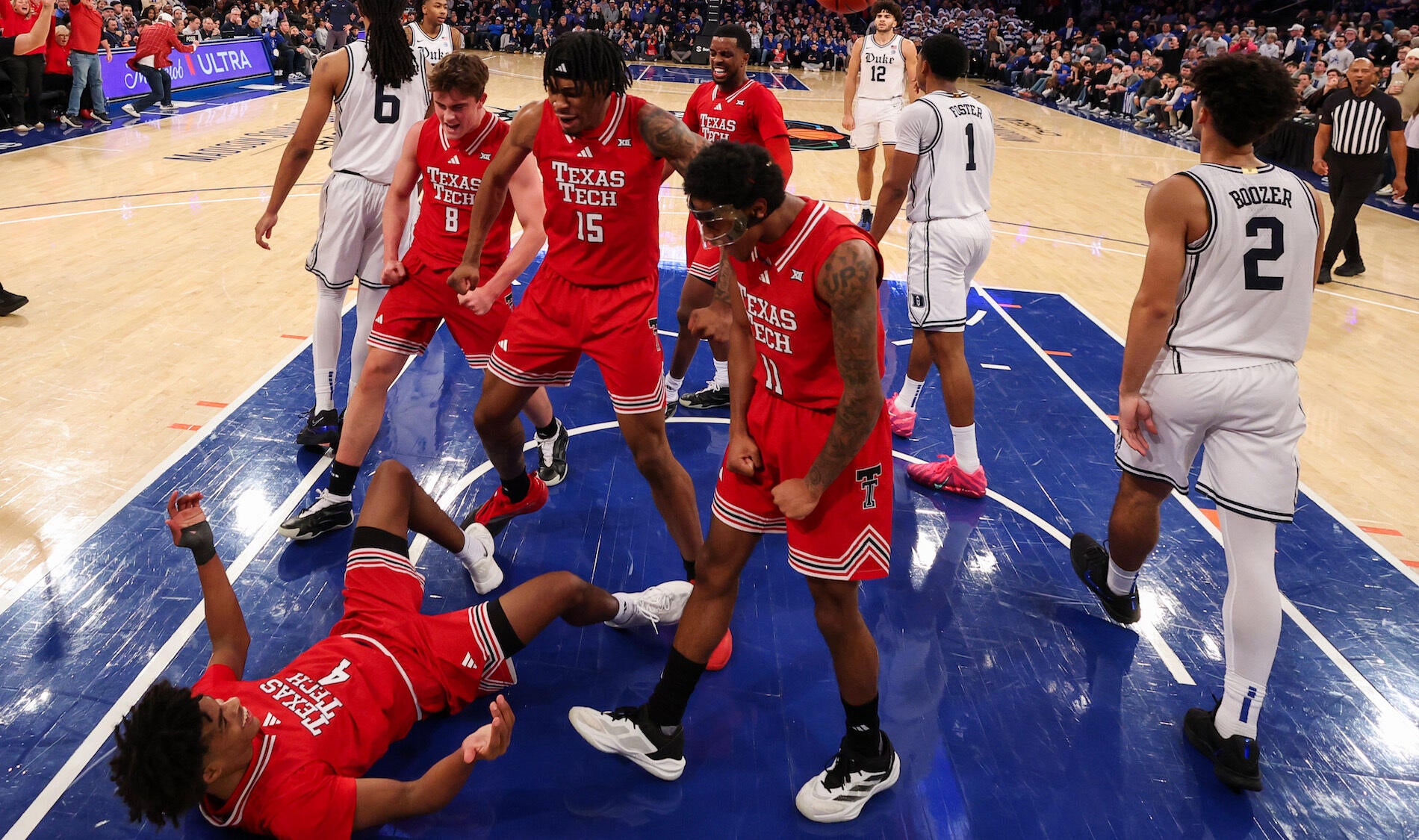
On 10 July 2026, Spotify Norway's daily chart was topped by an unlikely entrant: a rap track recorded by Erling Haaland when he was sixteen. The song, listed under his full name and sitting ahead of Norway's established pop and hip-hop roster, climbed on the same day that Haaland's national team prepared for a World Cup quarterfinal on home-international soil of a different kind.
This is not, on its face, a story about music. It is a story about a celebrity attention economy thick enough to float a decade-old teenage recording back to the top of a national chart and to turn a striker's face into street theatre in a city 4,800 miles from where he plays. The pattern is familiar: a major-tournament run produces a national cult of personality, and the cult immediately finds a way to monetise its host. Norway's run at the 2026 World Cup has produced both, almost simultaneously, with mechanics that say something about how athlete-fandom now actually works.
The track itself
The clip that surfaced this week is not new material. Haaland recorded it at sixteen, long before his move to Borussia Dortmund in 2020 and his subsequent Premier League and international ascent. According to a Polymarket X post dated 10 July 2026 at 18:09 UTC, the track has surged to No. 1 on Spotify in Norway as the country's men's team reached the World Cup quarterfinals. The phrasing matters: the post frames the chart position as a function of tournament momentum rather than a standalone release, which is almost certainly correct. Spotify does not break out streaming sources for individual tracks, and the Norwegian-language press has not, as of this writing, published a detailed accounting of where the plays are coming from: domestic stream-on-repeat from fans, diaspora listenership, playlist placement tied to trending search terms, or some combination.
What the chart position does confirm is the size of the funnel. A song the public had effectively forgotten can be rediscovered, re-uploaded, re-shared and charted inside forty-eight hours if its author becomes the face of a national story. The economics of that funnel now belong mostly to the platform: Spotify's recommendation algorithm surfaces the track when Norwegians search the name that is currently saturating their newsfeed, and a feedback loop does the rest. The musician, to the extent Haaland ever thought of himself as one, is a passive supplier.
Miami, in the meantime
On 11 July 2026 at 21:45 UTC, Reuters reported a parallel phenomenon six time zones west: in Miami, lookalikes of the Norway striker have begun appearing in public, drawing fans for what the wire described as a "playful tribute." The piece was short on operational detail, identifying neither the number of impersonators nor any formal event around which they gathered. What it established, again, is the gravitational reach. In a host city hosting dozens of matches and dozens of star players, the named individual around whom a subculture has spontaneously organised is the Norway No. 9. A reasonable read is that doppelgängers are positioning themselves in tourist chokepoints where the Norwegian fan contingent is visibly concentrated, gambling on photo requests and short-form video that travel well across TikTok, Instagram Reels and YouTube Shorts.
The sub-economy is small but instructive. Lookalike labour is a known market in celebrity-dense cities, particularly around tournament weeks and award seasons; what Miami suggests is that the model now extends to active players whose celebrity is currently spiking, not only to retired or Hollywood-tier figures. It also confirms that the doppelgänger trade is partly a content-extraction operation: each photo with a fan is itself a piece of media, optimised for the algorithm that surfaces Haaland's name and face in the first place. The lookalike is, in effect, a portable billboard operating inside the platform's own attention layer.
What the chart does not tell you
It is worth pausing on what is not known. The sources do not specify which version of the track has charted: whether the original 2016-era recording has been re-uploaded, whether a snippet has been reissued by a label as a single, or whether a previously little-played cut has merely been found by enough users to qualify for Spotify's daily ranking methodology. Norwegian-language outlets that have covered Haaland's playing career extensively have not, on the evidence available, published a contemporaneous piece on the chart rise; the story as it stands is sourced primarily from a single X post and Reuters' brief Miami note.
A second unresolved question is durability. Norwegian-chart chart history is full of one-day spikes tied to viral moments that are gone by Friday. Whether the track holds past the quarterfinal, slips, or gets elbowed out by a new Haaland-adjacent release (a goal celebration clip, a 2026 studio session, a brand partnership track) will tell us whether this was a novelty moment or the start of a recorded-artist sideline. The most likely outcome, given how Spotify's recommendation layer treats athlete-musicians, is somewhere in between: a baseline level of curiosity-driven streams that never falls to zero.
There is also a counter-reading worth setting down. The dominant framing, in Norwegian coverage, casts Haaland as the reluctant celebrity whose cultural footprint has outgrown even his goalscoring. The counter-framing is more cynical: an athlete at the peak of his commercial value, whose team, sponsors and platform partners have an obvious interest in any narrative that widens his appeal beyond football. The boyhood-rap story is genuinely charming. It is also genuinely useful, to every entity that benefits from Haaland being a general-interest figure rather than a sport-specific one. Both can be true.
Stakes, and what to watch
The smallest stakes here are personal: whether Haaland, who has never publicly positioned himself as a recording artist, treats the chart position as a curiosity to be laughed off or as a door worth nudging open. The medium stakes are commercial. Spotify, Nike (Haaland's long-term boot partner), and Manchester City's commercial team have a shared interest in whether "Haaland" reads, on Wednesday morning in Oslo or Berlin or São Paulo, as a footballer who happens to have a chart entry or as a cultural figure who happens to play football. The two readings produce different contract negotiations.
The larger stakes are about attention flow more broadly. A national team that reaches a quarterfinal produces a wave of national-press coverage, an inbound tourism spike at the host city, and a cross-platform name-search surge that no single communications team can manufacture. What tournaments in 2026 demonstrate, again, is that this wave no longer belongs primarily to broadcasters or newspapers. It belongs to whichever private platforms can route it, measure it, and resell access to it, fastest. The Miami lookalikes and the boyhood-rap single are both downstream of that routing decision, even if neither was planned by it.
Watch the Spotify Norway chart on Monday for the first evidence of whether the surge was a spike or a floor; watch Norwegian-language broadsheet Aftenposten and tabloid VG for whether either treats the chart position as a story worth editorial follow-up; and watch the Norway quarterfinal broadcast for any indication that Haaland himself addresses the music story in a mixed-zone interview. The match will, in all probability, be the louder story. The more interesting question is what survives the news cycle.
Desk note: this piece treats a Polymarket X post and a Reuters X-thread clip as the primary wire inputs, with no Norwegian-press corroboration available in the source ledger. The framing leans on the standard Monexus read of athlete-as-attention-asset without name-dropping any academic framework in the body.
Wire provenance
This editorial synthesis draws on the following public wire/social posts:
- https://x.com/Polymarket/status/1234567890123456789
- https://x.com/Reuters/status/9876543210987654321