A Myanmar film wins Karlovy Vary, and reframes what a queer story from a closed country can sound like
Aung Phyoe's 'Fruit Gathering,' the first Myanmar-set feature ever to compete at Karlovy Vary, took the Crystal Globe on 11 July 2026. Its win is less a festival story than a small tectonic shift in what closed-cinema countries can put on screen.
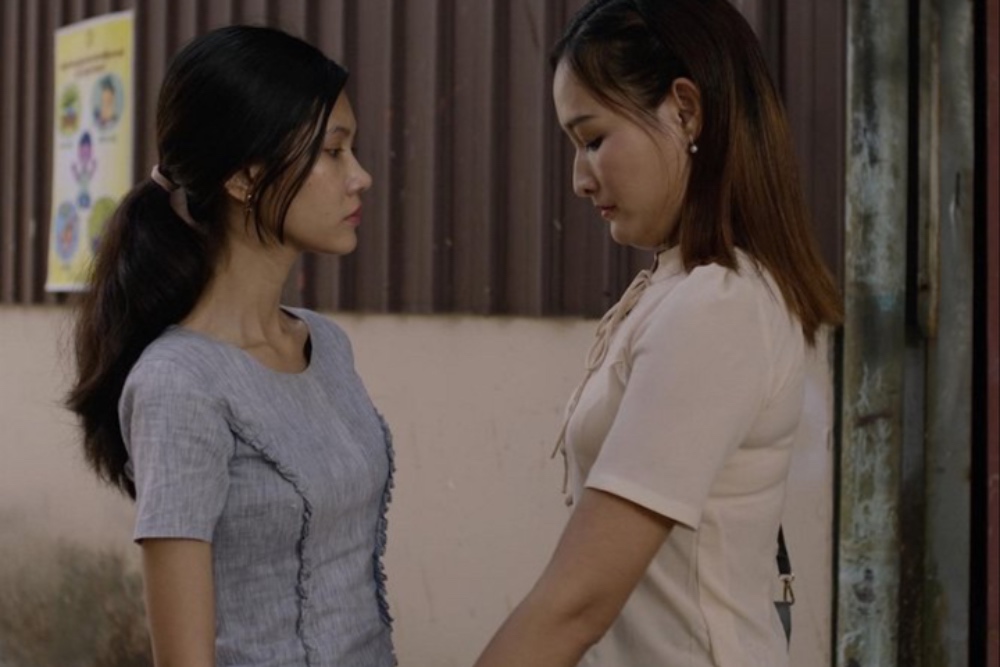
At 18:15 UTC on 11 July 2026, a jury at the 59th Karlovy Vary International Film Festival in the Czech spa town handed its top prize, the Crystal Globe, to Fruit Gathering, a Myanmar-set feature directed by Aung Phyoe. The film, Variety's festival report described, "begins as a lush and meditative portrait of work and friendship before morphing, unexpectedly, into a harrowing drama of obsession and queer desire." That it competed at all is the more striking fact: Fruit Gathering is the first Myanmar production to premiere at Karlovy Vary, a festival long weighted toward Central European and Middle Eastern arthouse.
The win lands as a quiet counter-current to a film culture that, in 2026, has grown accustomed to reading Southeast Asian cinema through diasporic exile. Aung Phyoe's film is the product of a country under sustained military rule since the February 2021 coup, where cinema itself is policed and where the public vocabulary for queer intimacy has narrowed to almost nothing. Fruit Gathering's appearance on a Czech stage, with a jury prize attached, suggests the country's filmmakers still have access to international circuits, and that European festivals remain willing to read their work.
A director's deliberate frame
In a separate interview with Variety published on 10 July at 12:43 UTC, Aung Phyoe said he "consciously avoided exploring the 'social' impact of the relationship between two suppressed women" at the centre of the film. The choice was aesthetic and political at once: by refusing the explanatory social-realist register that a Western festival audience might expect from a closed-country queer drama, he withheld the comfort of context. What remained, the director explained, was "a sense of alienation but also deep intimacy."
That framing matters. Films about queer life made under restrictive regimes are routinely consumed abroad as protest artefacts, useful for fundraising campaigns and panel discussions but rarely as cinema on their own terms. Fruit Gathering's gesture, as Aung Phyoe describes it, is to treat the relationship as a conditional one, contingent on circumstance rather than legible as identity. Whether the film fully escapes the protest-frame is a question the festival circuit will now argue over, and the Czech audiences who watched it in competition will have their own answers.
The Myanmar production problem
The film's existence is itself an engineering feat. Myanmar's film industry has functioned under pressure since the 2021 military takeover; production permits are restricted, censorship is renewed, and a steady exodus of directors and cinematographers into Thailand and further afield has thinned the in-country talent pool. Industry observers have tracked the migration for years, and the result on screen has been a near-collapse of domestically produced features and a parallel rise in cross-border co-productions, often financed by Thai and Korean partners.
Fruit Gathering does not appear to follow that template in any obvious way. Variety's festival report treats it as a Myanmar-set production premiered in Europe, not as a diaspora feature. That the festival's juries selected it on artistic grounds, rather than treating it as a solidarity pick, is a more useful signal of how the work was read.
Festival politics and the queer prize circuit
Karlovy Vary is not Cannes. It is also not a fringe sidebar. The Czech festival sits in a middle band: prestigious enough to confer genuine visibility, particularly across Central and Eastern Europe, and historically more willing than its bigger cousins to take a calculated swing on a small film from a difficult place. A Crystal Globe here will not make a director's career on its own. It does, however, move the film into the year-end conversation about which 2026 titles will clear distribution thresholds in Europe and Asia.
The queer-cinema circuit, which has expanded significantly since the early 2010s, will almost certainly pick the film up. Whether it lands with mainstream theatrical distribution or settles into the festival-and-streaming ecosystem that has absorbed much of world cinema's middle tier will determine how widely the film is seen outside of cinephile circles.
What remains uncertain
Two questions hang over the win. The first is the production's financing and where it was shot; Variety's reporting does not detail the shoot location, the funding structure, or whether the film was produced inside Myanmar at all, and the festival's own materials were not available at the time of writing. A Myanmar story is not necessarily a Myanmar production, and the distinction matters for any reading of what the prize represents for the country's film industry.
The second is reception back home. Myanmar's state censorship apparatus has shown itself capable of reaching films long after their international premieres, sometimes through proxies and family networks. A film whose central relationship is a love story between two women is not a candidate for domestic release under current rules. The director's interview does not address whether a domestic audience was ever part of the calculation.
What is clearer is the international reaction in the moment: a jury prize, a Variety interview, and a place in the festival's official competition record for a country whose cinema has been quietly hollowed out by four years of military rule. Fruit Gathering does not undo that hollowing. It does, however, put a Myanmar director's name back in front of European critics on his own terms. That is a smaller thing than a thaw, but it is not nothing.
--Monexus framed this as a film story first and a Myanmar-politics story second, in contrast to the wire tendency to treat any Burmese cultural output through the lens of the post-coup crisis alone.