Caleb Wilson drops 35 in Summer League debut, but Boozer and Memphis walk out with the win
Chicago's No. 4 pick lit up Las Vegas with 35 points and seven threes; Memphis's No. 3 pick answered with 23 and the Grizzlies' first Summer League victory.
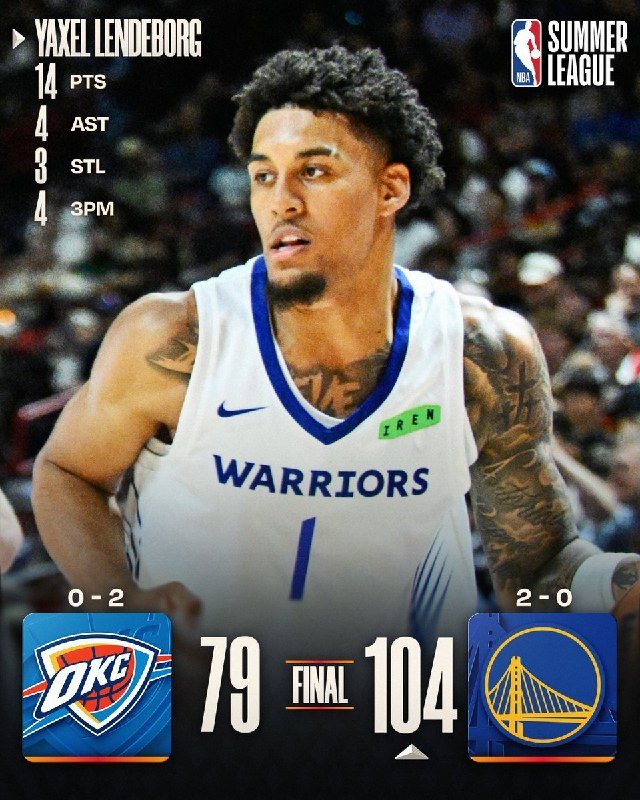
Caleb Wilson's first NBA Summer League game ended with a stat line worth framing and a loss worth forgetting. The Chicago Bulls' No. 4 overall pick went off for 35 points on 7-of-11 shooting from deep, adding 5 rebounds, 2 steals and 3 blocks in Las Vegas on Thursday night, 10 July 2026. The Memphis Grizzlies still walked off with their first Summer League win of the cycle, 110-104.
The duel was the headline. The No. 3 pick, Cameron Boozer, answered with 23 points, 6 rebounds and 4 assists, and the Grizzlies held on late after Wilson's perimeter barrage cut a double-digit lead to single digits. It was, in miniature, the scouting report every front office had filed since the draft: two players with very different shapes, asked to answer the same question.
The shot chart that follows a player
Wilson did not ease in. His 7-of-11 from three-point range is the kind of line that turns a Summer League debut into a clip package, and the highlight reels started circulating within an hour of tip-off. Five rebounds is light for a forward, but the steal-and-block total suggests a defender whose instincts already translate. The Bulls are betting on the latter, and they were not shy about showing it: 35 points in your first Vegas game is a statement, even when the box score's other column reads L.
For Chicago, the calculus is simple. Wilson was the fourth pick in a draft where the top of the board thinned out fast, and the team's rebuild timeline now bends around his development arc. A 7-of-11 night from deep tells the front office something the scouting combine could not: the perimeter package is real, not a workout-day artefact. The counterweight is the defensive metrics, where three blocks against Summer League competition is encouraging but not yet dispositive.
Boozer's quieter case
The Grizzlies' No. 3 pick did not need to match Wilson's volume to control the game. Boozer's 23 points came on a usage profile that looks more like a hub than a scorer: 6 rebounds and 4 assists against a defence designed to limit exactly that kind of playmaking. Memphis has been drafting for fit alongside its young core, and Boozer's line reads as a connective performance, the sort of night that does not trend on social media but shows up on tape the next morning.
There is a reading here that does not flatter either prospect. Wilson's perimeter barrage is the kind of output that regresses against longer, more athletic wings; Boozer's playmaking is the kind that grows as the surrounding cast stabilises. Summer League is a single-game sample from a league where defenders rotate a half-step late and offences run sets they will never see again in October. Both players will be judged by what their second and third summers look like.
What the draft order is actually telling us
The interesting question is not who won Thursday's game. It is what the gap between picks three and four is starting to look like in real minutes. The Grizzlies have spent two cycles now drafting for a specific offensive identity: big creators who can pass, defend multiple positions, and hold up in transition. Boozer fits that brief more cleanly than Wilson does, which is not a knock on Wilson so much as a description of what Memphis thinks it is building.
Chicago's brief is different. The Bulls have been cycling through young talent without a clear offensive philosophy since their last competitive season, and Wilson's debut looks like the first data point in a longer audition. If the threes keep falling, the rest of the rotation questions solve themselves. If they do not, the front office has a different conversation on its hands by the All-Star break.
What to watch next
The two teams meet again in Las Vegas on the Summer League's closing weekend, and the rematch will draw the same camera placement it did on Thursday. Wilson will get another chance to prove the shooting is portable. Boozer will get another chance to prove the playmaking scales against a defence that has now seen the report. The league office will not adjust the schedule around the matchup, but the broadcast partners have already noticed that this particular pairing moves the needle.
The only honest read on a one-game Summer League sample is that it is one game. Wilson's box score is the loudest kind of evidence, and loud evidence is the easiest kind to overread. Boozer's quieter line is the kind that ages well. Both will be tested by October, when the lineups tighten and the defenders arrive with scouting reports of their own.
How Monexus framed this: a debut is a debut, not a referendum. Wilson's perimeter volume will dominate the highlight cycle; the more durable read is the gap in role between the two lottery picks, and whether Chicago's plan absorbs a shooter-first profile the way Memphis's plan absorbs a connector.
Wire provenance
This editorial synthesis draws on the following public wire/social posts:
- https://t.me/s/NBALive
- https://t.me/s/NBALive
- https://t.me/s/NBALive
- https://en.wikipedia.org/wiki/2026_NBA_Summer_League