Asia braces for a second shock as the Iran-US ceasefire teeters
Asia is preparing for a second economic shock from the possible collapse of the Iran-US ceasefire, with oil and food prices already moving. Japan is the early visible edge of a regional repricing that no capital in the region has a plan B for.
Asia's planners are running the numbers on a second economic shock, and this one has nothing to do with the pandemic and everything to do with a ceasefire that may not survive the summer. On 11 July 2026, Asia Times reporting circulated across Persian-language and regional wires warning that the continent is preparing for a renewed surge in oil and food prices should the ceasefire between Iran and the United States collapse, with food inflation in Japan cited as the first visible edge of the regional repricing.
The framing matters. The first shock of the Iran-US confrontation was the supply-side hit to crude and to the sealanes that move it. The second shock, as Asia Times lays it out, is the demand-side and balance-of-payments squeeze that follows when the first one lingers: imported energy bills that refuse to deflate, food import costs that compound, and currencies that get dragged through a second round of depreciation against a dollar that has already strengthened once on this story. Asia did not start the fight, but it is positioned to absorb most of the second-round damage.
How the first shock became the second
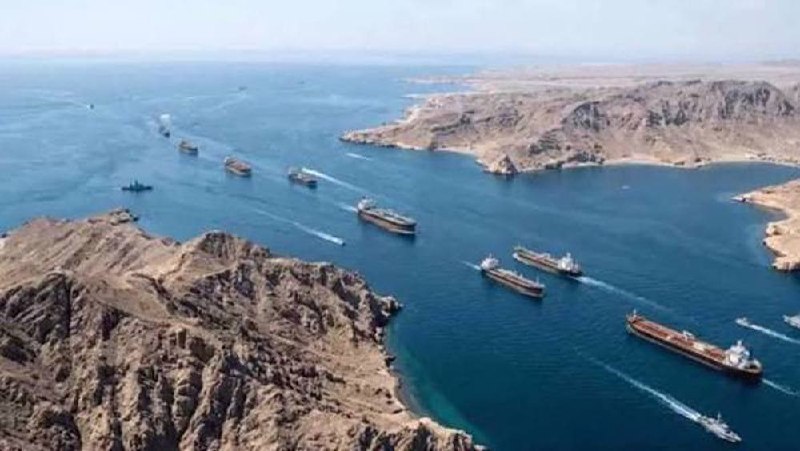
The first shock was mechanical. A confrontation between Iran and the United States lifted the risk premium on Gulf-origin crude, rerouted shipping away from the Strait of Hormuz, and pulled freight rates through the Bab el-Mandeb upward as carriers extended routings. Asian buyers, who absorb the bulk of Middle Eastern crude exports, took the price hit directly because the marginal barrel is set in Asia and the freight adjustment lands first in Asian refineries.
What Asia Times is now flagging is that the shock did not reverse when tensions eased. Refiners in Tokyo, Seoul, Singapore and New Delhi absorbed higher input costs, passed some of them into retail fuel, and are now sitting on a price plateau higher than the pre-crisis baseline. A second round, triggered by a ceasefire collapse, would not be a replay of the first. It would land on top of a baseline that has already moved, and on currencies that have already weakened once. That compounding is the structural reason the second shock hurts more than the first.
Japan as the early indicator
The Tasnim Plus wire, following Asia Times, singled out Japan. Food prices in Japan have moved upward against a backdrop of yen weakness and elevated import bills, and Japanese consumers are exposed at both ends: a weaker currency inflates the dollar-denominated cost of imported wheat, corn, soy and energy, while domestic retailers pass the increment through with limited absorption capacity. Japan does not produce enough calories domestically to feed itself; it imports them. That is the structural exposure the second shock is testing.
The regional read-through is not subtle. South Korea imports the majority of its energy. The Philippines and Indonesia import the bulk of their wheat. India imports the bulk of its edible oil and a meaningful share of its pulses. China is the regional outlier on energy self-sufficiency by design, but it is the single largest importer of soybeans and a major buyer of corn, and the food-price channel still lands on Chinese consumers through pork, edible oil and feed costs even when the oil channel does not. A second shock does not need to touch every economy the same way to be regional. It needs to touch a critical mass of import-dependent economies in the same window, and this window is that window.
The Iran-US ceasefire that may not hold
The ceasefire under discussion is the arrangement that paused direct US-Iranian escalation after the most recent round of strikes and counter-strikes earlier in the year. The structural pressure on it has not eased. Iran's nuclear file remains unresolved, the sanctions architecture is intact, and the maritime incidents in the Gulf have continued at a tempo that suggests the parties are managing the ceasefire rather than trusting it. Both sides have an incentive to keep the arrangement in place; neither side has an incentive to be seen as the first to break it. That is not the same thing as durability.
The Asian exposure in this is not symmetrical with the negotiating exposure in Washington or Tehran. The United States is a net energy exporter at the margin and can absorb a Gulf supply shock through domestic production and strategic reserves. Iran can throttle supply, which is its leverage, but it cannot insulate itself from the cost of a regional conflagration on its own territory. The countries that sit between those two positions, the importers who take the price without setting it, are the ones whose planning assumptions are now being rewritten.
What the second shock actually transmits
There are three transmission channels, and they compound. The first is the oil channel: a ceasefire failure lifts the risk premium, reroutes shipping, and feeds through to retail fuel within weeks in price-controlled markets and within days in deregulated ones. The second is the food channel, which is the one Asia Times is foregrounding. Energy is a feedstock for fertilizer, transport, processing and irrigation. A sustained oil shock at the level of a ceasefire collapse flows into agricultural input costs on a lag of one to two quarters, and into retail food prices on a lag of two to four. Japan is the early read because its currency pass-through is fast and its domestic caloric exposure is total.
The third channel is the currency channel, and it is the one Asian finance ministries will watch most carefully. A second oil shock drives a renewed bid for dollars, which pressures Asian currencies against the greenback, which inflates the local-currency cost of the same imports that were already expensive. The mechanism is the same one that ran in 2022, and the regional memory of that episode is what is driving the planning now. The Asian Infrastructure Investment Bank and the Chiang Mai Initiative exist in part because the region does not want to be the marginal price-taker in a dollar-funded commodity shock a second time. Whether those instruments are large enough to do the job this cycle is a separate question.
What the regional planners can and cannot do
Asian capitals have more tools than they did during the first round, and fewer than they would like. Strategic petroleum reserves in Japan, South Korea and India can buffer weeks of disruption, not months. Currency intervention can smooth volatility but cannot reverse the direction of a sustained dollar bid. Subsidies can absorb political pressure on fuel and food but at a fiscal cost that compounds with the very shock the subsidies are designed to offset. Diversification of supply, the long-term answer, is a ten-year project and not a same-quarter tool.
The honest planning posture is a hedge. Refiners in Singapore and Utsunomiya are running scenarios for crude that is 10 to 20 percent above current prints, which is the band Asia Times and the regional wires are flagging. Food importers in Manila, Jakarta, Seoul and Tokyo are pre-booking where they can, which is itself a signal that the buyers closest to the freight are not waiting for a verdict on the ceasefire. Currency desks across the region are lengthening their dollar hedges. None of these moves require the ceasefire to fail. They require it to be uncertain, which is the current state.
What remains contested
The reporting is uniform on direction and less uniform on magnitude. Asia Times and the wires that carried the piece frame the second shock as a real risk to be planned against, not a forecast. No source quantifies the price move, the duration of disruption, or the probability of ceasefire failure within a specific window. The Japanese food-price move cited by Tasnim Plus is presented as an early indicator, not as a measured estimate of the eventual shock. The reporting does not specify whether the second-round move Asia is bracing for is intended to overlap with the southern-hemisphere harvest cycle or to land against the northern-hemisphere winter demand peak, and that timing question matters more than the headline probability.
There is also a counter-narrative worth naming. A subset of regional analysts argues that the oil market has already priced a meaningful share of the geopolitical premium, that OPEC+ spare capacity provides a counter-weight, and that the food-price transmission is being overstated because current inventories are adequate. That view is a minority in the Asian financial press but it is not fringe, and the planning posture in Tokyo, Seoul and Singapore is built to be robust if either view turns out to be right. The buyers in the room are not betting on the ceasefire holding or failing. They are pricing the uncertainty, which is the more honest read of what the next quarter looks like.
Wire provenance
This editorial synthesis draws on the following public wire/social posts:
- https://t.me/JahanTasnim
- https://t.me/tasnimnews_en
- https://t.me/tasnimplus
- https://en.wikipedia.org/wiki/Strait_of_Hormuz
- https://en.wikipedia.org/wiki/Asian_Infrastructure_Investment_Bank
- https://en.wikipedia.org/wiki/Chiang_Mai_Initiative
- https://en.wikipedia.org/wiki/Bab_el-Mandeb
- https://en.wikipedia.org/wiki/Strategic_Petroleum_Reserve_(Japan)
- https://t.me/JahanTasnim
- https://t.me/tasnimnews_en
- https://t.me/tasnimplus
- https://en.wikipedia.org/wiki/Strait_of_Hormuz
- https://en.wikipedia.org/wiki/Asian_Infrastructure_Investment_Bank
- https://en.wikipedia.org/wiki/Chiang_Mai_Initiative
- https://en.wikipedia.org/wiki/Bab_el-Mandeb
- https://en.wikipedia.org/wiki/Strategic_Petroleum_Reserve_(Japan