Israel's demolition campaign in Khiam, and the question Beirut won't answer
A pre-dawn demolition operation in Khiam marks an escalation in southern Lebanon. The harder question is what Beirut, and the ceasefire architecture, intend to do about it.
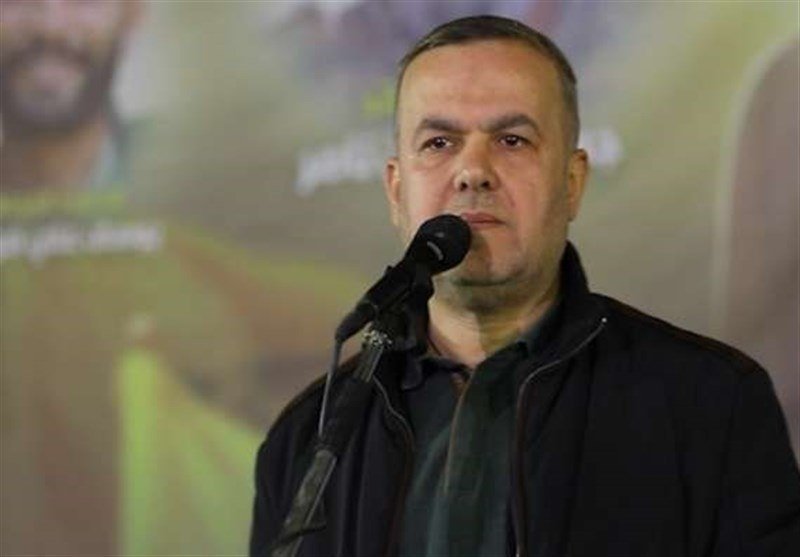
In the hours after midnight on 10 July 2026, Israeli forces moved into the southern Lebanese town of Khiam and carried out what The Cradle Media described as a "large-scale demolition operation," leveling residential infrastructure in a campaign that residents and correspondents on the ground framed as a fresh wave of aggression. The reporting, distributed via Telegram at 08:48 UTC, joins a string of overnight operations across the south that have steadily redrawn the map of what the November ceasefire was supposed to leave standing.
The episode is not an outlier. It is the working logic of an arrangement in which a UN-brokered cessation of hostilities has not produced a corresponding halt in kinetic activity, and in which the most consequential decisions about southern Lebanon are being made by bulldozers rather than by the Lebanese cabinet. The pattern deserves scrutiny on its own terms — and so does the silence around it.
What Khiam tells us
Khiam sits barely two kilometres from the Israeli border, on the route between Metula and Marjeyoun. It was a Hezbollah-adjacent village in the strict geographic sense long before 7 October 2023, and was among the first to be emptied during the autumn ground offensive. What is different about the overnight operation is its method. The Cradle's reporting characterises it as a demolition rather than a strike: the levelling of structures, often with internal roads and access points cut in advance, that turns a depopulated town into something harder to return to.
The Israeli framing, in past operations of this kind, has been that such demolitions target militant infrastructure — tunnel shafts, weapons caches, launch positions, observation posts — that cannot be left in place without inviting reactivation. That is a coherent military logic, and it is one that Israeli security planners are entitled to weigh. It is also a logic that produces, cumulatively, a buffer zone whose boundaries are no longer those of any ceasefire map.
The counter-narrative, and why it has weight
The Lebanese state, and the residents who have been filing back to inspect damage in daylight, frame the campaign as collective punishment imposed on a village whose population is not present to consent and not invited to object. Coverage from outlets such as The Cradle and Middle East Eye routinely emphasises the civilian infrastructure dimension — homes, water systems, agricultural terraces — and the slow strangulation of any prospect of return. That framing is not without merit, even where the underlying security concerns are real.
The honest version of the story holds both at once: that the Israeli military has legitimate defensive reasons to dismantle installations from which rockets and anti-tank fire have in the past been launched at its northern towns, and that the operational template now being applied in Khiam produces outcomes indistinguishable from forced displacement. A policy that empties a border strip of its inhabitants, then removes the houses, then declares the ground unusable, is not a counter-terrorism operation. It is a re-engineering of the border itself.
The structural frame
What is unfolding in the south is best read not as a series of tactical decisions but as the slow collapse of the ceasefire's political premise. The November arrangement rested on three legs: a halt in fire from the north, a withdrawal of heavy platforms from the south, and a US-backed mechanism to push Israeli forces back to the international border. Two of those legs have, by any honest accounting, given way. Disengagement timelines have slipped repeatedly, and the buffer zone has widened rather than narrowed.
A sovereign state confronted with this would, in theory, have options. It could complain to the Security Council. It could rally the ceasefire committee. It could threaten to suspend the agreement entirely, accepting the risk of re-escalation as the price of restoring its own authority. The Lebanese government has done some of this in the past and done none of it visibly in recent weeks. That silence is itself a fact, and a damning one for any reading of the arrangement that depends on Beirut as a willing co-equal partner.
Stakes
If the trajectory continues through the summer, the working assumption that the war in the north is winding down will need to be retired. The displaced Shia population of the border strip — by UN counts well into six figures since October 2023 — will face a choice between slow-return to rubble or permanent exile, with predictable downstream effects on reconstruction, on political stability in Beirut, and on Iran's calculus about the value of restraint. The ceasefire, in other words, is not a static object to be preserved or violated; it is a sliding equilibrium, and the bulldozers now operating in Khiam are the instrument by which it is being adjusted.
What remains contested, and what the available reporting does not yet settle, is the operational authorisation for the overnight wave — whether it reflects a localised commander-level decision or a policy instruction from Tel Aviv — and the scale of the demolition footprint relative to the legitimate military target set. The sources do not specify the number of structures destroyed, the casualty count, or the size of the displaced-population increment attributable to the 10 July operation alone. Those numbers, when they emerge, will not change the framing. They will sharpen it.
Desk note: Monexus read this story from a single The Cradle Media Telegram wire at 08:48 UTC on 10 July 2026. The Cradle is a Beirut-based outlet with an explicit editorial alignment to the Axis of Resistance. We have treated its on-the-ground reporting as a useful primary signal for what happened overnight in Khiam while flagging its framing throughout, and we have weighted the resulting analysis against the absence of corroboration from Israeli, UNIFIL, or wire-service sources in the same time window. The Israeli military has, in past operations, disputed the characterisation of demolitions; that dispute is a standing one and a future edition will revisit it once IDF or UNIFIL statements are on the record.
Wire provenance
This editorial synthesis draws on the following public wire/social posts:
- https://t.me/TheCradleMedia