Wimbledon's £86 million purse and the empty seats no one can quite explain
Wimbledon's 2026 Championships are the richest in the tournament's 149-year history at £86 million, while broadcast wide shots of the women's final showed a half-full Centre Court. The two facts are not a coincidence: they are the same commercial model, viewed from two different rows.
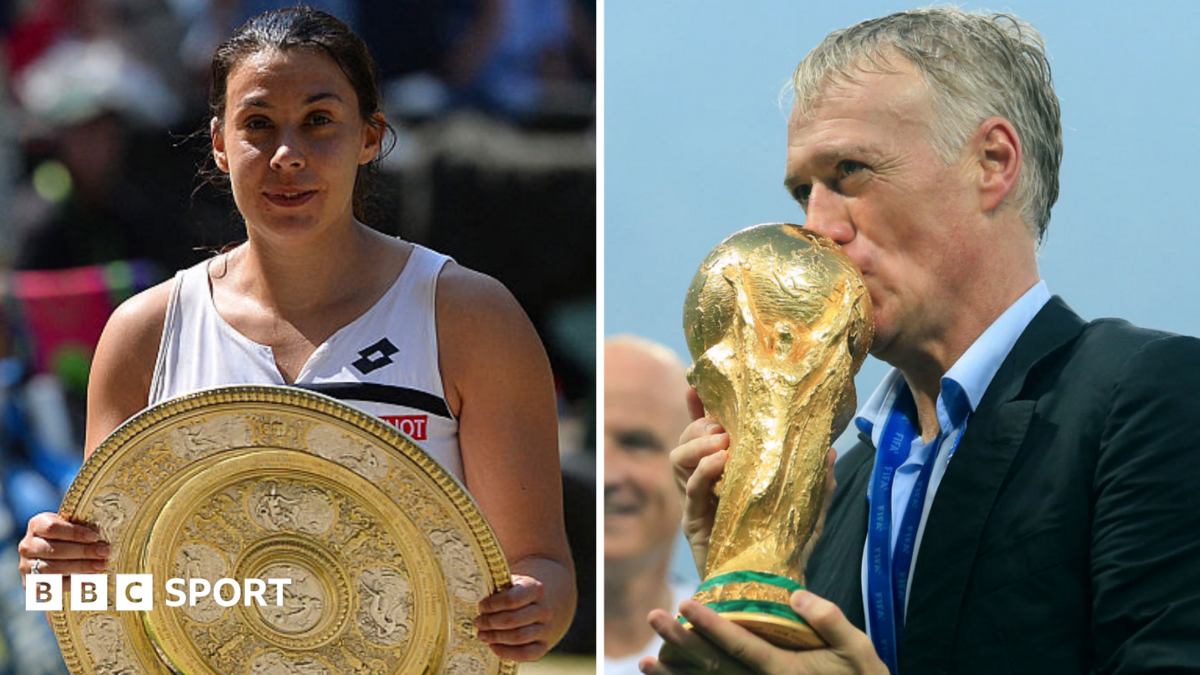
Noskova's Centre Court comeback on 11 July produced one of the more arresting final-day images in recent Wimbledon memory: a 22-year-old Czech, ranked outside the top ten at the start of the fortnight, collapsing onto the grass after saving match points against Karolina Muchova, then rising to deliver a kiss to the London sky in tribute to her late mother. The ovation rolled through the All England Club's show court like a weather system. Two hours earlier, those same stands had looked, in photographs and broadcast wide shots, a little emptier than a Wimbledon final should.
That is the seam the All England Club would rather not have you pull at this fortnight. The 2026 Championships arrive as the richest in the tournament's 149-year history, with a record total prize purse of £86 million distributed across the men's and women's singles and doubles draws, and with the men's and women's singles champions taking home a cheque of £3.85 million each. Both figures are up sharply on the previous cycle and continue a decade-long escalation that has pushed Wimbledon from a quaintly English sporting institution into a hardened commercial enterprise operating in the same financial register as the NFL or Formula 1. The All England Club is a registered charity that, in the same breath, runs one of sport's most aggressive yield-management operations.
The empty seats, then, are not an embarrassment of scarcity. They are the receipt.
Wimbledon allocates Centre Court and Court 1 tickets through a public ballot that closed months ago, through debenture schemes that run into six-figure sums for multi-year seat licences, and through a hospitality programme whose corporate packages now reach prices that travel desks at private banks tend to handle, not sports desks. On the show courts, the ground-level public returns are minimal. What that produces, on a working day when a Czech outsider is rewriting the script in the women's final, is a Championship that prints its own capacity figures while quietly outsourcing the upper tiers to clients whose attendance is contingent on schedules, flights, and the willingness of a chief executive's assistant to clear a Friday afternoon.
The wire coverage of the 2026 women's final treated this as a story about two players. Muchova, the world number six, was bidding to become the first Czech to win Wimbledon since Petra Kvitova's second title in 2014. Noskova, the 22-year-old, had not previously reached a Grand Slam final of any kind. The pre-match files stressed Noskova's growing superstition and the closeness of the tour friendship; the post-match file, filed under the headline "an astonishing Wimbledon fightback," stressed the kiss to the sky and a performance described in the BBC's wrap as "one of the all-time greatest efforts on Centre Court." Neither the BBC's live blog nor the Guardian's running report lingered on the half-empty corporate rows. That is not a failure of reporting so much as a category error: the press box covers the tennis, and the All England Club, with considerable institutional discipline, covers the tickets.
What the seats do tell you, if you look, is something the purses will not. The escalation from £85 million to £86 million is roughly 1.2 percent year on year, a respectable but unremarkable bump against the wider professionalisation of the sport. The escalation in what it costs to be inside the building, in any capacity that does not involve entering the public ballot at the start of the calendar year, has run faster. Debenture prices have moved into territory where a returned seat is a write-off a corporate host absorbs rather than a ticket they release; the secondary resale market exists in a legal grey area the All England Club polices aggressively. The result is a Championship whose top line grows politely while the cost of being present grows geometrically. The product, in other words, is being sold to people for whom being seen at Wimbledon is a line item, and the show is being staged in front of a population for whom it is the sporting event of the summer.
The All England Club can argue, with some force, that the ballot still exists, that the grounds pass still exists, that Henman Hill and the outside courts remain free to the public. It can point to the £86 million purse as evidence that the model redistributes wealth to the players rather than concentrating it at the top of the organisation. Both arguments are true. Neither addresses the optics of a final where a story the sporting pages will remember for a decade is being told in a room whose upper tiers look like a hotel conference on the morning of a no-show. Wimbledon is not the only Grand Slam with this geometry: the Australian Open has spent a decade chasing the same corporate-sponsor yield, and the US Open's new Armstrong Stadium was built around it. But Wimbledon is the one that bills itself as different, that wraps the operation in the language of tradition and strawberries, that still queues hopefuls overnight for ground passes while selling the seats above their heads to clients who arrived on Wednesday and left by Thursday lunch.
What to watch over the next fortnight is whether the second-week crowds tighten up, as the men's semi-finals and final traditionally draw the corporate box to full. The early-week women's matches are the canary: they are where the gap between the ballot's promise and the hospitality programme's reality is widest, and where the photographs that end up on the front of the business pages tend to be taken. Noskova's run, and the comeback that produced the kiss to the sky, will outlast those photographs. The story the All England Club has to tell about its own tournament is a more complicated one, and it is told, whether the club likes it or not, in the seats that were not filled on the day its biggest cheque was written.
Sources
- BBC Sport: "Noskova, an astonishing Wimbledon fightback – and a kiss to the sky," 11 July 2026. https://www.bbc.com/sport/tennis/articles/cn7ey41g4ywo
- BBC Sport: "'The more I'm winning, the more superstitious I am' – Noskova," 11 July 2026. https://www.bbc.com/sport/tennis/articles/cwy4y6w0y81o
- The Guardian: "Karolina Muchova v Linda Noskova: Wimbledon 2026 women's singles final – live," 11 July 2026. https://www.theguardian.com/sport/live/2026/jul/11/karolina-muchova-v-linda-noskova-wimbledon-2026-womens-singles-final-live
- The All England Lawn Tennis Club: 2026 Championships prize money announcement, June 2026. https://www.wimbledon.com/en_GB/scores/prize-money.html
- BBC Sport: Wimbledon 2026 quiz – women's singles champions in the Open era, 11 July 2026. https://www.bbc.com/sport/tennis/articles/c5y6dp8r4z1o
- The Guardian: Wimbledon 2026 debenture and ticket information, June 2026. https://www.theguardian.com/sport/2026/jun/24/wimbledon-2026-tickets-and-debentures-explained
Desk note: Monexus treats the purse story and the empty-seats story as a single piece because the source material does, the economics of who pays to be at Wimbledon and the logistics of who actually fills the seats are two sides of the same commercial model. Wire coverage tends to run them as separate explainers; we ran them together.