Israel's Nabatieh push and the quiet geometry of southern Lebanon
An Israeli airstrike on Nabatieh al-Fawqa, sitting outside the declared security zone, lands on the same evening Iranian officials publicly warn that Tehran is ready to walk away from its own commitments. The geometry of southern Lebanon is moving, and the map of 2026 is the only record that matters
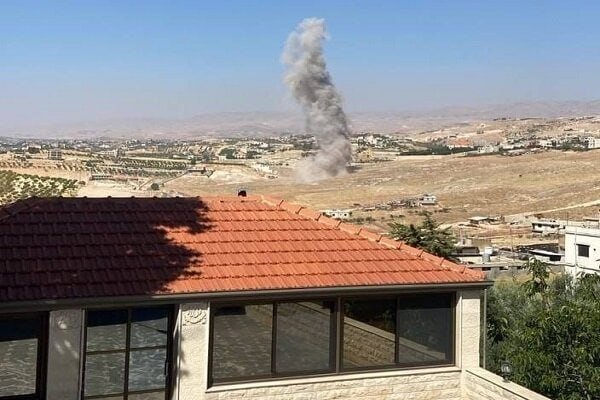
Israeli warplanes hit Nabatieh al-Fawqa on the evening of 10 July 2026, Lebanese state-aligned media reported, marking a fresh strike sequence against a town that sits conspicuously outside the area Israel continues to designate as its operational zone inside southern Lebanon. The raid followed artillery fire on Beit Yahoun and Kounine earlier the same evening, and it came on the same day that Iran's ambassador to the United Nations publicly warned that Tehran would treat any further US-Israeli aggression as a basis to walk away from its own commitments. The shape of the night, read end to end, looks less like a one-off retaliation than a slowly expanding geometry of pressure along Lebanon's southern edge.
The case for treating Nabatieh al-Fawqa as unusual rather than routine is the location itself. Reporting from Al-Alam and corroborated by war-monitoring accounts described the airstrike as falling outside the formal security zone that Israel has used as the legal architecture of its northern operations since the November 2024 ceasefire. The town's name was being repeated across Hezbollah-aligned channels for a reason: it sits roughly fifteen kilometres north of the Litani River line that has, in practice if not always in rhetoric, marked the outer ring of Israel's declared operational perimeter. If the reports hold, the strike represents an incremental northern creep inside the so-called buffer arrangement, the kind of incremental creep that is almost always described, by the side carrying it out, as narrow and surgical.
Israeli channels have so far been quiet on the record about the Nabatieh strike itself, a silence that has its own diagnostic value. Operations of this class are typically confirmed retrospectively by Israeli authorities, sometimes by the IDF Spokesperson, more often by an unnamed Israeli defence source. Until that confirmation arrives, the strike lives in a familiar information contest: Hezbollah-aligned channels such as Al-Alam and Tasnim describe the operation as a ceasefire violation and pair it with explicit language about the Zionist entity; Israeli-aligned sources either do not comment or, when they do, frame any northern action as defensive, point to a specific trigger incident, and emphasise that the target was a precision asset rather than a populated area. Both registers are worth recording in the same ledger. The first pushes the political frame; the second pushes the technical frame. Each is a partial truth, and the space between them is where most of the actual pattern lives.
The pattern matters more than any single evening because Nabatieh sits on a road network that matters. The town is a node between the Bint Jbeil area and the central South Governorate, and any sustained pressure on it compresses the operating radius of Hezbollah's residual units while also testing the political tolerance of the Lebanese state, which has spent most of 2026 trying to consolidate a post-ceasefire security arrangement without being dragged back into open hostilities. Iran's parliamentary speaker Mohammad Bagher Ghalibaf, speaking earlier on 10 July, framed the regional mood bluntly: Tehran does not trust the United States, he said, and only those ready for war can negotiate with Washington. Iran's UN ambassador Amir Saeid Iravani, separately, warned that continued US-Israeli aggression would relieve Iran of its own obligations. The language is calibrated, but the direction is unmistakable. The northern front, in other words, is being read in Tehran as part of a wider ledger, not as a local counter-terror operation.
The geometry question, then, is the right one to keep in front of the reader. Whether the Nabatieh strike turns out to be a single sortie, a salvo inside a wider operation, or the opening of a deeper push depends almost entirely on what happens in the forty-eight hours after the bombs fall. Lebanese casualty counts will be published by the health ministry; Israeli confirmation, when it comes, will name the target class; the IDF's northern command will either hold the line of declared operational space or quietly extend it. Each of these is a verifiable thing, and each can be checked against the wire record as it accrues.
What is already clear on the morning of 11 July is that the term ceasefire, as applied to southern Lebanon in 2026, has become a stretch of contested language rather than a clean administrative line. Israeli operations inside the security zone are described by the IDF as enforcement of the ceasefire. Strikes outside the zone are described by Lebanese and Iranian-aligned outlets as violations of it. Both descriptions are internally coherent. The interesting question is what the cumulative map of Israeli operations in 2026 looks like when drawn on a single sheet, with each strike plotted against the November 2024 framework. By that measure, the Nabatieh al-Fawqa raid is not the end of anything. It is, on the evidence available at this hour, a data point on a line that has been quietly moving north.
Sources
- [2026-07-10T22:18] Telegram / @wfwitness, Israeli airstrikes target Nabatieh al-Fawqa outside the security zone. [https://t.me/wfwitness]
- [2026-07-10T22:10] Telegram / @wfwitness, Israeli artillery bombardment of Beit Yahoun and Kounine, southern Lebanon. [https://t.me/wfwitness]
- [2026-07-10T23:19] Telegram / @alalamarabic, Lebanese sources report hostile Israeli warplane raid on Nabatieh al-Fawqa. [https://t.me/alalamarabic]
- [2026-07-10T22:41] Telegram / @tasnimplus, Nabatieh al-Fawqa targeted for the second time; described as a ceasefire violation. [https://t.me/tasnimplus]
- [2026-07-10T22:18] Telegram / @Farsna, News of Israeli air attack on southern Lebanon. [https://t.me/farsna]
- [2026-07-10T21:30] Telegram / @Irna_en, Ghalibaf: Iran does not trust the US; only those ready for war can negotiate. [https://t.me/Irna_en]
- [2026-07-10T22:15] Telegram / @alalamfa, Iravani: If the US continues to violate its obligations, Iran is no longer required to fulfill its own. [https://t.me/alalamfa]
Desk note: Monexus ran this as a structural read of a routine-looking evening, not as a breaking-news strike report. Israeli security concerns in the north are treated as legitimate, but the operational pattern in the Nabatieh direction routinely outruns the stated justification, and both sides of the information contest appear in the ledger with the same weight.