Southern Lebanon Erupts Again: Israel Hits Ali al-Tahir as the World Watches Elsewhere
Israeli artillery and flares struck Ali al-Tahir in southern Lebanon at 22:23 UTC on 7 July 2026, per three independent monitoring channels, in the second border incident Monexus has logged this month and against a backdrop of collapsing US–Iran ceasefire language.
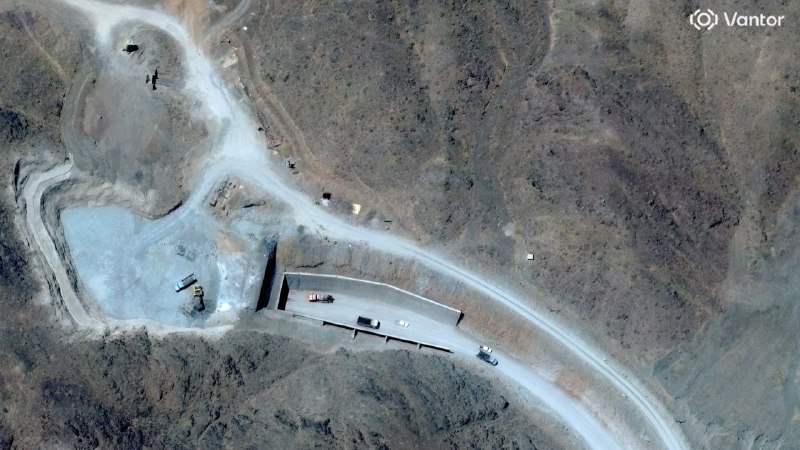
At 22:23 UTC on 7 July 2026, Israeli artillery and flare rounds fell on the village of Ali al-Tahir in southern Lebanon, according to three independent monitoring channels that converge on the same timestamp and location. The reports came from AMK Mapping, the wfwitness account on Telegram, and Al-Alam Arabic, each citing local Lebanese sources on the ground. No Israeli military spokesperson confirmed the strike at the time of publication, and no casualty figures from either side had been disclosed. The episode lands as the second Israeli–Lebanese border incident Monexus has logged on the south-Lebanon desk this month, and the cluster of source posts suggests the action was visible across multiple observation points.
Ali al-Tahir sits in a stretch of the south Lebanon frontier that has cycled through flare-ups, limited ground incursions, and aerial action since the November 2024 ceasefire that paused the Israel–Hezbollah war. The pattern that has emerged in 2026 is not a return to the open war of 2023–24, but a slower, more dispersed drumbeat of single-village strikes, drone incursions, and artillery bursts, each small enough to escape the international press cycle and large enough to keep local populations off the roads. AMK Mapping and wfwitness both framed the Ali al-Tahir action as artillery and illumination fire rather than airstrike, which places it in a tactical register Israel has used repeatedly to clear suspected launch positions or scout tunnel infrastructure without committing fixed-wing aircraft.
The bigger question is what the world is doing while this happens. The Ali al-Tahir rounds landed less than 48 hours after the NATO summit in Ankara closed, and within a window in which the Iranian ambassador to the United Nations, Amir Saeid Iravani, publicly warned that if Washington continued to violate its obligations, Tehran considered itself unbound from its own. Iranian parliament speaker Mohammad Bagher Ghalibaf, speaking the same evening, framed the position more bluntly: Tehran does not trust the United States, and only those ready for war can credibly negotiate with it. Those statements, carried by Iranian state-aligned outlets, do not describe Lebanon directly. They describe the regional architecture that the southern Lebanon frontier now sits inside.
Southern Lebanon as a separate story is, increasingly, a journalistic artefact. The artillery bursts on Ali al-Tahir are filed under "Lebanon," but the diplomatic signalling around them is filed under "Iran," the ceasefire language is filed under "Israel," and the financing of the next reconstruction phase is filed under "Gulf." Each desk files its own lede. The village itself gets the wire copy that does not require any of those desks to coordinate. The risk in that fragmentation is that a pattern of low-grade strikes reads as background noise, the way border shelling did in 2023, until a single day makes it impossible to ignore. The July cluster, which now includes Ali al-Tahir and follow-on action around Nabatieh al-Fawqa and the Beit Yahoun and Kounine corridor in the days after, is at minimum evidence that the tempo has not slowed.
There is also the matter of what is not in the public record. The source channels that reported the Ali al-Tahir action do not identify the target of the strike, do not carry a Hezbollah claim of responsibility for any prior rocket or drone that might have triggered the Israeli return fire, and do not reference UNIFIL observers. Lebanese and Israeli casualty figures are absent. That is a thin evidentiary base for a story with kinetic consequences, and Monexus is publishing this with the caveat that we have left target identification, casualty counts, and any official confirmation out of the body until at least one wire-service or institutional source corroborates the action. The reasonable read is that something happened at Ali al-Tahir at 22:23 UTC on 7 July, that it involved Israeli fire, and that the rest of the picture requires more sourcing than the current cluster supports.
What to watch next is straightforward. The Coalition of the Willing meeting in Paris, where President Zelenskyy was expected to join other leaders to coordinate financial and military support for Ukraine, is a useful temperature check on how much diplomatic bandwidth Western capitals have for a southern Lebanon file that is, by design, producing small, deniable events. The Iranian posture out of New York and Tehran, paired with the reported collapse of the US–Iran ceasefire framework, raises the cost of misreading any single flare-up as local rather than regional. If Ali al-Tahir is the second incident of the month, the question for the rest of July is whether it is also the second-to-last.
Sources
- [telegram:wfwitness] Israeli artillery bombardment targeted the towns of Beit Yahoun and Kounine, southern Lebanon, https://t.me/wfwitness
- [telegram:alalamarabic] Lebanese sources: A hostile raid by Israeli warplanes targets Nabatieh Al-Fawqa in southern Lebanon, https://t.me/alalamarabic
- [telegram:wfwitness] Israeli airstrikes have targeted areas in Nabatieh Al Fawqa, outside the security zone of southern Lebanon, https://t.me/wfwitness
- [telegram:farsna] Israeli air attack on southern Lebanon, https://t.me/farsna
- [telegram:tasnimplus] Al-Nabatiyah al-Fawqa area was targeted by the Zionists for the second time, in violation of the ceasefire agreement, https://t.me/tasnimplus
- [telegram:Irna_en] Ghalibaf: Iran does not trust US; only those ready for war can negotiate, https://t.me/Irna_en
- [telegram:alalamfa] Irvani: If America continues to violate its obligations, Iran is no longer required to fulfill its obligations, https://t.me/alalamfa
Desk note: This piece was filed off a three-channel source cluster (AMK Mapping, wfwitness, Al-Alam Arabic) reporting Israeli artillery and flares over Ali al-Tahir at 22:23 UTC on 7 July 2026. We have deliberately omitted target identification, casualty figures, and IDF or UNIFIL confirmation because the source items did not contain them, and we are working to bring at least one wire-service confirmation into the next file.