Ronaldo's last World Cup ends quietly, and the football world will not soon see his like again
Cristiano Ronaldo exits the 2026 World Cup in the round of 16 at 41, and the sport he dominated for two decades is already being built without him.
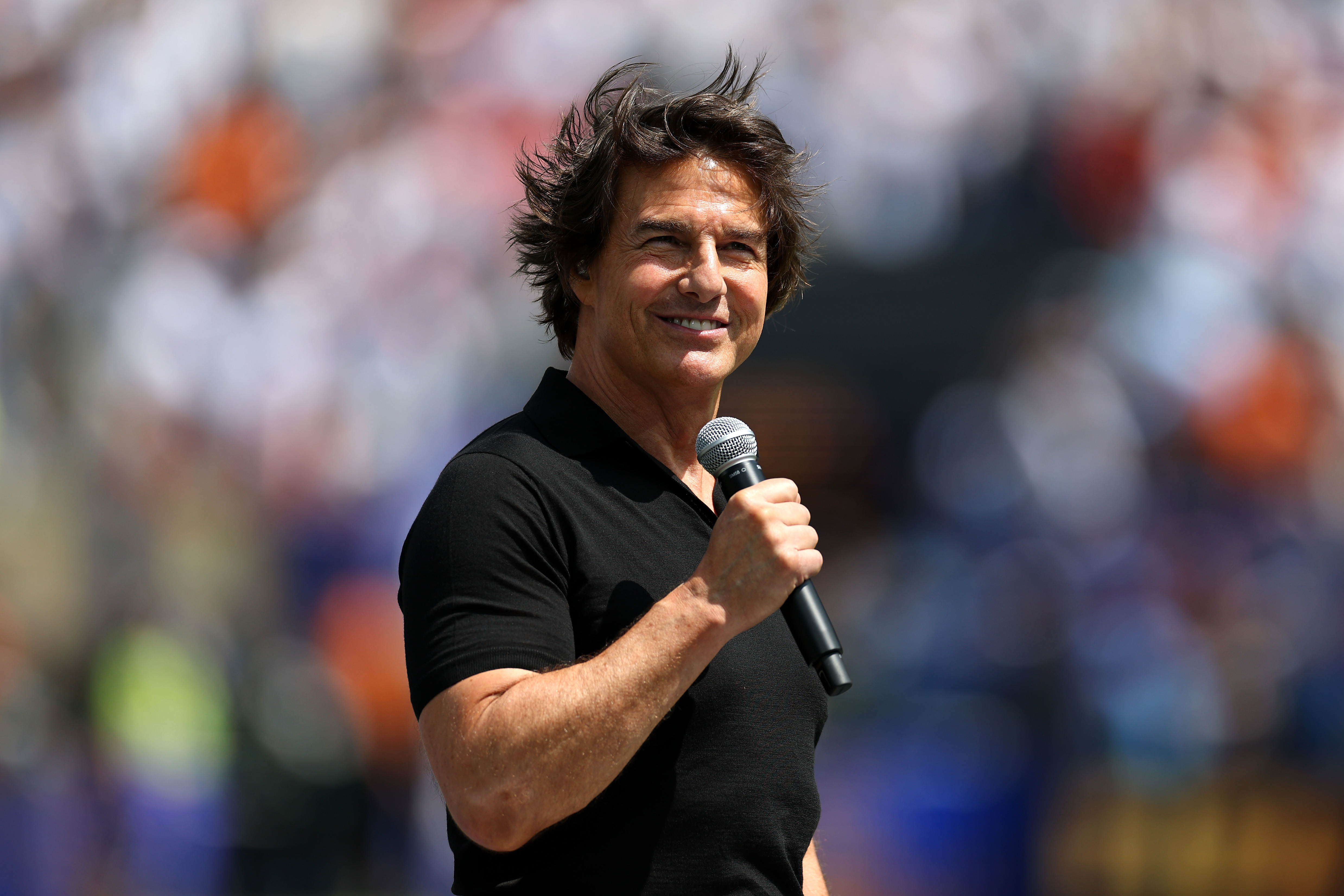
The 2026 World Cup reached the quarter-finals on 8 July without Cristiano Ronaldo in the field for the first time in two decades, and the tournament's rhythm changed in ways that had little to do with tactics. Portugal exited in the round of 16, beaten by a side built on the kind of physical pressing and vertical passing that has come to define this edition. Ronaldo, now 41, came on as a substitute. He did not score. The cameras lingered on him at the final whistle, walking alone, and the picture travelled faster than the scoreline.
The bare result is unremarkable: a generational forward runs out of answers against a defence structured to deny him the corridor he once owned. The interesting story is what the absence of his gravitational pull exposes. Leagues are no longer built around a single nine whose movement bends the back four; pressing triggers and inverted full-backs have redistributed the work. Ronaldo's exit, modest as the match itself was, marks the moment the sport stops pretending a talisman model still wins knockout football at the highest level.
What the bracket tells us
Eight teams remain after the round of 16, and the field has an unfamiliar look. The Guardian's panel of writers has France as favourites, with England, Spain, and a handful of credible outsiders behind them. Spain have not conceded in the tournament: their goalkeeper Unai Simón has barely been tested, which is its own kind of statement about how thoroughly the Spanish defensive scheme has suffocated opposing attacks. France, meanwhile, ended Morocco's resistance with a Kylian Mbappé strike that carried the kind of authority the French have shown in every round, a relentlessness that makes them feel closer to inevitable than romantic.
Morocco's run, by contrast, was no surprise to anyone who watched them dismantle Belgium's structure in a previous round. The Atlas Lions have now reached a second consecutive World Cup quarter-final, four years after becoming the first African side to reach the semi-finals in Qatar. BBC Sport framed them not as dreamers but as a side that has plainly arrived, and the data backs the framing: organised, athletic, and increasingly able to convert midfield control into chances against top-ten opposition. Their exit, like Ronaldo's, tells you something about the closing window rather than the closing match.
A new kind of forward
Bayern Munich's Michael Olise has been the most striking attacking player of the tournament's first three weeks, the kind of creator who can unlock a low block with a single change of angle. His former youth coach told the Guardian this week that Olise's move from the Hayes housing estate pitches to Reading's academy was the inflection point: a player whose game is built on combination rather than isolation, on passing angles rather than solo runs at goal. France's attack now runs through him in ways it did not run through their vaunted front line a year ago.
The contrast with the Ronaldo archetype could not be sharper. Where the Portuguese once asked a defence to choose between conceding a header and conceding a dribble, modern attacking play asks a defence to choose between tracking seven players who can all shoot. The England squad mirrors that shift. Declan Rice and Martin Ødegaard, the two architects of Arsenal's title win, are set to duel each other directly in England's quarter-final against Norway, the kind of midfield collision that decides tournaments now. The Guardian's preview made the point delicately: two players whose club partnership has been the season's defining story, almost certain to spend ninety minutes trying to cancel each other out.
The politics around the pitch
The tournament has not escaped its political weather. Andrew Giuliani, head of the White House's World Cup taskforce, defended Donald Trump's lobbying of Fifa over a red card shown to United States striker Folarin Balogun in an earlier round, calling the referee's actions "very, very suspicious." The intervention underlined the extent to which this World Cup has been pulled into a wider contest over the sport's governance, with Trump's pressure campaign on Gianni Infantino now an established backdrop rather than a passing headline.
Closer to the dressing room, England's preparations have been complicated by Fifa's decision to hand Jarell Quansah a two-match ban for serious foul play following his sending off against Mexico. The defender will miss both the quarter-final and any semi-final, a depletion that speaks to how thin the squad has become at the back. The FA is understood to be weighing an appeal.
What the room feels like
Keir Starmer, the British prime minister, hinted this week that he would consider declaring a bank holiday should England reach the final, a piece of careful political positioning that shows how seriously Whitehall is taking the national mood. BBC iPlayer viewing data, mapped across UK regions, has towns and small cities lighting up in patterns that have nothing to do with club allegiance, just temporary collective attachments to a side that has finally looked like it might go deep.
Whether that mood survives a quarter-final against a Norwegian side built around physical duels and direct set-piece work is another matter. The Guardian's statistical preview notes that every remaining team has at least one elite strength: Swiss speed, Spanish defensive geometry, French individual brilliance, English set-piece volume. There is no clear favourite beyond France, and the eight remaining sides are unusually close on underlying numbers.
The era that ends with him
Ronaldo's last World Cup was not a tragedy and will not be remembered as one. He leaves the tournament having added a record-extending appearance total to a CV that already owed nothing to tournament football in 2026. The commercial scaffolding that grew up around him, the social-media tracking, the boot deals calibrated to specific goal-scoring thresholds, the body-fat percentage contract clauses, was always going to outlive his playing career. A generation of academy players grew up studying his movement; the next generation will study pressing schemes designed to deny it.
What changes is the scarcity value. There will be other forwards who score 900 goals. There will not, in the foreseeable sport, be another forward whose individual brand sits inside a tournament's economic logic the way his did. That is the loss, and it is bigger than the 2-1 in the round of 16.
Sources
The Guardian, Rice and Ødegaard put club union on hold in decisive duel between England and Norway, 9 July 2026
The Guardian, 'There is a magnificent balance': how Spain built a record-breaking defence, 9 July 2026
The Guardian, Mbappé stunner ends Morocco resistance to send France into World Cup semi-finals, 9 July 2026
The Guardian, 'Best player England has developed': Olise's rise from Hayes to the World Cup, 9 July 2026
BBC Sport, Could Morocco become a football powerhouse?, 9 July 2026
BBC Sport, Has your area gone football-mad? We've mapped World Cup viewing, 9 July 2026
BBC Sport, Morocco's unfinished business with France, 9 July 2026
The Guardian, World Cup quarter-final predictions: will anyone derail France?, 9 July 2026
The Guardian, England's big chances and France's shots: how World Cup quarter-finalists' stats line up, 9 July 2026
BBC Sport, Starmer hints at bank holiday if England win World Cup, 9 July 2026
The Guardian, White House's World Cup head defends Trump lobbying Fifa over red card, 8 July 2026
BBC Sport, Chris Sutton's World Cup quarter-final predictions, 8 July 2026
Desk note: Monexus framed Ronaldo's elimination as the close of a sporting and commercial era rather than as a referendum on his legacy. The wire coverage leaned heavily on the emotion of the moment; the structural story is bigger than the match.