The Meloni–Trump Show Ahead of the Hague Summit
A Polymarket contract puts a 75% probability on a Trump–Meloni sit-down in July, just as Reuters reports the US president goading Rome again on the eve of the Hague summit. The optics matter more than the substance.
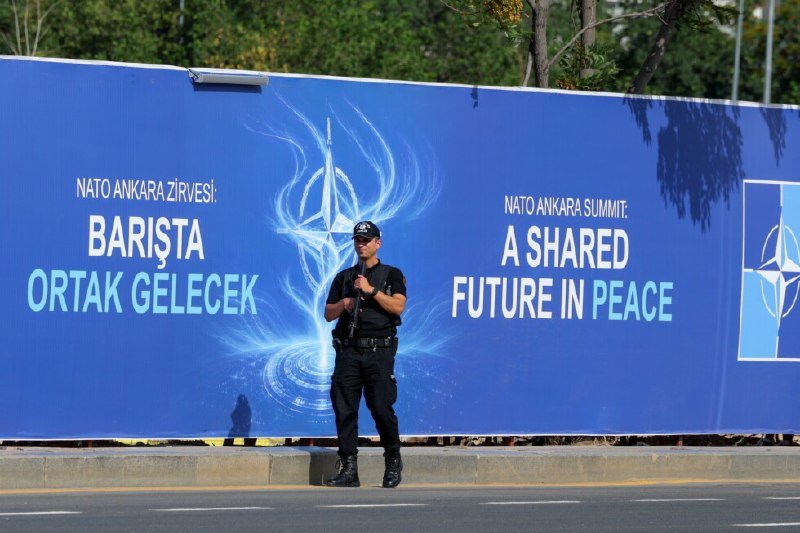
Donald Trump used the eve of the NATO summit in The Hague to needle Italy's prime minister, reopening a familiar line of attack on Rome's posture toward the alliance. The exchange, reported by Reuters on 6 July 2026, comes hours before leaders gather for what is already shaping up to be one of the more uncomfortable alliance gatherings in years.
What makes the moment worth pausing on is not the insult itself. It is the prediction market sitting beside it. A Polymarket contract on whether Trump will meet with Italian premier Giorgia Meloni this month priced the meeting at 75% on 6 July, according to posts on X by the Unusual Whales account and by Polymarket itself. In other words, traders with money on the line are treating the encounter as the base case — not the exception. That is a small but telling signal of how the relationship between Washington and Rome is being read by people who have to be right to get paid.
What Reuters actually reported
The Reuters wire on 6 July 2026 described Trump again goading Meloni on the eve of the NATO summit. The piece sits inside a wider pattern: the US president has used the run-up to The Hague to apply public pressure on allies whose domestic spending trajectories or rhetorical positions have irked him. Italy, under Meloni's Brothers of Italy-led coalition, is one of the more conspicuous targets — a NATO member whose leaders like to invoke Atlanticism while occasionally diverging on migration, China and budget arithmetic. Reuters did not frame the exchange as a substantive policy dispute. It framed it as theatre, timed for maximum visibility before the leaders' arrivals.
Why the Polymarket number matters
Prediction markets are not the same thing as polling. They aggregate the bets of participants who are willing to put capital on a binary outcome, and they update continuously as news shifts. A 75% price on a Trump–Meloni meeting in July means traders believe the political cost of not meeting — to Meloni, to Trump, or to both — exceeds the cost of meeting. That is the part worth sitting with. Rome has positioned itself, in Brussels and Washington, as the Atlanticist voice inside a fragmented European centre-right. Walking into The Hague without a face-to-face with the US president would puncture that positioning. Trump, for his part, gets the optics of alliance unity without having to soften his public line on Italian policy. Both sides have reasons to sit down. The market is pricing those reasons rather than the insults.
The optics versus the substance
There is a credible counter-read worth naming. The 75% figure could simply reflect that summit scheduling makes a Trump–Meloni sit-down near-certain regardless of temperature: leaders gather in the same building, bilateral meetings are routine, and a photo-op costs nothing. Under that reading, the market is capturing the diary, not the diplomacy. The Reuters reporting suggests a sharper story than that. A president who feels comfortable publicly needling an ally on the eve of a NATO summit is signalling — to that ally and to every other leader in the room — that the public register of the relationship has changed. Whether the private register changes too is the question the wire cannot yet answer, and the market has no clean way to price.
Stakes for the alliance
If the dominant read holds — public friction, private accommodation — The Hague summit closes with the now-familiar image of Trump and Meloni side by side, smiling for the cameras, having absorbed the insult and converted it into a renewal of attention. Italy keeps its privileged-channel status inside the Atlantic framework. Trump keeps the public posture of a dealmaker who does not need allies but will work with them. The losers, as usual, are the policy specifics that get compressed out of the photo-op: burden-sharing formulas, the southern-flank posture, the increasingly tense question of how far NATO extends its remit beyond its original treaty area. A 75% prediction-market price tells us the meeting will happen. It does not tell us what, if anything, will get decided while the cameras are pointed elsewhere.
Wire provenance
This editorial synthesis draws on the following public wire/social posts:
- http://reut.rs/4p6q7FL