Iran Turns a Funeral Into a State Performance, and the Cameras Are Part of the Point
As the Khamenei cortège moves from Mashhad to Karbala, the Islamic Republic's state outlets are not covering a funeral. They are performing one, on camera, with the iconography of martyrdom and the discipline of a liturgy.
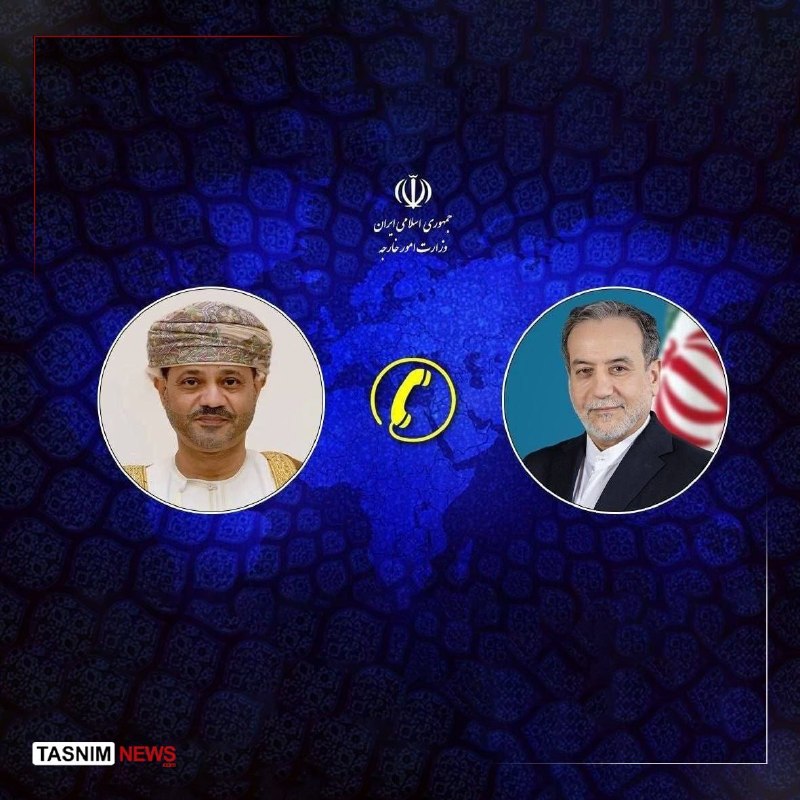
The funeral cortège for Ayatollah Ali Khamenei began at the Imam Hussein holy shrine in Karbala on the evening of 8 July, according to Press TV, after days of procession through Iranian cities and across the border into Iraq. The Islamic Republic's English-language outlets did not call it a funeral. Tasnim's feed referred to the body as the "holy body of Imam Martyr" and to the deceased as "Mr. Shahid of Iran," a deliberate formula that fuses the language of religious mourning with the vocabulary of martyrdom the state has spent four decades institutionalising. Large crowds of Iraqis turned out in Karbala for the procession, Press TV reported, and the attendants of the Motahar Razavi Shrine in Mashhad registered their longing for "their martyred leader" in the remaining hours of the funeral and burial. Every line of this coverage was produced by state media and its affiliated outlets. Every camera on the cortège was either run by those same outlets or pooled through them. That is the story.
The wire lead on this event, when it lands in Western newsrooms, will almost certainly frame the funeral as either security fallout from a punishing US air campaign or as sectarian theatre staged for a regional audience. Both frames are partial. The Reuters copy will emphasise the strikes that preceded it: the explosions in Iranshahr, the missile damage to the Incheboroon–Gorgan rail bridge in Golestan, the BBC's report that Washington had launched a new wave of strikes after promising to "hit them hard." The New York Times will lean into the palace politics, reporting that Iran's president and foreign minister were physically attacked this week by supporters of a hard-line faction opposed to any deal with the United States. These are real facts about a real war. They are also the facts Iran wants the international press to spend its column inches on, because they sit at the surface of the story.
Monexus reads the funeral differently. What is on screen is a working example of how the Islamic Republic converts an assassination into institutional legitimacy, and how the cameras, deliberately named in the agency's own copy, are part of the apparatus doing the converting. Read the Tasnim feed end to end and a pattern emerges. The framing is not journalistic. It is liturgical. The deceased is not an ex-president or a former supreme commander; he is a "martyr," an "Imam," a "shahid" whose entry into the shrine is filmed with the same iconography used for the eighth-century imams the state already venerates. The camera does not record a state event. It performs one.
The camera is the institution
There is a difference between a state that mourns publicly and a state that mourns on camera, and the difference is constitutional. When Press TV publishes the timestamp for the start of funeral prayers at the Imam Hussein shrine, when Fars publishes Trump's quote about having "won over them militarily" inside the same half-hour as a procession update, when IRNA files a complaint at the United Nations working group on preventing an arms race in outer space while the cortège is still moving, the message is that there is no gap between the regime's domestic grief and its foreign policy. The camera is what closes that gap. To be on the cortège's feed is to be inside the state's claim about itself. To be off it is to be outside the legitimate community of mourners, which in Iranian political theology is a meaningful distinction.
The secondary audience is harder to read but easier to identify. Senator Bernie Sanders's statement that "the war against Iran will end," carried by Tasnim's international feed, is useful to the Islamic Republic not because it changes American policy but because it furnishes a Democratic critic of the war inside the American political system who can be cited as evidence that the war is contested at home. The Bahraini participation in the US strikes, reported by Al Arabiya and recycled across the channel ecosystem, is useful as a sectarian counter-image: a small Gulf monarchy joining a Christian-majority power against a Shia theocracy. Both data points are absorbed into the funeral broadcast. The broadcast does not need to respond to them. It only needs to be running while they circulate.
What the American strikes actually did
The military backdrop is concrete enough to test against the propaganda overlay. Local officials confirmed to OSINT analysts that US strikes targeted Iranshahr Airport and Airbase in southeastern Iran, a site partially used by the Islamic Revolutionary Guard Corps. An unidentified missile struck a railway line in the Golestan Province in the far northeast, on the Incheboroon–Gorgan line opened in late 2013 and early 2014, which serves as the final link of the "New" rail corridor running from the Caspian Sea through Turkmenistan toward China. This is the deepest strike into Iran since a ceasefire took hold, and OSINT analysts noted that almost all of the tit-for-tat exchanges have clustered along the Iranian coast. The geography is not random. It targets infrastructure that doubles as IRGC logistics and as the eastern terminus of China's Belt and Road rail ambitions inside Iran.
Inside the regime, that dual exposure has produced the palace fracture the Times described. The president and foreign minister were physically attacked by hardliners opposed to talks with Washington. The funeral gives the hardliners the upper hand, because martyrdom politics is their natural terrain and the supreme leader's body is the credential. The moderate faction, such as it is, cannot afford to be absent from the cortège and cannot afford to be photographed beside it. The camera decides who is in the legitimate political community and who is not.
What to watch next
The Iranian complaint at the UN working group on outer space is a procedural tell. It signals that Tehran intends to internationalise the strike on space facilities rather than treat them as battlefield losses, which gives the foreign ministry a venue in which the moderate faction can operate without ceding the martyrdom frame to the hardliners. The next 72 hours will test whether that division holds or whether the funeral's broadcast consensus absorbs it. If the cortège's iconography continues to dominate Iranian state media at the same intensity after the burial, the hardliners have won the institutional argument and the diplomacy channel narrows. If the camera moves on, the moderate faction has a window. Either way, the cameras were the point, and they did the work they were built to do.
Sources
- Press TV via Telegram: "Funeral prayers for Iran's martyred Leader begin at the Imam Hussein holy shrine," 8 July 2026. https://t.me/presstv
- Press TV via Telegram: "Large crowds of Iraqis turn out for the funeral procession of Iran's martyred Leader in Karbala," 8 July 2026. https://t.me/presstv
- Tasnim News via Telegram: "The entry of the holy body of Imam Martyr into the Holy Shrine of Aba Abdullah," 8 July 2026. https://t.me/tasnimnews_en
- Tasnim News via Telegram: "The longing of the servants of Motahar Razavi shrine for Mr. Shahid of Iran," 8 July 2026. https://t.me/tasnimnews_en
- BBC via Telegram: "US launches new wave of strikes against Iran after promising to 'hit them hard'," 8 July 2026. https://t.me/BBCWorldoffl
- OSINTdefender via Telegram: "Local officials have now confirmed that U.S. strikes indeed targeted Iranshahr Airport/Airbase," 8 July 2026. https://t.me/osintlive
- RN Intel via Telegram: "An unidentified missile struck a railway line in the Golestan Province," 8 July 2026. https://t.me/rnintel
- Fars News via Telegram: "Trump again repeated the illusion of a military victory over Iran," 8 July 2026. https://t.me/farsna
- IRNA via Telegram: "Iran took issue of attacks on its space facilities to United Nations," 8 July 2026. https://t.me/Irna_en
- Tasnim News via Telegram: "Senator Sanders' attack on Trump: Ending the war against Iran," 8 July 2026. https://t.me/JahanTasnim
- The New York Times: "Divisions Festered Within Iran Over Talks With the U.S.," 8 July 2026.
Desk note: Wire coverage on this event is being routed through Iranian state outlets, which double as primary mourners. Monexus treats their copy as primary-source liturgy rather than as reportage, and cross-checks the military backdrop against independent OSINT analysts and Western wire services.