England outlasts Mexico at the Azteca, and the host nation wakes up to a problem it cannot scout its way out of
A 3-2 defeat in Mexico City ended El Tri's tournament and exposed a structural gap between a federation that still believes it can buy minutes and a roster that no longer can.
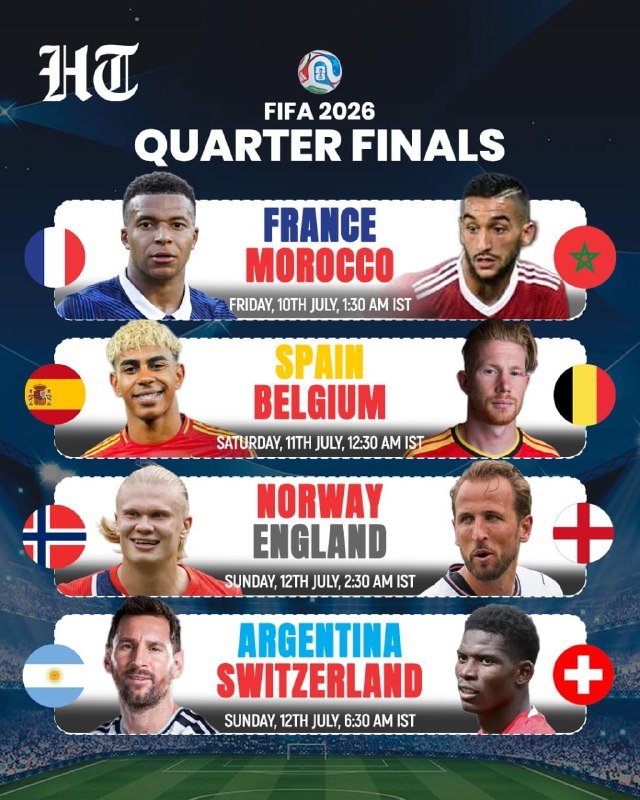
The final whistle at the Estadio Azteca came down at 23:43 UTC on 6 July 2026, and with it the end of Mexico's tournament. England, finishing 3-2, advanced to a third consecutive FIFA World Cup quarterfinal. The result, reported by BBC News on 6 July 2026, was less a story of English excellence than of Mexican collapse in the moments that mattered. For a host nation that had spent a decade telling itself it was the tournament's natural co-star, the loss lands as a referendum.
What El Tri ran into was not bad luck and not, despite the easy framing, a refereeing conspiracy. It was the predictable consequence of a federation that has spent the last cycle treating the men's senior squad as a brand-extension exercise while the actual footballing infrastructure atrophied. The 3-2 scoreline flatters the home side. England's win probability on Polymarket sat at 19% on the morning of 6 July 2026 — a market that priced the upset as live, but never as likely. The market was right.
The night itself
The match had been delayed by an hour after the Azteca issued a shelter-in-place order at 01:19 UTC on 6 July 2026, owing to severe weather over Mexico City, per Polymarket's wire feed. The break turned the stadium into a holding pen; when the teams finally emerged, the energy in the stands was brittle. England absorbed the early pressure, picked Mexico apart on the break, and converted the chances that have been the difference between the two programmes for a generation.
Mexican fans described the night as "a very sad day," per BBC News reporting from Mexico City on 6 July 2026 — a phrase that captures the mood without overstating it. Sadness is the honest emotion. Anger, the more photogenic one, will come later.
What the federation will not say out loud
Here is the structural read the Mexican Football Federation will resist in public. The senior team is no longer the centre of the country's footballing project; it is a marketing surface for the federation's commercial partners. The under-20s and the women's programme have carried the country's reputation for the last cycle. The senior men's squad, by contrast, has cycled through four coaches in three years, persisted with a domestic league structure that pays well but does not develop, and treated dual-national recruitment as a substitute for actual scouting at the level below 20.
England, meanwhile, has spent fifteen years doing the unglamorous middle work — coaching licensing, academy accreditation, sport-science integration at the under-15 level — that produces a 23-man squad in which the third-choice right back can come off the bench at the Azteca and not look out of place. The gap is not talent. It is institutional.
The counter-narrative, worth airing: this is one tournament, on home soil, with a refereeing performance and a weather delay that any honest Mexican supporter can point to as complicating factors. Mexico has, after all, reached the round of 16 at every World Cup since 1994 — a streak the federation will lean on in its post-mortem press conferences. The streak is real. It is also the wrong unit of analysis. Streaks describe outcomes. The relevant variable is process, and on process the last decade has been a write-off.
The market and the message
It is worth pausing on the Polymarket pricing. A 19% implied probability for England, on the morning of the match, is not a market dismissing Mexico. It is a market that has watched the same tape the federations have watched, and priced the structural gap accordingly. Prediction markets do not care about crowd noise, shirt sales, or federation press releases. They price the chance that one organisation has built a better machine than the other. On 6 July 2026, the market's read was that England had.
This is the part Mexican football's commentariat will struggle to metabolise. The bettors who moved the line to 19% were not Anglophiles. They were people with money on the outcome doing arithmetic. The arithmetic said England.
Stakes
For England, the stakes are familiar and manageable: a quarterfinal, the chance to test the squad's ceiling, and the breathing room that comes with having already exceeded the federation's internal target for the cycle. For Mexico, the stakes are existential in a quieter way. The country co-hosted this tournament. The federation sold the bid partly on the promise that the senior team would be a credible on-pitch presence, not merely a logistical host.
If El Tri fails to make a deep run at the next World Cup — and the structural conditions suggest they will — the federation's commercial partners will begin to ask why they are paying premium rates for a brand that underperforms its peer group. That is when the meaningful reform begins, because that is when the money starts to move. Until then, expect another cycle of coach changes, another friendly against a European side played behind closed doors, and another round of press conferences in which the federation's leadership explains why this time, finally, the process will be different.
What remains uncertain
The sources do not specify the goal scorers, the minute-by-minute sequence, or the individual errors that decided the match, and Monexus will not invent them. The 3-2 scoreline and the BBC-confirmed framing of Mexican disappointment are what the public record supports. The tactical autopsy will run for weeks in the Mexican press; the structural one, the one that matters, will probably not run at all. That, more than the result, is the loss El Tri should be grieving.
— Monexus framed this as an institutional story, not a tactical one. The wire coverage on 6 July 2026 concentrated on atmosphere and crowd reaction; the market data pointed to the more durable read.