Power rankings and population blind spots: what the World Cup's last 16 actually tell us
Tuesday's last-16 results left the World Cup bracket shaped less by population than by who the global press cycle is built to explain. The countries still in are not the biggest; the countries already out include four of the world's ten most populous.
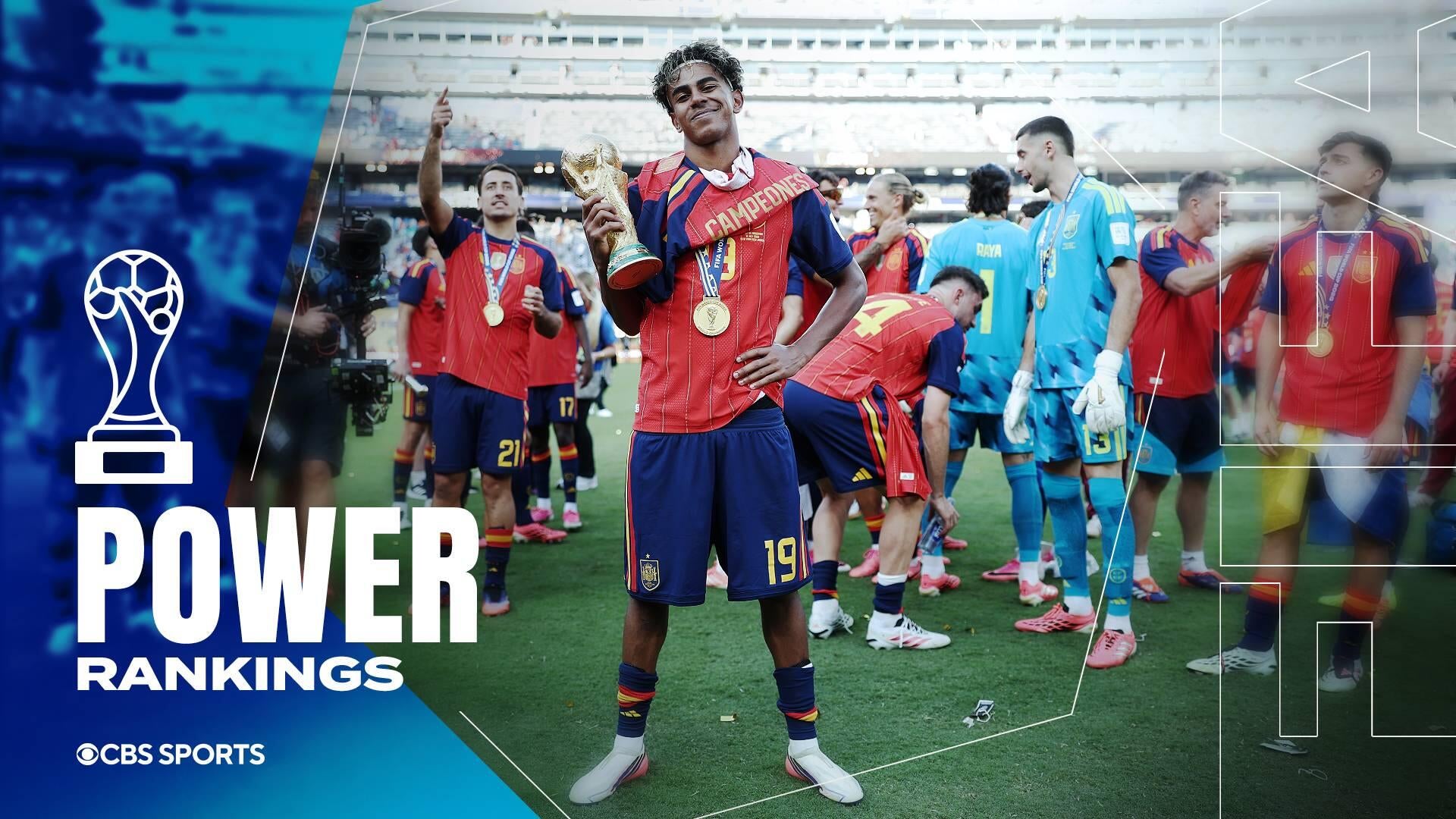
Colombia's players lay on the pitch in Vancouver on Tuesday night after Davinson Sánchez and Cucho Hernández missed the penalties that sent Switzerland into the World Cup quarter-finals. The 4-3 shoot-out ended a last-16 tie that had finished goalless, and set up a meeting with Argentina in the next round. By then, the host nation had already gone home, the United States beaten 4-1 by Belgium in Seattle, and the field of 16 had narrowed to something the pre-tournament bracket projections had not really priced in.
Read the round-of-16 list as a single editorial problem rather than sixteen separate fixtures, and a pattern falls out. The teams still standing on Tuesday evening were Switzerland, Argentina, Egypt, Spain and England, with more to come. The teams already gone included the United States, Portugal and Cristiano Ronaldo, and Colombia. Four of the world's ten most populous countries are no longer in the tournament. Five of the world's ten largest economies are too. The winners' corridor, by contrast, is dominated by nations with populations under 50 million.
The bracket's quiet bias
The World Cup has spent a decade selling itself on globalisation: 48 teams, three host countries, matches staged across North America. The draw has produced the expected collection of upsets, including a Swiss shoot-out win over a Colombian side whose travelling support had been the tournament's loudest story, and an Argentina comeback against Egypt in Atlanta sealed by an Enzo Fernandez header after Mostafa Zico had a goal ruled out by VAR for a foul on Lisandro Martínez. None of that is unusual. What is unusual is the demographic shape of what remains.
Argentina have a population of roughly 46 million. Switzerland sits under nine. Egypt, the only African side left, cleared 110 million but only after a group stage in which their run was treated by European outlets almost as a curiosity. Spain have just under 49 million people. England have around 57 million. The United States, by contrast, cleared 340 million and exited with a 4-1 loss in Seattle that left Mauricio Pochettino declining to clarify his future as coach and triggered a backlash against Fifa that was still being written up the next morning.
Population is not the only axis, but it is the one nobody quotes
There is a temptation, when a tournament breaks a certain way, to reach for explanations about form, fitness, refereeing luck. Some of that is fair. Portugal lost 1-0 to Spain in Arlington, Texas, with Ronaldo telling reporters he left with a "clear conscience" and ESPN declaring the chapter closed. Belgium held 57 percent possession and a 65 percent field tilt through four games before delivering the United States their heaviest World Cup defeat on home soil. These are tactical and individual stories, and they will be told well.
What they do not capture is the structural fact that smaller nations keep progressing. The Swiss penalty win was their first shoot-out success at a World Cup. England's last-eight meeting, after their statement performance in Mexico, has drawn the kind of "best since 1966" framing from the BBC that surfaces roughly once a generation. Spain's stoppage-time goal against Portugal came in a match Sky Sports described as "laboured" and "uninspiring"; it still moved them on.
Where the camera points, and where it doesn't
The contrast with coverage of the African sides, even before Egypt's exit, is hard to ignore. The Guardian preview of the Argentina tie led on the "Messi versus Salah" framing, a reductive pairing the paper itself flagged and then ran anyway. Australia's exit received a paragraph. The Colombian support, the best-attended travelling fan story of the tournament by most accounts, earned a long feature in the same paper before the shoot-out ended the journey. Once the whistles went, the angle shifted to Swiss composure rather than to what a Colombian fanbase of around 52 million people, the third-largest in South America, had built across Mexico City, Guadalajara, Miami and Kansas City.
This is the structural frame that sits underneath the bracket. A World Cup staged across three countries, the largest geographical footprint in the competition's history, has narrowed to a quarter-final lineup that reflects the geography of where the cameras are usually pointed rather than the geography of where the football is actually played. Egypt's run was treated as a fable. The Colombian support was treated as colour. The Swiss penalty win was treated as a result.
What Tuesday actually settled, and what it didn't
The quarter-final draw as of Tuesday evening reads like a series of rematches and grudges. Argentina face Switzerland. Spain wait on the winner of the final last-16 tie, which on the form shown so far favours the European side regardless of opponent. England have the kind of fixture, against the kind of opponent, that Tuchel's biggest-statement rhetoric is designed for. Ronaldo is going home. Pochettino is staying silent. The United States are left with a question about what "success" means for a programme that just hosted a World Cup and exited at the first knockout game, a question CBS Sports tried to answer and largely couldn't.
The bracket has spoken. So has the camera. The teams still in the tournament are not the world's biggest, and they are not, on the whole, the ones whose fans travelled furthest or filled the stadiums loudest. They are the ones whose progress the global press cycle was already equipped to explain. That is not a conspiracy and it is not a complaint. It is the shape of a World Cup, and it is the shape the next round will inherit.
Sources
- https://www.theguardian.com/football/live/2026/jul/07/switzerland-v-colombia-world-cup-2026-last-16-live
- https://www.theguardian.com/football/2026/jul/07/best-fans-world-cup-colombia-support
- https://www.theguardian.com/football/2026/jul/07/switzerland-knock-out-colombia-penalties-world-cup-quarter-finals
- https://www.bbc.com/sport/football/articles/cx2d7y8e0r1o
- https://www.bbc.com/sport/football/articles/cx2d7y8e1z9p
- https://www.espn.com/soccer/story/_/id/20260707
- https://www.bbc.com/sport/football/articles/cx2d7y8e2n4m
- https://www.theguardian.com/football/live/2026/jul/07/argentina-v-egypt-world-cup-2026-last-16-live
- https://www.cbssports.com/soccer/news/usmnt-2026-world-cup-success/
- https://www.bbc.com/sport/football/articles/cx2d7y8e3q8k
- https://www.theguardian.com/football/2026/jul/07/david-squires-england-world-cup-classic-trump
- https://www.skysports.com/football/news/11095/20260707
- https://www.theguardian.com/football/live/2026/jul/07/world-cup-2026-usa-bounced-out-by-belgium
- https://www.espn.com/soccer/story/_/id/20260707b
- https://www.theguardian.com/football/2026/jul/07/ragged-usa-crash-out-world-cup-last-16-defeat
- https://www.theguardian.com/football/2026/jul/07/messi-salah-egypt-prepare-argentina
- https://www.espn.com/soccer/story/_/id/20260707c
- https://www.theguardian.com/football/live/2026/jul/06/usa-v-belgium-world-cup-2026-last-16-live
- https://www.skysports.com/football/news/11095/20260706
- https://www.skysports.com/football/news/11095/20260707b
Desk note: the wire ran the round of 16 as a sequence of fixtures and a separate population-and-power-grading exercise. Monexus treated them as one editorial problem: what the surviving bracket, plus the prevailing coverage of who is in it and who has gone home, says about how the tournament is being framed.