Cargo ship distress call off Hodeidah revives questions over Red Sea shipping corridor
UKMTO's 5 July advisory on a cargo-ship distress call 64 nautical miles off Hodeidah named no attacker and described no mechanism. Monexus is running the advisory without attribution because the public record still does not support one.
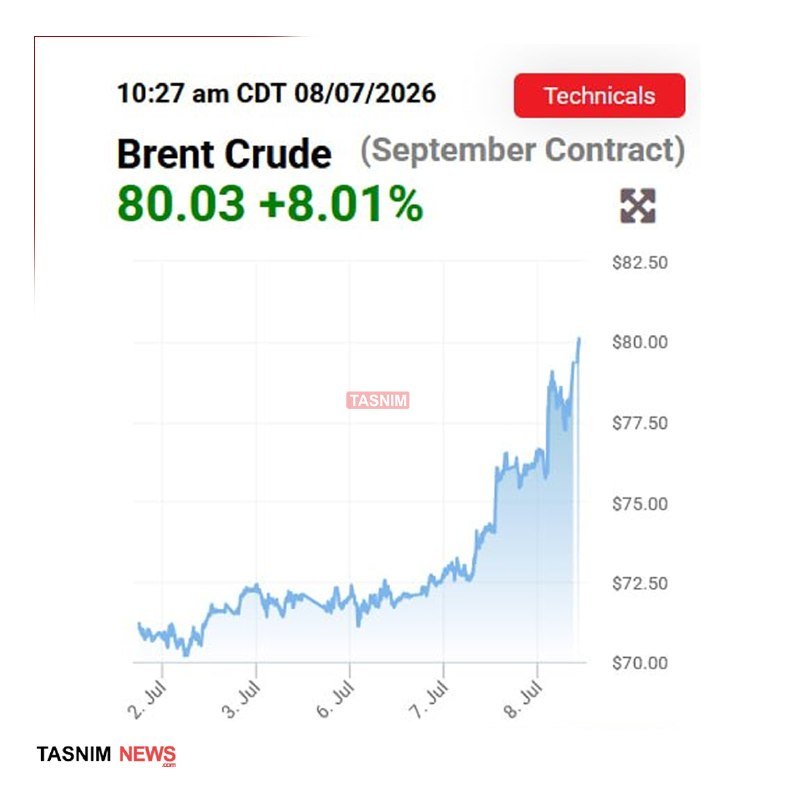
At roughly 04:12 UTC on 5 July 2026, the United Kingdom Maritime Trade Operations centre at Dubai received a distress call from a cargo vessel positioned approximately 64 nautical miles west of Hodeidah, on Yemen's Red Sea coast. The vessel reported an unspecified incident and sought assistance; UKMTO issued an advisory within the hour, the standard procedure for any commercial ship signalling trouble inside the waters where, since late 2023, the Houthi movement has periodically targeted shipping in what it frames as solidarity operations against Israel and its Western backers. The advisory itself was routine. The geography was not.
The default wire instinct in such cases is now reflexive: an incident inside the Houthi-claimed maritime box, and the story writes itself as another chapter in the Red Sea campaign. That instinct may turn out to be correct. As of the evening of 5 July, it has not been confirmed in the public record. UKMTO's advisory, distributed through its standard channels and relayed by monitoring accounts including OSINTLIVE and the Yemen-focused observer channels that track such events, did not name an attacker, did not describe the mechanism, and did not attribute responsibility. The Telegram traffic around the incident, captured across OSINTLIVE and witness-channel relays, is consistent with the standard ambiguity window that opens between a distress call and a confirmed attack report. Monexus is carrying UKMTO's advisory and those channel relays on those terms, because the alternative, which is to assign blame before the operator or a maritime authority has done so, substitutes geography for evidence.
What UKMTO actually said
UKMTO advisories are deliberately spare documents. The centre's job is to alert mariners, not to adjudicate incidents. The 5 July advisory, distributed via its standard mailing list and republished through Telegram channels including OSINTLIVE and witness feeds, identified the vessel's approximate position, summarised the distress call in operator-supplied language, and recommended that transiting ships exercise extreme caution until further notice. There was no reference to missiles, drones, small-boat approaches, or any specific threat vector. The advisory also did not say the vessel was attacked; distress calls can be triggered by mechanical failure, by collisions with floating debris, by crew medical emergencies, or by the operator simply losing confidence in the situation on deck. None of these possibilities has been ruled in or out as of publication. The Cradle's regional channel carried parallel traffic on a separate set of disruptions further north, including a Kuwaiti ministry statement that several electrical transmission lines had gone offline, causing widespread power outages across multiple areas, a reminder that the maritime theatre sits inside a wider regional electrical and security grid where attribution work is rarely clean.
Why the geography matters
The Red Sea and Bab el-Mandeb strait have been a contested corridor since November 2023, when the Houthi movement began targeting vessels it associated with Israel and with the broader Western logistics chain serving the war in Gaza. Container throughput through the strait fell sharply in early 2024 as the major liners rerouted around the Cape of Good Hope, raising freight rates and adding roughly two weeks to Europe-Asia transit times. Insurance premiums for the corridor climbed into the hundreds of thousands of dollars per voyage for tanker traffic. The corridor has stabilised at a lower baseline of trust rather than at a recovered one: ships still transit, but the risk premium has never fully unwound, and the shipping industry's tolerance for ambiguity has narrowed considerably. Any distress call inside that geography is now read as evidence until proven otherwise, a reversal of the usual evidentiary order that puts pressure on UKMTO, on the operators, and on the analysts watching the feed to close the gap between signal and confirmation faster than the news cycle demands.
The naming problem
Maritime attribution in this corridor has been a consistent weakness in Western wire coverage. Early reporting on the 2024 campaign routinely attributed attacks to the Houthi movement before independent verification, in part because the movement claimed most of the incidents, and in part because no other plausible maritime actor was operating in that geography at the time. The problem with that pattern is not that the attributions were wrong; the problem is that they were ahead of the evidence. The same template is now being applied to incidents that may or may not fit it. A distress call off Hodeidah is a fact. An attack is a claim. The distance between them, in the public record, is the difference between UKMTO's advisory and a statement from the group or from an independent maritime forensics outfit such as Ambrey Analytics or those working through EOS Risk Group. Neither has yet weighed in on this incident as of the time of writing.
What the rest of the region is doing
The Red Sea incident lands inside a Middle Eastern security environment that is already running hot. Across the same 48-hour window, the regional picture has been dominated by a separate and far larger maritime confrontation further east, in the Strait of Hormuz, where, according to reports aggregated through Telegram channels including Our Wars Today and relayed references to Axios, the Iranian Revolutionary Guards fired at least two missiles at commercial ships transiting the strait on the night of 6-7 July, prompting a US strike campaign described in subsequent CNN-sourced reporting as punishment rather than proportional response. US commanders have separately been accused, per CNN reporting carried through witness channels, of bypassing warnings about outdated intelligence on potential Iranian targets in a strike that hit a school and killed nearly 200. The point of listing these adjacent incidents is not to assert a connection to the Hodeidah distress call. The point is to underline that the analytical bandwidth available to attribute a single cargo-ship incident in the southern Red Sea is being consumed by a much larger story 1,200 nautical miles to the northeast, and that any attribution work on Hodeidah will arrive faster, sloppier, and more contested as a result.
The stakes for the corridor
For shipowners, the practical question is not who attacked whom; it is whether the Bab el-Mandeb remains insurable and whether the rerouting economics still favour the Cape. For insurers, the question is whether a single distress call, even one that turns out to be mechanical, moves the war-risk premium for the corridor. For the operators plying the route, the question is whether the corridor's baseline of trust, already eroded from the 2024 campaign, can absorb another ambiguous event without hardening into a permanent Cape-only routing. The UKMTO advisory will, in time, be matched to a confirmed incident report, a satellite image, or a claim of responsibility. Until then, the corridor sits in the same state it has occupied for the past 18 months: open, watched, and priced for the possibility that any given distress call is the first line of a confirmed attack report. The geography does the talking that the evidence cannot yet do.
Sources
- https://t.me/osintlive
- https://t.me/TheCradleMedia
- https://t.me/wfwitness
- https://t.me/ourwarstoday
- https://t.me/rnintel
Desk note: Monexus carried UKMTO's advisory and the Telegram-channel relays of it without attributing the incident to any actor, on the grounds that the public record as of 5 July 2026 contains no confirmed attribution. The wire-default template in this corridor is to assign blame to the Houthi movement the moment an incident falls inside the geography the group has claimed. We declined to apply that template until the operators, UKMTO, or an independent maritime forensics outfit produces a confirmed incident report.