Prediction markets, Persian-Gulf live streams, and the question of who is watching
Kpler recorded 36 ships a day through Hormuz between 3 and 5 July, a quarter of normal. What the channels around that data are broadcasting tells you more than the data itself.
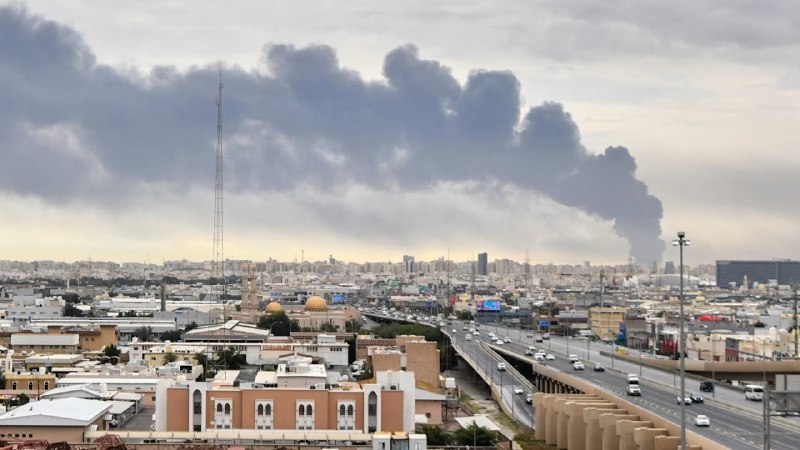
On the morning of 3 July, Kpler shipping data recorded 36 vessels passing through the Strait of Hormuz, a number that would hold steady across the next 48 hours. By 5 July the three-day total reached 108 ships, a daily average of roughly 36, compared with a pre-war baseline of 140 to 150 transits per day, per Kpler figures cited by Sprinter on 6 July. The arithmetic is brutal and uncomplicated: traffic through the world's most consequential oil chokepoint has collapsed to about a quarter of its normal cadence, and the world is recalibrating in real time.
What is harder to read is the information environment forming around that collapse. Across Telegram channels, X feeds, and Persian-language outlets, a parallel story is being assembled in fragments: shipping incidents off Oman, oil-market leadership contests, the afterlives of assassinated leaders, World Cup politics, and a steady drip of feed-specific propaganda. The Kpler numbers are the spine. Everything else is muscle, much of it attached to different skeletons.
The shipping channel is throttled
The Strait of Hormuz is not merely a route; it is the route through which roughly a fifth of globally traded oil normally moves. Kpler's three-day read, posted to X on 6 July by the analytics account Sprinter, marks one of the clearest public data points on the war's shipping impact to date. It does not specify who is transiting and who is not, only that the count is down by more than 100 ships a day. The collapse is consistent with war-risk insurance withdrawals, charterer caution, and the slow strangulation that armed actors impose on commercial sea lanes without ever needing to fire the decisive shot.
Then there is the smaller, sharper data point. On 6 July, the United Kingdom Maritime Trade Operations Centre reported a vessel struck by an unknown projectile 8 nautical miles east of Limah, Oman, while travelling southbound away from the Strait, per OSINTdefender's Telegram relay of the UKMTO advisory. UKMTO notices are deliberately spare: location, vector, mechanism. They tell crews to be alert, underwriters to reprice, and analysts to count. They do not name perpetrators. That silence is itself the news.
Two parallel broadcasts of the same war
While Kpler counts hulls, Iranian-aligned channels are running a very different news cycle. The Tasnim and Khamenei-affiliated English feeds on 6 July carried mourning ceremonies at Jamkaran Mosque in Qom, framing the death of Ayatollah Sayyid Ali Hosseini Khamenei in explicitly eschatological register: verses recited, a new world order invoked, the leader elevated to martyr. The Fars News Agency, on the same night, ran a sharper line: "The President of Lebanon begged Trump to withdraw Israel from this country." Read individually, these are unrelated posts. Read in aggregate, they describe a state project that is at once grieving and on the offensive, performing legitimacy to one audience while lobbying Washington through proxies.
The Persian-language information layer is dense, ritualised, and politically controlled. It runs on Telegram the way Reuters runs on terminals. Western readers encountering it through al-Alam Arabic or Mehr News English will not see a debate; they will see a single broadcast, with disagreements confined to tone rather than substance. The first casualty of any war is always the press, and the second is the press that covers the first.
Where the markets are betting
Sprinter's 6 July post on oil leadership, noting that United States control of global supply is now in question with the "Trumpist" takeover of Venezuelan production, sits awkwardly next to the Hormuz data. The prediction markets built on such indicators are now pricing what shipping data already shows: a world in which US swing-supply dominance is a story the United States still tells itself, and a story the market increasingly discounts. Polymarket and Kalshi users have spent the past two weeks pricing strike probabilities, ceasefire timelines, and shipping-route reopenings; their price action on Hormuz transits has tracked Kpler more closely than any official bulletin.
The 2026 World Cup has become an unlikely venue for this. As teleSUR English noted on 6 July, the United States played Belgium in the Round of 16, and the Russian milblogger channel Two Majors used the moment to sneer about FIFA rule-keeping versus Persian-Gulf lawlessness. Egyptian national coach Hossam Hassan, per Mehr News, added that "anyone who does not feel the suffering of Palestine is not human," inserting a frontline diplomatic sentiment into what is otherwise a sports broadcast. Prediction markets price goals; they also price the politics that games now carry.
The story inside the silence
What unites the chokepoint data, the UKMTO strike notice, the mourning rites in Qom, and the prediction-market chatter is not a single narrative but a shared condition: under-specified information. UKMTO will not say who fired. Telegram channels will not say who reads them. Kpler will give you the count and leave the why to the charterer. The result is an information regime in which every party claims to know more than it can prove, and every consumer of the news, from an oil trader in Singapore to a shipping clerk in Hamburg, is quietly running their own probabilistic model.
That is the medium, and it is the message. The wires lead with named anchors and verified copy; this piece reads the silence around those inputs as the actual story. A prediction market is only as honest as its order book. A Persian-Gulf live stream is only as authoritative as its audience. A shipping strike off Oman is only as legible as the next UKMTO notice allows. Until one of those inputs hardens into something provable, the rest of us are trading on fog, and fog is the most volatile commodity of all.
Sources
- [2026-07-06] Kpler shipping data via Sprinter (X), https://x.com/sprinterpress
- [2026-07-06] UKMTO strike advisory, relayed by OSINTdefender (Telegram), https://t.me/s/osintlive
- [2026-07-06] Tasnim News English (Telegram), https://t.me/s/tasnimnews_en
- [2026-07-06] Khamenei English (Telegram), https://t.me/s/Khamenei_en
- [2026-07-06] Fars News Agency (Telegram), https://t.me/s/farsna
- [2026-07-06] Mehr News English (Telegram), https://t.me/s/mehrnews
- [2026-07-06] Middle East Eye (X), https://x.com/middleeasteye
- [2026-07-06] teleSUR English (X), https://x.com/telesurenglish
- [2026-07-06] Two Majors (Telegram), https://t.me/s/two_majors
- [2026-07-06] al-Alam Arabic (Telegram), https://t.me/s/alalamarabic
Desk note: Where wire desks lead with named anchors and verified copy, Monexus treats the under-specified cluster as the actual story, a deliberately fuzzy information environment treated as evidence of the medium rather than the message.