Iran's 'farewell' shows how the regime scripts grief into mobilisation
The regime's English-language channels turned Khamenei's burial at Jamkaran into a choreographed farewell, repeating the word until grief became mobilisation.
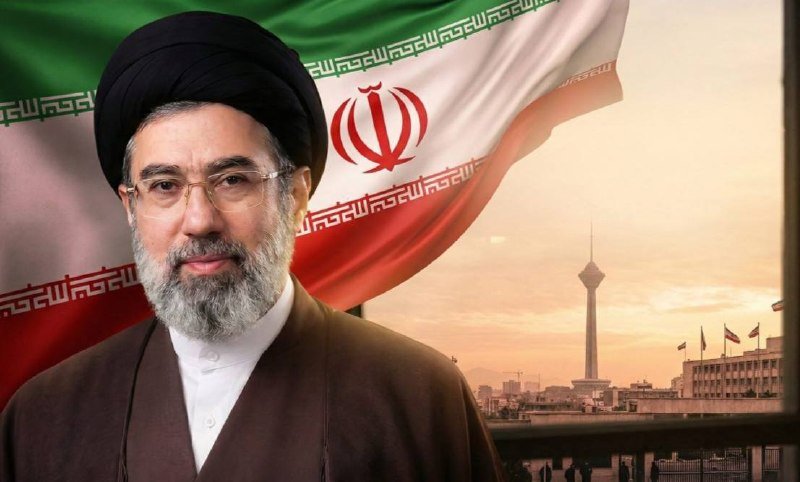
At 02:00 local time on 6 July 2026, the streets of Qom were still full. Tasnim News, the state-aligned outlet closest to the Islamic Republic's inner circle, posted aerial footage of a "roaring flood of people and pilgrims" moving toward Jamkaran Mosque in the small hours, where the body of Ayatollah Ali Khamenei, dead days earlier, had been brought for burial. Press TV, the regime's English-language outlet, ran its own aerial clips of mourners "pouring into" the mosque compound, caption after caption repeating a single word: martyred.
The choreography is the story. Within hours of the death, the entire state media apparatus had locked into a single, repeating template. The leader is not dead, the script insists. He is mohahid, a shahid, a martyr. The crowds are not mourners. They are lovers, pilgrims, devotees, the ummah. The street scenes are not a wake. They are a farewell, a badarqa, a ritual departure staged for the cameras as much as for the dead. The English word that Tasnim and Press TV reached for first, again and again, was farewell.
A vocabulary scripted before the body was cold
Look at the phrasing the regime's own channels chose. Tasnim's overnight post called the gathering a "Farewell dawn", a dawn that belongs to the bereaved and to the state simultaneously. A second post described flowers "showered on the holy body of Imam Mujahid Martyr, Grand Ayatollah Khamenei" along Azadi Street in Tehran. A third mapped the "route of the farewell of the people of Karbala" to the body, invoking a Shia holy city 800 kilometres away in Iraq as if it were a Tehran suburb. A fourth reported on "the anger of Pakistanis at the farewell ceremony for the martyred Imam of the Ummah", collapsing Tehran, Najaf and Islamabad into a single congregation.
This is not accident. The Supreme Leader's office, the state broadcasting apparatus, and the network of affiliated Telegram channels had roughly 72 hours between the announcement of his death and the burial at Jamkaran to set the linguistic frame. They used every hour. "Imam of the Ummah", "Martyr Imam", "the depth of Iranian society", "the beginning of a new world order" (the last phrase lifted directly from the Khamenei.ir English channel): each is a deliberate widening of the circle, an attempt to convert one man's death into a civilisational event and a mobilisation order at the same time.
Crowds as script, crowds as signal
The Lebanese newspaper Al-Akhbar, the regional outlet closest to the axis the Islamic Republic built around Hezbollah, obliged. Its dispatch, relayed by Tasnim's Jahan network, read the crowds in Qom as evidence that "the Islamic Republic still has a strong base in the depth of Iranian society". The line is striking for what it concedes. A regime confident of its mandate does not need a foreign-friendly newspaper to certify it. The Al-Akhbar gloss is for outside audiences, particularly the Shia constituencies in Lebanon, Iraq and the Gulf, whose continued deference the Islamic Republic treats as a strategic asset.
Inside Iran, the same logic works on a different audience. Sardar Hassan Hassanzadeh, head of the "Farewell, Prayer and Funeral Headquarters of the Martyr Leader in Tehran", released a statement of "thanks and appreciation from the people of Iran" to the Iranian people, via Mehr News. The phrasing is layered: the headquarters speaks for the people, then thanks the people for the headquarters' own performance. The crowd is both audience and actor, mourned and mobilised, in a single sentence. That recursion is not a translation artefact. It is the product.
The German minister and the inverted facts
Into this carefully staged atmosphere stepped Iran's foreign ministry, with spokesman Baqaei denouncing German Foreign Minister Johann Wadephul's criticism as "a flight forward and an attempt to show the facts upside down". The phrase is revealing. The Islamic Republic has long treated the gap between the official narrative and external reporting as a contest to be won on its own terms, by sheer repetition and the discipline of its allied outlets. A German foreign minister, of all voices, is the easiest of foils: a Western official whose words can be mocked without the cost of a European riposte.
The function of the denunciation is not diplomatic. It is internal. The line tells Iranian readers that the martyred Imam's farewell is now a matter of state sovereignty, that foreign criticism is a single coherent Western posture, and that the proper response is solidarity with the regime's framing. The funeral is being converted, in real time, into a referendum on the West.
What the regime is buying, and what it is paying
A martyr's farewell is the most expensive ritual an authoritarian state can perform, because the script has to be believed by the mourners as much as by the cameras. The repetition of farewell across a dozen Telegram channels, the wedding of Karbala to Tehran in a single map, the elevation of the deceased from Supreme Leader to Imam of the Ummah in the space of a single news cycle: these are the prices the Islamic Republic is paying for legitimacy in the days after its longest-serving leader left the stage.
The crowds may be real. The grief may be real. The question is whether the script, the repetition, the 2 a.m. aerial shots of Jamkaran Mosque, are the regime buying consent, or the regime buying time. By the time the bodies of the Supreme Leader and his family members are interred, the answer will be visible in what the same channels are not saying.
Desk note: Monexus filed this piece drawing on the public Telegram feeds of Tasnim News, Press TV, Mehr News and the Khamenei.ir English channel, given the absence of independent on-the-ground reporting from Iran at the moment of the Supreme Leader's death. The vocabulary of martyrdom and farewell used here is reproduced from those feeds, not endorsed. Where Western wire reporting later specifies cause of death or names the deceased's family members, Monexus will revise.
Sources
- Tasnim News English (Telegram), multiple posts on the Qom farewell procession, 6 July 2026. https://t.me/tasnimnews_en
- Press TV (Telegram), aerial footage of Jamkaran Mosque mourners, 6 July 2026. https://t.me/presstv
- Mehr News Agency (Telegram), statement by Sardar Hassan Hassanzadeh, 6 July 2026. https://t.me/mehrnews
- Khamenei.ir English (Telegram), Jamkaran Mosque and "a new world order" post, 6 July 2026. https://t.me/Khamenei_en
- Jahan Tasnim (Telegram), Al-Akhbar dispatch on Iranian social base, 6 July 2026. https://t.me/JahanTasnim
- Sprinter Press (X), summary of the funeral as "a demonstration of power", 6 July 2026. https://x.com/sprinterpress