The President, the Portfolio, and the Question the Markets Aren't Asking
Treating the portfolio as the news, not the colour: why the second disclosure of a presidential cycle is the document markets should be reading line by line.
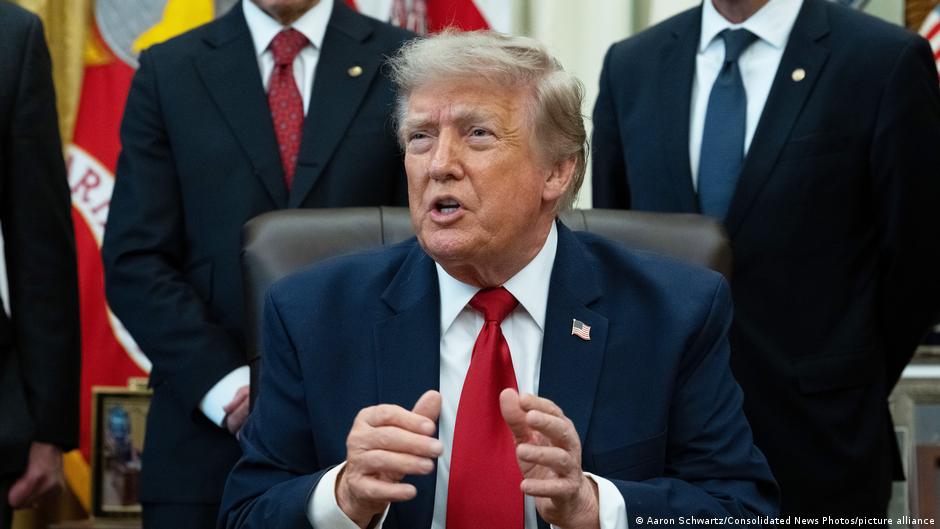
The disclosures filed on a Thursday afternoon in early 2026 reshaped a debate that had, until then, been conducted entirely in the language of tariffs and trade balances. A president's portfolio, long treated as a footnote to the larger drama of economic statecraft, became the document everyone wanted to read in full. The numbers were modest. The implications were not.
Most political coverage of a sitting president's financial life follows a familiar ritual. Reporters inventory the holdings, op-ed columnists render verdict, and within seventy-two hours the story migrates from the front page to the business back-of-book. The framing is almost always defensive: the assumption is that an elected leader's portfolio is, at most, a window into taste, not into leverage. Monexus has long treated that framing as incomplete. A portfolio is not a mirror. It is a position. And positions, in markets that anticipate policy, are usually the earliest read on what policy is about to become.
The disclosure in plain sight
The mechanics of the system are dull on purpose. Federal conflict-of-interest statutes obligate office-holders to file periodic statements listing assets, transactions, and income streams above a statutorily defined threshold. The filings are public. The analytical work of connecting a specific line item to a specific policy outcome is left to journalists and, increasingly, to retail investors who have built entire businesses around parsing the documents faster than legacy media does. The result is a structural asymmetry: the public learns about a trade event at the speed of a wire alert, and about a presidency at the speed of an annual ethics form.
That gap is where the story now sits. When filings surface during a market open, the read-throughs cascade within minutes. Traders scan for sector exposure. Political reporters scan for optics. The two camps rarely compare notes. The president's own trade desk, to the extent one exists publicly, sits somewhere between the two, executing against a known mandate. Everyone else is reacting to a position they did not know was on until they read it on a screen.
Why the framing tilts to the macro
The gravitational pull of macro coverage is easy to explain. Tariff numbers, central-bank rates, and growth forecasts are legible to a newsroom trained to think in aggregates. A president's portfolio is, by contrast, granular and specific: a position in one company, a fund allocation in one sector, a transaction window of one week. Aggregates travel well across syndication. Specifics do not. The wire story on the president's trades will be short and unfussy. The story on the geopolitical posture driving those trades will be long and syndicated. The portfolio will become colour.
This is a methodological choice, not a moral one. Newsrooms allocate ink to where readers' attention already is, and attention follows the macro because the macro is what moves the average retirement account. But the same logic that makes the macro the leading indicator also makes the portfolio a leading indicator of the macro. If a portfolio shifts into a sector, the holder expects that sector to outperform. If the holder writes trade and economic policy, the question is whether the expectation has been operationalised into any regulatory or contractual change, or whether the position simply rides the policy it helped shape.
What the filings can and cannot show
A disclosure document is, by design, a snapshot. It tells the reader what an office-holder owned at a moment in time. It cannot, on its own, demonstrate that any specific policy decision was calibrated to the portfolio, because the chain of causation in modern governance runs through staff memos, regulatory comment letters, and interagency consultations that no public filing captures. What the document can do is narrow the universe of plausible explanations. When a position appears in a sector that the same office has recently helped shield from a competitor, the prior probability of coincidence drops. When the position is closed before the policy is publicly announced, it rises again.
This is why the most consequential coverage of these filings has historically come from journalists who treat the documents as primary sources rather than as fodder. The reporting stance is procedural: what does the form say, what date does it cover, what is the sector classification, and how does that classification map to the agenda of the agencies the filer controls. The questions that follow are narrow on purpose. Did the position exist before the policy? Did it close before or after? Is the size of the position consistent with a passive index allocation, or does it require a discretionary buy?
The market's anticipation problem
Markets have always priced political risk, but the asset class of political risk has expanded. Prediction markets, options chains on single equities, and even structured products tied to electoral outcomes have grown into a deep, if still lightly regulated, secondary market for political information. Each new instrument compresses the lag between a filing and a price reaction. The portfolio disclosure, once a quarterly footnote, is now read by algorithms before the PDF finishes uploading.
That compression changes what the disclosure means in practice. A president who files during a market open is, functionally, transmitting a signal to participants who did not ask for it and cannot un-see it. The disclosure cannot be retracted. The position cannot be unwound in the time it takes a wire service to push a story. The filer's options, in other words, narrow at exactly the moment the public's attention peaks.
What the next filing is likely to surface
The pattern of the past several cycles suggests the second disclosure of the year is the more revealing one. The first filing tends to inherit a portfolio constructed under different assumptions and a different rate environment. By mid-year, the holder has had time to respond to whatever the agenda has actually become. Sector tilts harden. Defensive positions close. A second filing reads less like a snapshot and more like a revised thesis.
That is the document the markets are not asking for yet. The macro coverage is comprehensive. The portfolio coverage is colour. The most informative document of the cycle, the second filing, will arrive in the middle of a news cycle dominated by trade negotiations and central-bank commentary, and will be processed by a press corps that has already pre-committed to its lede. The question worth treating as news is not what the president owns. It is what the president has been buying into, and against which policy the position is now betting.
Monexus treats presidential financial disclosures as primary documents; the wire treats them as colour. The next filing will test which framing ages better.