Spain and Switzerland carry Europe's last knockout hopes as 2026 World Cup culls the continent's middle tier
Spain and Switzerland enter Thursday's Round of 32 ties as Europe's last unconvinced standard-bearers, with Algeria and Austria waiting to test whether the continent's middle tier can convert group-stage promise into knockout football.
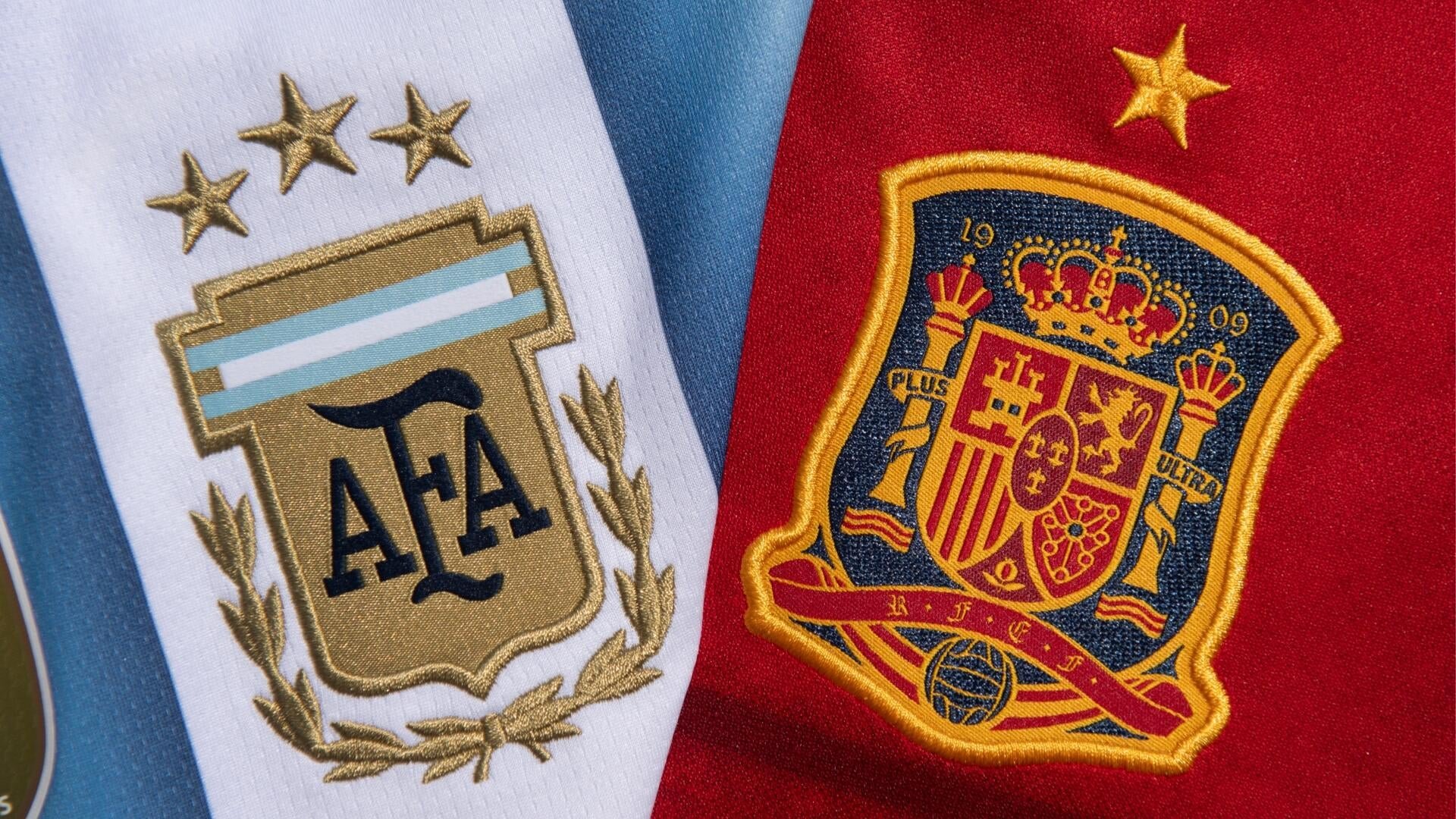
Europe arrived at the 2026 FIFA World Cup in North America with the deepest qualifying pipeline of any confederation and, by the closing week of group play, had watched most of its middle tier walk into the same trap. Round-of-32 fixtures published on 2 and 3 July pit Spain against Austria and Switzerland against Algeria on Thursday, 3 July 2026, leaving La Roja and the Nati as the only European sides still standing outside the consensus elite. The shape of the bracket says the rest.
The tournament's middle band is being hollowed out in real time. The two matches CBS Sports has framed as Thursday's headline cards — Spain–Austria and Switzerland–Algeria — were previewed on 2 July and 1 July UTC respectively by SportsLine handicapper Jon Eimer, whose record over the past two windows stands at 12-5 (Spain–Austria card) and 25-15 (Switzerland–Algeria card). His picks function less as predictions than as a market thermometer: the prices themselves, not the prose, are where the information lives.
What the prices are telling us
Spain enter the Austria tie as heavy favourites, with Eimer's published card flagging Spain's superior technical depth and the wider tournament line that has tracked La Roja as second-favourites to lift the trophy in many futures markets since March. Switzerland, by contrast, are a touchdown-plus favourite against Algeria despite the Fennecs' group-stage run that included a clean sheet against a European side. Both spreads narrow the further the bookmaker has to defend: Spain–Austria's margin is built on squad, Switzerland–Algeria's on structure.
That distinction matters. Spain's group-stage performances have been uneven — draws have interrupted what the bracket assumed would be a cruise — and the published betting angle on the Spain card is that La Roja's young attacking core, with Lamine Yamal operating as the side's chief chance-creator, will eventually overwhelm an Austria side that qualified through the playoff route and lacks the same offensive ceiling. The Switzerland card carries a different framing: Algeria's physical profile and set-piece threat have historically troubled European sides that try to play through them, and Nati coach Murat Yakin's preference for a compact mid-block is read as the structural answer.
The African counterweight
Algeria are not the storyline many European preview desks have made them out to be. Their Round-of-32 appearance is the result of a qualification campaign that displaced one of Africa's traditional heavyweights and a group-stage showing that included the sort of defensive numbers that have quietly become the continent's calling card at this tournament. Belgium, Egypt, Senegal and Morocco have already been eliminated; Algeria's presence in the bracket is the visible edge of a deeper African cohort that has, by expected-goals metrics and underlying shot quality, outperformed European second-tier sides throughout the group stage.
The Switzerland–Algeria price reflects that asymmetry. A handicap in favour of the European side at anything less than a goal would, on the underlying data, be a misread. Whether the market has fully priced the African side's set-piece threat and transition speed into the line is the question Eimer's 25-15 run is implicitly answering. It is also the question that will determine whether Switzerland's knockout run extends past the Round of 16.
The European middle tier's structural problem
Spain and Switzerland are not, on paper, in the same tier. FIFA's world ranking places La Roja inside the top five; Switzerland sit closer to the high teens. The bracket has nonetheless done what brackets tend to do: it has compressed the European middle band into a single coin-flip cohort where one bad afternoon ends the tournament. Austria, the Czechia of the previous cycle, the Denmark of the one before that — these are sides that arrive with a defensive plan and leave when the plan meets an opponent with a No. 9 who can run behind it.
What Thursday's fixtures expose is the absence of a European fourth pillar behind Spain, France, England and Germany. The confederation sent six sides to the knockout round. Two face each other; the rest have already departed or face uphill brackets against South American opposition. The structural read is that Europe's depth, vaunted for two cycles, is now concentrated at the top and gappy underneath — and that the gap is being filled, on this evidence, by African sides that have spent the past four years building exactly the kind of athletic, set-piece-oriented squads that punish European mid-tier caution.
Stakes and what's unresolved
If Spain and Switzerland both advance, the Round of 16 sets up a Spain–Switzerland quarter path on the same side of the bracket — a meeting that, on current prices, would price Spain as roughly 2-to-1 favourites. If either falls, the bracket tilts toward an African quarter-finalist and the loudest non-European story of the tournament so far. The remaining uncertainty is whether Austria or Algeria can execute the sort of low-block, transition-disciplined performance that has historically been the European mid-tier's kryptonite — and whether either European side has the attacking variety to break that block without conceding the kind of counter that decides knockout football.
The published lines treat both European sides as favourites, but the prices on the Algeria and Austria sides are shorter than the public commentary implies. That gap — between the narrative frame and the market frame — is where Thursday's results will likely be settled. Spain and Switzerland carry Europe's last unconvinced hopes, but unconvinced is not the same as safe.