Kling's $2bn round lands the same week Beijing pushes an ethnic-unity law, two faces of China's state-capital compact
On July 3, 2026, Kling closed a $2bn round and Beijing advanced an ethnic-unity law within hours. Monexus reads the two as one story: capital and political discipline priced into the same Chinese AI ecosystem.
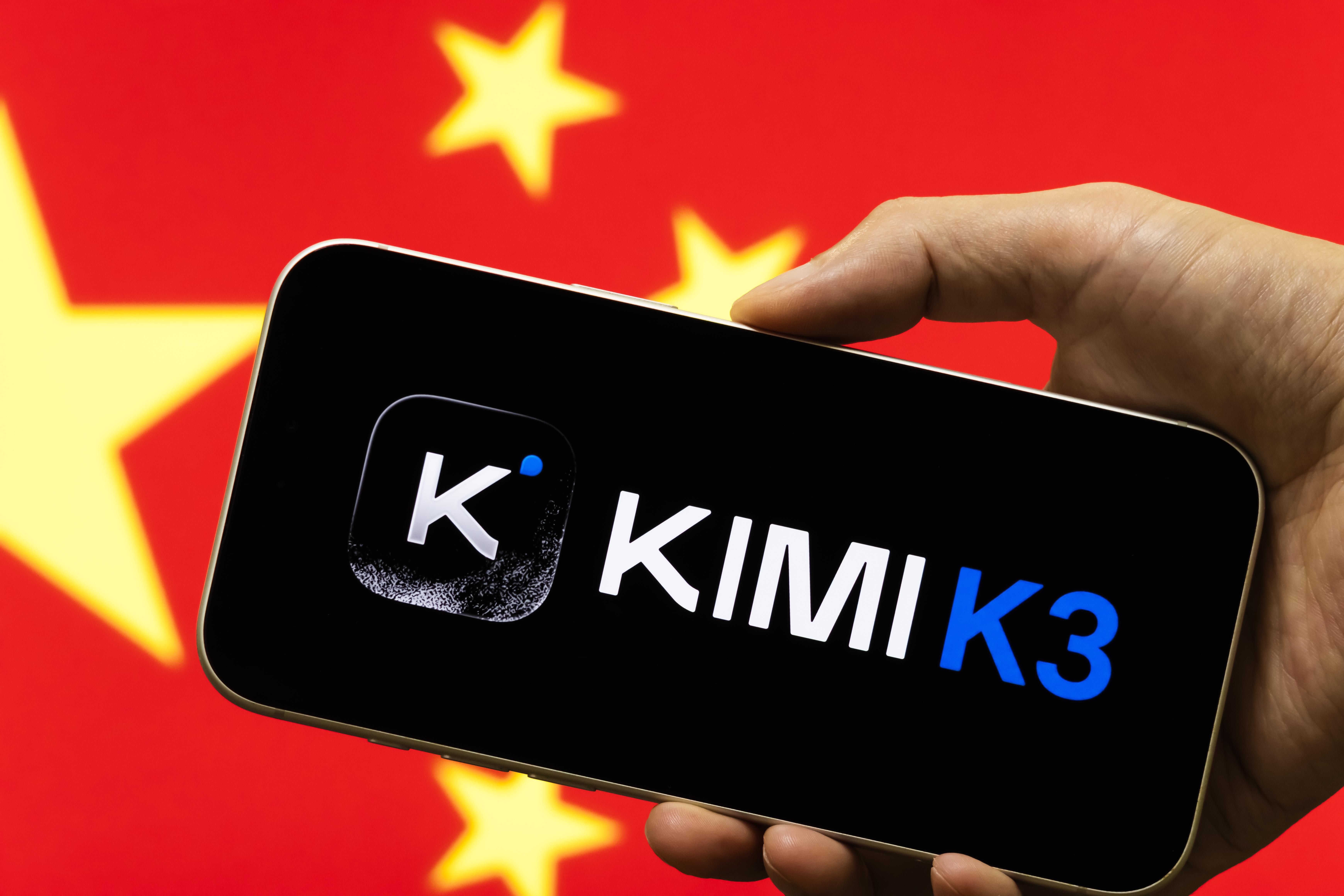
On July 3, 2026, two announcements landed within hours of each other on opposite sides of the Chinese state. In the morning, Kling, the video-generation model run by Beijing-based Kuaishou, closed a funding round that valued the company at roughly $2 billion. By evening, the same Beijing had pushed forward a national-ethnic-unity law through its legislature, the kind of measure that tightens the political floor under every company operating inside the country. The capital providers who wrote the cheques into Kling were underwriting, on the same day, the legal architecture that defines what the company can and cannot say.
The juxtaposition is the story. China's AI sector has been treated by Western analysts as a story about model weights, chip access, and export controls. The July 3 dual publication argues for a different frame. The state extracts both capital and political discipline from the same ecosystem, and the firms compete in a space where the rules of competition are written by the entity that also lends the national project its ideological clothing.
Kling's valuation, reported by wire services earlier this month, puts the video model in a tier with the better-capitalised Chinese generative-AI players. The company behind it, Kuaishou, is one of the country's two dominant short-video platforms, and its model releases over the past year have tracked a deliberate strategy: leapfrog where the chips allow, accept the limits where they don't, and price aggressively against Western incumbents. The $2 billion figure is the market's verdict that this posture works, at least for now. Investors had been watching the Chinese video-AI field thin out over the past quarter as smaller players ran out of compute access; the round signals consolidation around a small handful of names with state-aligned gravitas.
The ethnic-unity law sits inside the same week's news because Beijing routinely bundles political-legal announcements into periods of intense market activity, in part to set the ceiling above which firms cannot climb. The law is described by state media as a measure to strengthen national cohesion and to govern how state actors discuss ethnic relations. The regulatory perimeter matters more than the specific provisions. Any Chinese technology company whose product generates, edits, or hosts media content can be construed as touching on ethnic representation, which is to say, on national cohesion. The new law gives the relevant ministries a fresh instrument to use against firms whose outputs violate the spirit of the policy, even where the letter of the law is not yet codified.
The standard Western read frames these as two unrelated items. Wire services covered the round in a finance brief and the law in a politics brief, and the two stories never spoke. The argument here is that treating them separately misses the operating logic of the sector. In China's AI economy, capital allocation and political discipline are not parallel processes; they are twin outputs of the same state. The party-state decides where investment flows through the guidance it gives to sovereign and quasi-sovereign capital, and it decides what the funded firms can do through legal instruments that look, to a Western reader, like domestic legislation. Kling can raise $2 billion because investors believe the company will continue to enjoy a state-aligned posture. Kling raises $2 billion into a market that is increasingly attentive to whether its outputs reflect the state's preferred reading of the country.
The model-versus-state framing also obscures a third layer: supply chain. Chinese AI firms continue to operate under heavy US export restrictions on advanced compute, and the workarounds, from state-subsidised domestic accelerators to grey-market procurement, depend on relationships with state-linked entities. The same week as the Kling round, wire coverage noted that Alibaba, the country's largest cloud provider, would ban internal use of Anthropic's Claude Code from July 10 over what the company described, via Reuters, as backdoor risks. This is the third leg of the same stool: a national AI ecosystem that capitalises against sanctioned Western models, builds domestic alternatives, and operates inside a political-legal perimeter that the state can tighten at will.
None of this is novel in the broad arc. Chinese internet platforms have spent fifteen years learning to manage political compliance alongside commercial ambition. What is novel in July 2026 is the simultaneity. A $2 billion private-market round on the same day as a national-unity law is not a coincidence; it is the public face of a compact. The firms get capital and a protected domestic market; the state gets compliant media infrastructure and a sector that can be mobilised for geopolitical ends, whether that means building models trained on curated data, censoring politically sensitive outputs, or competing with US firms in third-country markets.
The risk for foreign analysts is to read the round as a vindication and the law as a sideshow. The two should be read together. China's AI sector is not a normal capital market with politics in the background; it is a capital market where politics is an input. Kling's valuation will move with chip access, model benchmarks, and user growth, just like any technology company's. It will also move with the political weather, because the state's willingness to let the company speak, and to let its users speak, is itself a variable the market has learned to price. The week of July 3 is a clean illustration of that pricing in real time.
Sources
- https://x.com/polymarket/status/2072862290500608000, Polymarket (X), funding-round market commentary, July 2026
- http://reut.rs/4xTtnIq, Reuters, Kling funding round coverage, July 2026
- https://t.me/s/aipost/, Telegram: AIPost, Alibaba Claude Code internal ban (citing Reuters), July 5, 2026
- https://t.me/s/theverge_news, Telegram: The Verge News, GTA VI launch coverage, July 5, 2026
- https://t.me/s/Artificial_intelligen, Telegram: Artificial Intelligence, weekly AI roundup, July 5, 2026
Desk note: The wire covered Kling's round and the ethnic-unity law as adjacent but unrelated items. Monexus treats them as a single story about the conditions under which Chinese AI firms raise capital and operate.