The Funeral That Is Also a Foreign-Policy Statement
As coffins are carried in Tehran, parliamentary speakers from Cairo to Doha are queuing to pay respects. The choreography is the message: the post-Khamenei order is being auditioned in public.
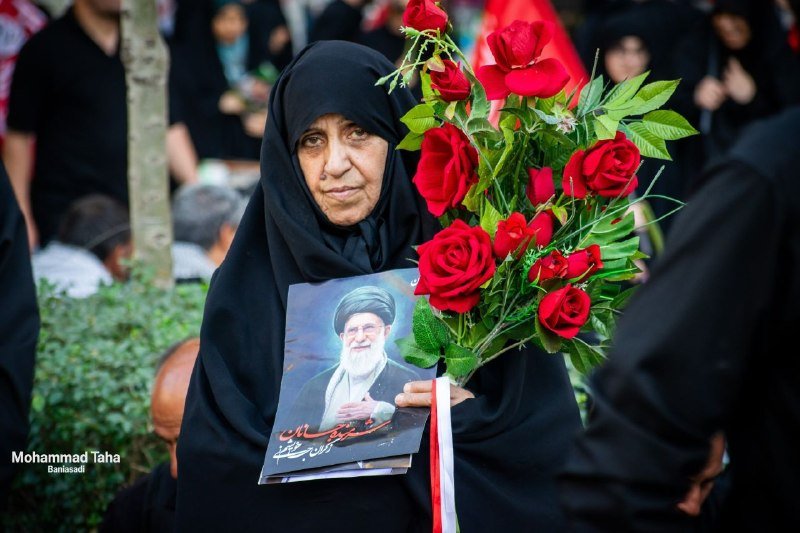
On 3 July 2026, the parliament of Qatar sent a delegation to Tehran. The Egyptians came the same day. A bloc described as the "resistance front" had reportedly already paid its respects by mid-afternoon, according to state-aligned Telegram channels covering the ceremony. The choreography is unusual. The choreography is the point.
For a leadership succession in Tehran, the speed and seniority of foreign visitors are themselves a policy document. Monexus reads the funeral as a foreign-policy event first and a mourning rite second.
The visiting list is the message
The names doing the paying of respects, and the order they arrive in, are doing diplomatic work. A parliamentary speaker is not a head of state, but a speaker is a permanent institutional figure: immune to electoral churn, recognisable across decades, and able to commit a legislature's symbolic weight without a formal treaty. When the Qatari and Egyptian parliamentary leaderships cross into Tehran within hours of each other, the act says that the Gulf Arab monarchies are not waiting to see who wins the internal contest. They are visibly courting whoever is in the room.
The official Iranian framing, propagated through Tasnim and IRNA-aligned channels, is that this is the world's farewell to a martyr. The structural reading is colder and more useful: regional parliaments are hedging.
What the Western wire missed
The Anglophone wire has been slow to register what is happening. Reuters and AP have framed the succession as a domestic Iranian problem. The Gulf delegations suggest otherwise. The post-2015 regional architecture — Iranian-Saudi rapprochement, the weakening of the armed-front model, the gradual reintegration of Damascus — has been built on personal relationships between the Islamic Republic's senior clergy and a small network of Gulf foreign-policy chiefs. Those relationships survive the supreme leader personally; they do not necessarily survive the inner-circle reshuffle that succession forces.
Parliamentary visits cannot create those ties. But they can prevent the new officeholder from having to introduce himself.
The counter-narrative, taken seriously
The Western press will read this as theatrical grief-management by an isolated regime. That reading is not wrong; it is incomplete. The Iranian state's domestic legitimation crisis is real, and a public mourning period is a tested instrument for resetting the clock. But the state-aligned framing also captures something the Western framing misses: that there is genuine regional demand for an orderly Iranian transition, and that demand is now being expressed in feet on the ground, not just statements of concern. Gulf capitals are not sending delegations because they love Tehran. They are sending them because the alternative — a contested succession inside an already heavily armed state — is worse for everyone within missile range.
What remains uncertain
The sources do not specify the identity of the senior official whose funeral is being commemorated, nor the size of the Egyptian and Qatari delegations, nor which "resistance front" members have been formally admitted. Iranian state media is, by its nature, not a neutral observer of its own succession. Until independent Western wire services verify the visiting lists against foreign-ministry readouts from Doha and Cairo, the precise hierarchy of attendees should be treated as a partial record. Monexus will update when those primary readouts are published.
What the choreography already establishes, independent of the naming, is that the regional architecture treats this transition as a coordination problem to be managed in real time. That is the news.
Desk note: Monexus framed this around the visiting-list choreography rather than the succession outcome, because the latter is unverified at publication and the former is the only piece of the story presently readable from open sources. Western wires have led on the internal Iranian framing; this publication led on the regional signalling.
Wire provenance
This editorial synthesis draws on the following public wire/social posts:
- https://t.me/tasnimnews_en
- https://t.me/tasnimnews_en
- https://t.me/tasnimnews_en
- https://t.me/tasnimnews_en