Iran's foreign minister reaches for diplomatic cover as Gulf tensions simmer
Araghchi's regional tour reframes a leadership transition as diplomatic momentum, but Iran's own defense minister is reserving the right to blow up the ceasefire memo the foreign minister is selling.
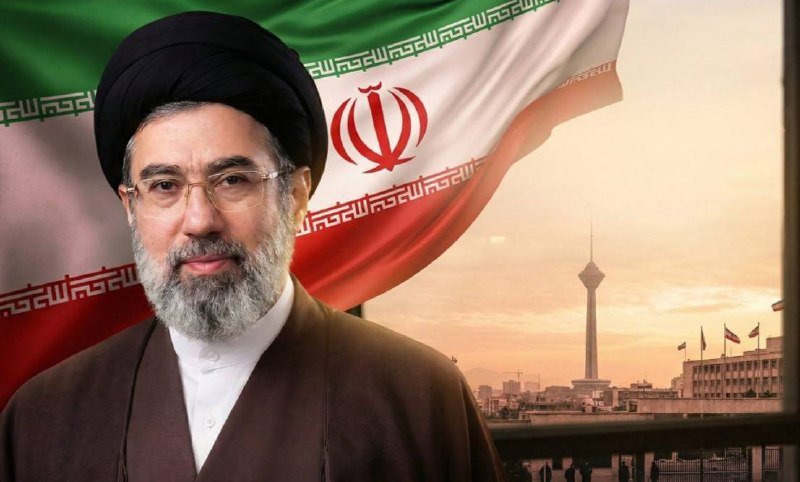
Araghchi arrived in Beirut on 2 July 2026 carrying a message calibrated for two audiences at once. To Gulf capitals watching the choreography of an Iranian diplomatic comeback, the foreign minister's regional tour is a signal that Tehran intends to be spoken to, not merely spoken about. To a domestic audience still processing the death of Supreme Leader Ali Khamenei, it is a demonstration that the Islamic Republic's diplomatic machinery still functions under new management.
The tour lands at an awkward moment. The acting Iranian defense minister publicly warned the same week that Tehran would give a "decisive response" to any violation of a ceasefire memorandum with Washington, a formulation that doubles as deterrent language and as a marker of how narrow the trust deficit between the two governments has become. Araghchi's preferred register is the opposite: patient, multilateral, inclusive. The contrast is the story.
A stage managed from Tehran
The headline the Iranian foreign ministry wanted Gulf and Levant observers to read that day was about attendance, not absence. According to Iranian state-aligned readouts, representatives from more than 70 countries attended commemorations for Khamenei, a figure designed to project continuity rather than rupture. Pakistani Prime Minister Shehbaz Sharif's tribute to the late Supreme Leader, released through Iranian channels as a portrait of a "great intellectual" defined by "tenacity, bravery, patience and foresight," served the same purpose. So did the carefully circulated footage of Burkina Faso's foreign minister paying respects at the memorial, a piece of evidence that the Islamic Republic still commands audiences across both the Muslim-majority world and the non-aligned South.
This is soft-power choreography with hard edges. Araghchi's project is to render the post-Khamenei transition legible to neighbours who have spent a decade hedging against Iranian isolation. A 70-country turnout is meant to do that work in a single image. Whether those foreign delegations travelled to mourn, to recalibrate, or to be seen travelling is the question the framing is designed to prevent.
The counter-narrative from Washington
Inside the United States, the same week produced a different picture. Iranian-aligned reporting picked up an internal dispute inside the Trump White House over the architecture of the Iran agreement and over the trajectory of the Lebanon war, framed as a competition between Vice President Vance and Secretary of State Rubio. The White House has denied any rift. The fact that Iranian channels are amplifying the rumour is itself the point: Tehran reads American disunity as an opening, and the diplomatic tour is partly an attempt to widen it.
The ceasefire memo that the acting defense minister cited is the unstable terrain on which Araghchi is now walking. Iranian state media treats the document as a binding compact whose violation would trigger retaliation; American interlocutors, to the extent their comments are visible in the public record, treat it as a tactical pause subject to revision. Until those two readings converge, every handshake Araghchi offers a Gulf counterpart is hedged by a question no Iranian readout can answer: what happens when the memo expires.
Gulf silence, and what it costs
What is striking about the readouts that frame Araghchi's tour is the comparative silence from the Gulf. Saudi, Emirati and Qatari state media have not, on the public record available on 2 July, matched the volume of Iranian-aligned coverage. That asymmetry is itself informative. Gulf monarchies have spent two years de-escalating with Tehran through Beijing-brokered channels and quiet intelligence contacts; they have little appetite for either the optics or the risks of being photographed alongside an Iranian foreign minister during a leadership transition in the Islamic Republic.
The silence is not disinterest. It is risk management. A Gulf capital that visibly welcomes Araghchi invites a domestic political backlash from constituencies still attuned to Iranian subversion, while a Gulf capital that visibly snubs him forfeits leverage in whatever negotiation comes next. The Iranian reading of that silence, predictably, is that Gulf capitals are waiting to be courted; the Gulf reading, less often aired, is that they are waiting to see whether the post-Khamenei order can survive its own internal contest.
What Araghchi is actually selling
Strip away the choreographed mourning and the tour reduces to a sales pitch with three components. First, the Islamic Republic remains a diplomatic interlocutor of consequence, capable of convening seventy-plus foreign delegations and of brokering understandings with Washington under written, if contested, terms. Second, the transition from Khamenei to his successor will be managed without disruption to regional interlocutors, an explicit reassurance to Gulf capitals that hedged heavily against the late Supreme Leader. Third, the door to a broader regional security settlement is open, on terms that begin from the ceasefire memo rather than from pre-2026 demands.
Each of those propositions is contestable. The 70-country figure reflects attendance at a memorial, not endorsement of Iranian foreign policy. The transition's stability is asserted, not demonstrated. The ceasefire's durability is denied by Iran's own acting defense minister, who publicly reserves the right to a "decisive response" against any party that, in Tehran's reading, breaches it.
The structural picture
What is unfolding is the familiar pattern of a sanctioned, ideologically committed state seeking diplomatic cover while its security services retain maximum freedom of action. Iran does not need Gulf recognition to project power across the Strait of Hormuz, into Iraq, or through Lebanese territory. It needs Gulf recognition to translate that power into political outcomes it cannot impose unilaterally, including the lifting or freezing of sanctions, the management of its nuclear file, and the insulation of the post-Khamenei leadership from domestic rivals.
Araghchi's tour is therefore best read as the visible half of a two-track strategy. The visible half is reassurance, mourning, and multilateralism. The invisible half is the deterrent language out of the defense ministry and the amplifying of perceived fractures inside the White House. Tehran is offering Gulf capitals a deal: recognise the new leadership and you get predictability, continued regional de-escalation, and a negotiating partner. Test that leadership and you get the version of Iran that the defense ministry has spent the past week reminding Washington about.
The Gulf knows this. The question is whether the Gulf, in 2 July's late summer quiet, will answer.
Sources: Middle East Eye live coverage (4 July 2026); Press TV Telegram (4 July 2026); Fars News International Telegram (4 July 2026); Khamenei.ir Telegram (4 July 2026, Sharif tribute); Azeri Khamenei.ir Telegram (4 July 2026, Burkina Faso footage); Al Alam Telegram; Tasnim News English Telegram.
Desk note: This piece relies on Iranian state wire readouts of 2 July 2026. Monexus treats those readouts as primary-source evidence of Tehran's preferred framing, not as a neutral account of the day's exchanges. Where Western or Gulf readouts emerge, the framing will be revisited.