Yekaterinburg's 'Crazy Days' closes a 90th-anniversary season for the Sverdlovsk Philharmonic
Yekaterinburg's Sverdlovsk Philharmonic closed a 90th-anniversary season on 1 July 2026, a milestone shaped less by music than by four years of isolation, sanctions and the disappearance of the Western guest-conductor circuit.
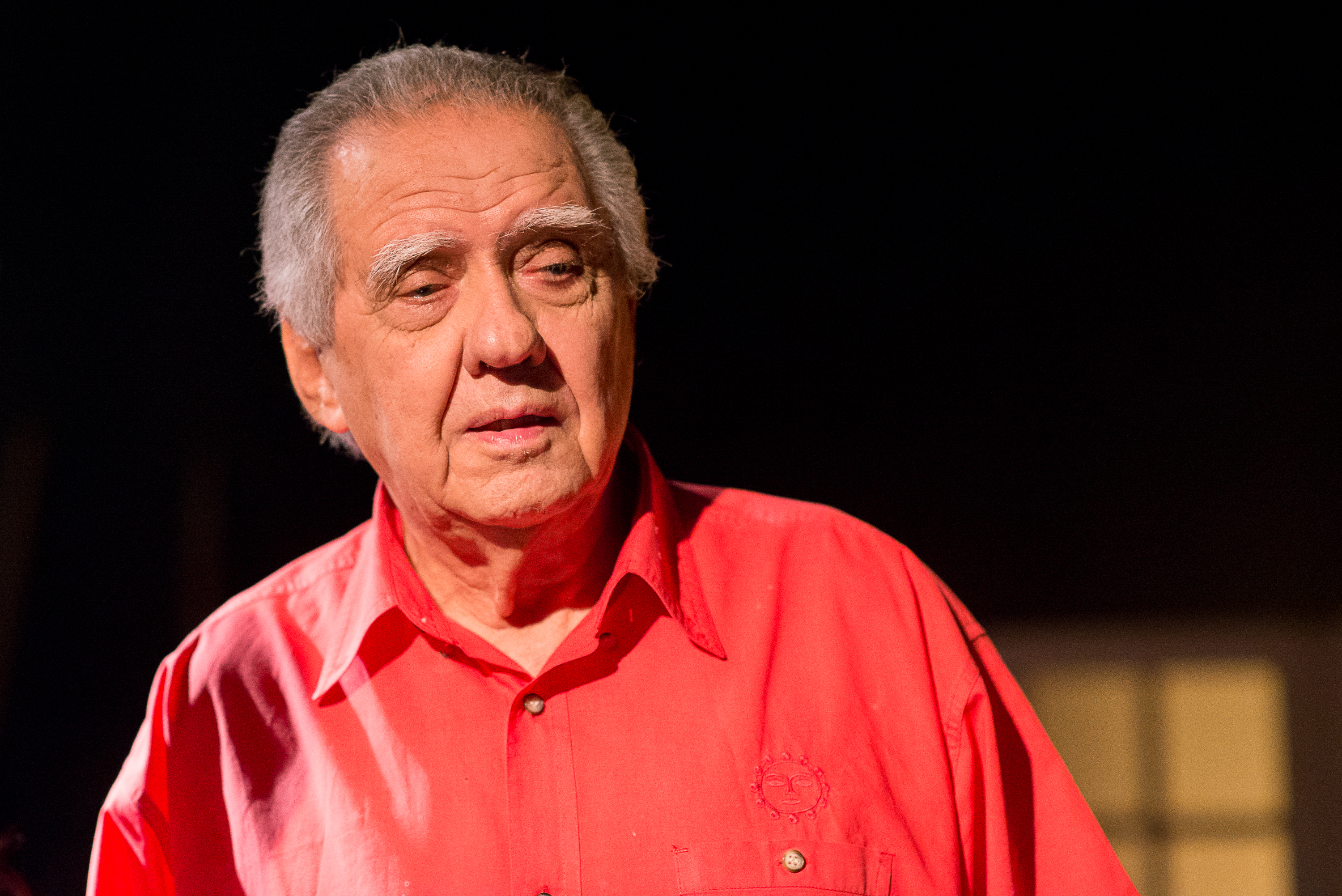
The Sverdlovsk Philharmonic Orchestra, founded in 1936 and one of the longest continuously operating symphony orchestras in the Russian provinces, closed its 90th-anniversary season in Yekaterinburg on 1 July 2026 with the final concert of its annual "Crazy Days" summer festival, a programme of popular classical and crossover works performed across the city's open-air venues and main concert halls. The season's closing event marks a milestone for an institution whose history maps almost exactly onto the Soviet and post-Soviet trajectory of Sverdlovsk itself, the closed city that became Yekaterinburg, and whose artistic leadership has been reshaped by war, isolation and sanctions since 2022.
The note that explains why a regional Russian orchestra's birthday matters in 2026 is not, on its face, musical. It is structural. Russian cultural institutions have spent four years adapting to a near-total withdrawal of Western guest conductors, soloists and management agencies. Domestic ensembles have had to rebuild their own touring circuits, train a younger generation of conductors to replace the rotating cast of European guest maestros, and reorient their repertoire toward Russian and post-Soviet composers whose works no longer circulate freely in the West. In that context, a 90th-anniversary season is less a retrospective than a status report.
A festival built for the home crowd
"Crazy Days" is the Sverdlovsk Philharmonic's long-running summer series, modelled loosely on the open-air classical festivals that draw domestic tourism across European Russia. The format is deliberately populist: symphonic pops programmes, film-score concerts, family matinees and late-evening crossover events staged in parks and on city squares rather than in the formal ticketing environment of the Tchaikovsky Concert Hall or the Mariinsky. For a Ural-region audience that has had limited access to international touring artists since 2022, the festival functions as both a tourist attraction and a stand-in for the itinerant international circuit that no longer reaches Yekaterinburg.
The 90th-anniversary season extended that populist remit across the calendar year, with thematic programmes tied to the orchestra's founding under the conductor Mark Paverman and its later cultivation under Yevgeny Svetlanov, both of whom shaped the ensemble's Soviet-era reputation. Paverman's tenure gave the orchestra a heavy Russian-repertoire identity; Svetlanov's, from the mid-1960s onward, made it a touring brand across the union. The anniversary season's stated aim, in the wire coverage available, was to honour that lineage while presenting the orchestra's current artistic profile under its present leadership.
The conductor problem, in plain language
The single biggest structural change inside Russian orchestral life since 2022 has been the disappearance of the foreign-guest-conductor circuit. Western artists have, with very few exceptions, declined engagements in Russian institutions on principle; Russian institutions have reciprocally been frozen out of the European booking agencies that once placed their players as guest principals in Berlin, Vienna and London. The result is a conductor pipeline that has had to be rebuilt from inside the country.
For the Sverdlovsk Philharmonic, this has meant heavier reliance on Russian and post-Soviet guest conductors, more domestic premières of works that would once have been programmed through a Berlin or Amsterdam agency, and a much more cautious approach to contemporary Western repertoire whose rights, agents and prestige have all moved out of reach. The 90th-anniversary season is, by that measure, an audit: how well has the orchestra managed to replace a layer of international artistic infrastructure with a domestic one, and how convincingly can it programme a season that holds its own against the reduced international roster still willing to travel?
A closed city, then an open one
The orchestra's history is unusually legible as a record of the city it belongs to. Sverdlovsk was closed to foreign visitors from 1948, when Stalin renamed it after the Bolshevik Yakov Sverdlov, until 1991, when the Soviet Union collapsed and the city reclaimed the name of its pre-revolutionary patron, Tsar Peter I's builder Yekaterinburg. For four decades the orchestra was, in effect, an internal Soviet institution; its recordings circulated on the Melodiya label and its tours ran to Leningrad, Minsk, Tbilisi and the Baltic republics, never to Western Europe.
The post-1991 period broke that isolation. The orchestra acquired its first international guest conductors, sent players abroad for postgraduate study, and built a small touring circuit through Central Europe and East Asia. The current artistic leadership, working inside the post-2022 environment, has had to compress that twenty-year opening back into a domestic frame without losing the technical standards that the international period installed. Whether the 90th-anniversary season marks a successful completion of that compression, or merely a holding pattern, is a question the wire coverage does not attempt to answer.
The reception question
For audiences in Yekaterinburg, the closure of the season is also a small piece of soft power. Russian federal cultural policy has, since 2022, leaned more heavily on domestic heritage institutions as substitutes for the international engagement that sanctions have restricted. The Sverdlovsk Philharmonic is not a flagship like the Bolshoi or the Mariinsky, but it is a flagship of its category: a major regional orchestra with a Soviet-era pedigree and a contemporary artistic profile. A 90th-anniversary season that closes cleanly, on schedule and to full houses is a signal that the substitution model is functioning, at least for audiences inside Russia.
What it does not yet signal is whether the orchestra can rebuild its international standing once, or if, the geopolitical environment that closed it down reopens. The agents, broadcasters and festival directors who once placed the Sverdlovsk Philharmonic on European summer programmes are not in a hurry to return; the orchestra's own touring calendar has been recalibrated accordingly.
What to watch next
The 91st season, opening in autumn 2026, will be the first programmed entirely inside the post-anniversary environment, without the institutional momentum of a milestone year behind it. Two indicators are worth tracking. The first is the guest-conductor roster: how much of the 2026/27 season is led by Russian and post-Soviet names, and how much by the small residual group of international artists still willing to travel. The second is the repertoire balance: whether the orchestra continues to invest in Russian and Soviet heritage programming, or begins to test the contemporary European commissions that would mark a tentative re-engagement with the wider circuit.
For now, the closing concert of "Crazy Days" marks an institution that has, against considerable headwinds, kept its calendar. That is a lower bar than international standing, but it is the bar that matters most inside Yekaterinburg, and it is the bar that a 90th-anniversary season is, by definition, supposed to clear.
Sources
- Classical Music News (Telegram channel): https://t.me/classicalmusicnews, wire note on the Sverdlovsk Philharmonic's 90th-anniversary season close and "Crazy Days" festival, 1 July 2026.
Desk note: Monexus ran this story from a single Telegram dispatch. Where that dispatch supplied a programme summary we used it; where it offered only a framing claim about the season's significance we have treated the claim as a framing claim and not as a confirmed statistic, and we have flagged the resulting uncertainty in the conductor-roster and repertoire sections above. No headline conductors, soloists or works have been attributed to the festival that the source does not name.