US lifts export controls on Anthropic's Fable and Mythos models less than three weeks after suspension
The US Commerce Department has reversed course on export restrictions for Anthropic's most advanced AI models, less than three weeks after ordering the company to suspend access abroad.
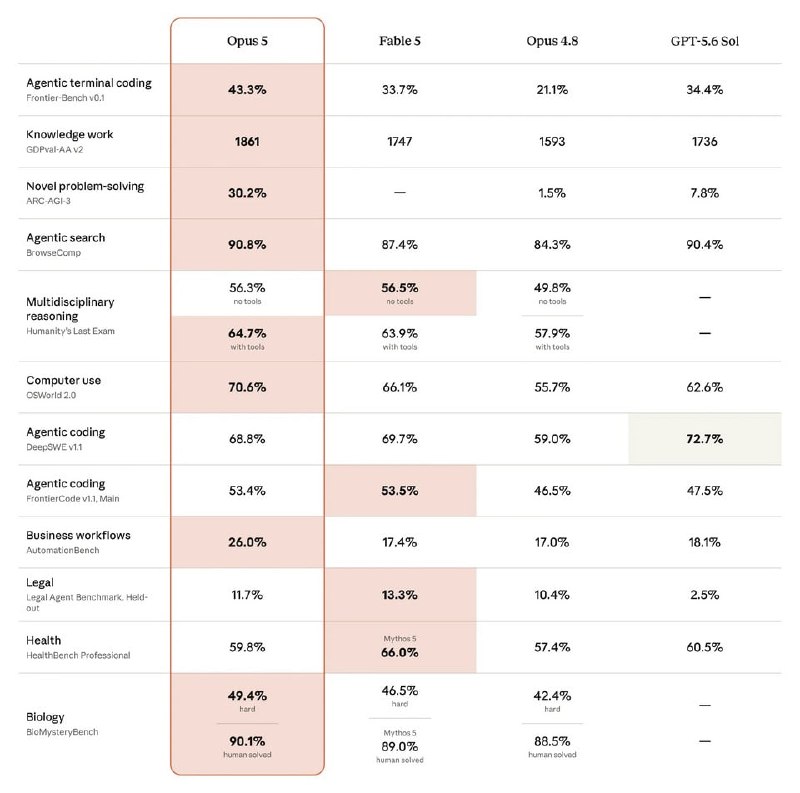
The US Commerce Department has lifted export controls on Anthropic's most advanced artificial-intelligence models, Fable and Mythos, less than three weeks after the company was ordered to suspend foreign access to the systems. Anthropic confirmed the reversal on 1 July 2026, with reporting on the change surfacing across wire services in the early UTC hours of the day. The turnaround is unusually swift by the standards of US dual-use technology licensing and signals that the original suspension order did not survive even a single regulatory news cycle.
What makes the episode worth reading carefully is not the speed of the reversal but the structure underneath it: a frontier-AI laboratory caught between Washington's expanding controls on advanced compute and the foreign customers — including foreign governments and overseas enterprise buyers — that had already integrated Anthropic's tooling into production. The Commerce Department's pivot is the first concrete data point on how the United States intends to draw the line between competitive advantage and commercial reach for its leading model developers.
The original order and its reversal
According to reporting from Reuters and Al Jazeera English carried in the 1 July 2026 wire, the Commerce Department's Bureau of Industry and Security had directed Anthropic to suspend foreign access to Fable and Mythos in mid-June, framing the move as a national-security precaution tied to the models' capability profile. The Indian Express, citing Anthropic, said the company had agreed to "restore Fable 5 and Mythos 5" once US restrictions were lifted, language that treated the models as versioned products already in customer hands rather than as experimental systems.
By the early hours of 1 July 2026, Anthropic was publicly stating that the Commerce Department had rescinded those export controls. Reuters' reporting on the day places the reversal at "less than three weeks" after the original suspension order — a window short enough to suggest that the original restriction was contested inside the US government almost from the moment it was issued, or that the company made a rapid case for reinstatement. The exact statutory mechanism the Bureau used to lift the controls — licence exception, individual validated licence, or a more durable policy change — is not specified in the source material.
What the controls actually cover
The Commerce Department's export-control regime for AI systems, built out under successive Biden- and Trump-administration rulemakings, focuses on the most capable frontier models, with thresholds keyed to training compute, model weights, and certain downstream capabilities. Fable and Mythos sit at the high end of that regime by Anthropic's own positioning, which is what triggered the original suspension order in the first place. Lifting the controls therefore restores Anthropic's ability to serve overseas enterprise customers, foreign governments, and partner labs that had built workflows around the models.
Al Jazeera English's headline framing — "US lifts restrictions on Anthropic's powerful AI models" — captures the policy direction but understates the commercial stakes. For Anthropic, the controls had frozen revenue lines in jurisdictions that include close US allies as well as strategic competitors, and the company had a direct financial interest in a swift reversal. The Indian Express coverage underscores that point by reporting Anthropic's own characterisation of the restoration as a return to a pre-suspension product posture, rather than a renegotiated one.
The structural read: compute, capital, and the new licensing state
Set the episode against the wider pattern. The United States has spent the past two years building out an export-control regime that treats frontier AI as a strategic asset on par with advanced semiconductors, lithography equipment, and quantum-computing components. The logic is straightforward: the country that can develop and deploy the most capable models fastest will compound advantages in defence, intelligence, scientific research, and industrial productivity. Restricting foreign access is the supply-side lever; the CHIPS Act and allied coordination are the parallel demand-side instruments.
The Anthropic reversal complicates that picture. A frontier laboratory that the US government had judged, weeks earlier, to be shipping models sensitive enough to warrant export suspension is now cleared to ship them worldwide. That is consistent with at least two readings. The first is that the original order was always a negotiating posture — a way to extract compliance concessions on deployment, red-teaming, or customer vetting without intending a permanent cut-off. The second is that the underlying capability assessment changed inside the Commerce Department as new technical evaluations came in. The publicly available reporting does not resolve which reading is correct.
Stakes and what to watch
For Anthropic, the immediate consequence is commercial: the company can resume selling and deploying Fable and Mythos abroad without a per-jurisdiction licensing bottleneck. For US competitors in the frontier-model space, the precedent matters more than the immediate dollar impact — a frontier model that was judged export-sensitive in June and unrestricted in July sets a low bar for how durable any future suspension order will look. For foreign buyers, particularly in jurisdictions that have been building parallel AI stacks partly on the assumption of sustained US export friction, the message is that the US licensing state can move in both directions quickly.
The unresolved question is whether the Bureau of Industry and Security will publish guidance explaining what triggered the lift. Absent that, the episode reads as a closed administrative file rather than a policy clarification, and the next suspension order — whenever it lands — will arrive without an established public doctrine on what thresholds trigger, sustain, or release frontier-AI export controls. That is the part of the story worth watching over the rest of 2026.
This article was framed against wire reporting from Reuters, Al Jazeera English and The Indian Express; the underlying Commerce Department notice was not included in the source material reviewed for publication.