England's knockout hand: Tuchel picks his moment
Thomas Tuchel has 36 hours to decide whether England's knockout identity is built on 35 crosses against the DRC or on a low block that respects Mexico City's altitude. The Mexico tie at 01:00 BST on Monday will answer the question the group stage only deferred.
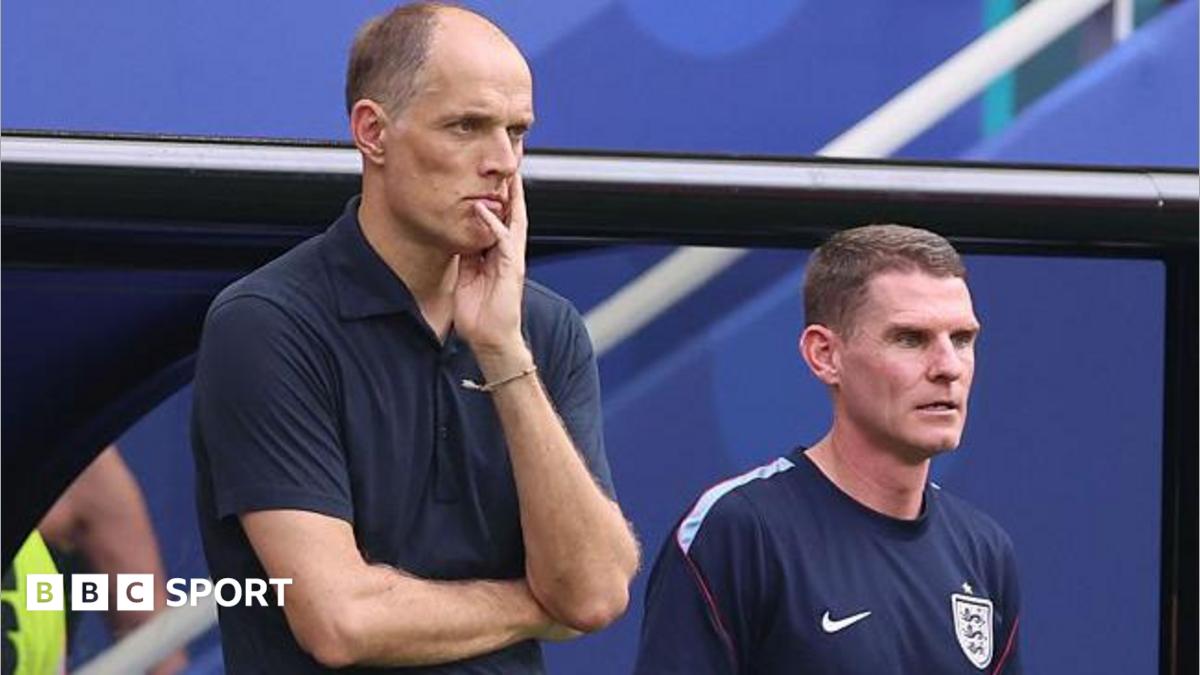
England's knockout campaign starts at 01:00 BST on Monday in Mexico City, and the choice Thomas Tuchel makes in the next 48 hours will tell more about his team than any of the three group-stage results that preceded it. The opponents are co-hosts Mexico, fresh off a group stage that has the Zócalo packed with shirt sellers and the streets around it abuzz. England, having negotiated the opening phase with the kind of control that has become routine for them under major-tournament management, now arrive at the tournament's pulsating heart to face a side whose expectations have rarely been higher.
Tuchel did not take this job to win a group. He was hired to manage what comes after. That is the frame every England supporter is now holding as the bracket tightens, and the early reporting around the camp has split into two clear currents: one that the squad has the depth and the tactical variety to impose themselves, and one that the altitude, the crowd and Mexico's directness will punish any side that tries to play their usual game at sea-level tempo.
The plan that worked, and what it leaves behind
England's 2-1 win over the Democratic Republic of the Congo produced a number worth pausing on. According to The Football's tactical read of the match, England attempted 35 crosses in open play against the DRC, their highest count since the World Cup-winning campaign. That is not a coincidence, and it is not a throwback. It is a deliberate leaning into the kind of aerial route that Aaron Ramsey's Wales once made uncomfortable for England, with the bench now stocked with the kind of targets who can actually meet them.
The temptation, after a performance like that, is to declare the template settled. Tuchel's camp will not. Crossing volume is a useful mask for a side still working out who carries the ball through the middle under pressure, and the DRC group-stage outing was the kind of controlled environment in which England could afford to find out. The knockout round is not that environment.
The altitude problem and the Mexico question
The Sport tactical preview of the Mexico tie is blunt: if any win will do, England do not need an exhibition. The advice, from a writer who has watched Tuchel long enough to recognise his preferences, is to slow the game down, sit in a lower block, and treat the altitude at the Azteca as the primary opponent rather than Raúl Jiménez. TheFootball's parallel piece makes the same point in different language: get a grip on Mora, force the aerial route onto Mexico's centre-backs rather than England's, and let the co-hosts break their head on a low block that does not give away the space Jiménez and company want to run into.
Both pieces converge on the same tactical thesis. England have the players to dominate possession against most sides in this bracket. They do not have the lungs to do it at Mexico City's elevation while also recovering for the transitions that a counter-attacking co-host will inevitably launch. The rational move is to invert the usual England shape: less territory, fewer crosses, more controlled territory in the middle third, and a refusal to be drawn into the kind of end-to-end game that altitude turns into a coin flip in the second half.
The in-game question that Southgate never really had to answer
Sky Sports' previews of Tuchel's England have repeatedly circled one specific anxiety: in-game management. Gareth Southgate, the predecessor, took England through the group stage of a major tournament four times out of four. That is the floor of the job. What separated the Southgate years from the failures that bookended them, and what made the run to the final in 2024 possible, was the bench and the willingness to use it: the early substitutions, the shape-changes at half-time, the refusal to wait until a game had slipped before intervening.
Tuchel, by reputation and by the Chelsea evidence that persuaded the FA to hire him, is among the more aggressive in-game tacticians in the international game. The question for the Mexico tie is not whether he will make changes, but which version of England he will change into. A side that has spent three matches building a crossing-based identity can either commit to that against the co-hosts or pivot back toward the possession-dominant shape that has been the default for England at major tournaments for a decade. The first option trusts the squad depth. The second trusts the system.
What the rest of the bracket is doing
The round of 32 is not waiting for England to decide. CBS Sports' knockout coverage has Argentina facing Cape Verde on Friday, Australia taking Egypt, Switzerland meeting Algeria, and Spain already through after Mikel Oyarzabal's double saw off Austria on the Pacific coast. TheFootball's write-up of that Spain win quoted Lamine Yamal's pre-match line that the group stage is something you have to do, but the World Cup starts here. Down on the Pacific, that was how it played out.
England's version of that argument arrives 24 hours later, in front of a stadium that will not be neutral, at an hour that the BBC's family-friendly preview concedes will require disco naps and spoiler-free recaps for any young supporters whose parents have agreed to let them stay up. The 1am kickoff is a small logistical fact with a large atmospheric one behind it: this is not the controlled group-stage England. This is the knockout version, and Tuchel has roughly 36 hours to pick which one shows up.
The hand he has chosen to play
The early signal, if the tactical preview is right, is restraint. England will not try to out-Mexico Mexico in the stands or on the break. They will try to slow the game, deny the counter, and trust the bench to introduce the kind of late tempo that altitude punishes but fresh legs can still deliver. Whether that reads in the moment as caution or as control will depend on the first 20 minutes and on whether the Azteca crowd treats a slow English start as an invitation or as an insult.
Tuchel's hand is not a secret. Mexico know what is coming, and so does everyone watching. The question, as it always is at this stage of a tournament managed by a coach who was hired for exactly this, is whether the hand changes when the first card falls differently than planned.
Sources
- [2026-07-03] The Football, Get a grip on Mora and take aerial route: what England can do to contain Mexico
- [2026-07-03] Sport, England must go low against Mexico to hit heights with Total Arsenalball
- [2026-07-03] The Football, England and Tuchel take leaf out of Ramsey's book with crossing tactics
- [2026-07-03] Sky Sports, Will Tuchel's in-game management be the difference for England?
- [2026-07-03] BBC Sport, Tuchel wants young England fans to stay up for 1am World Cup clash
- [2026-07-02] The Football, Mexico City swept up in World Cup fever as El Tri capture imaginations
- [2026-07-02] The Football, Mikel Oyarzabal at the double as Spain beat Austria and cruise into last 16
- [2026-07-03] CBS Sports, Argentina vs. Cape Verde odds, prediction
- [2026-07-03] CBS Sports, Switzerland vs. Algeria odds, prediction
Desk note: Monexus framed this around the manager's decision point, not around the national mood. The wire coverage in late June and on 1 July alternated between reassurance (penalty plan, squad depth) and warning (danger zone, group-stage caution). We held both, then asked which one the round of sixteen will test first.