Trump Says He's Hands-Off on His Own Money, While Markets Stay in His Orbit
Trump sat for a children's-book podcast on 3 July while his tariff and NATO rhetoric moved indices that price the assets his own disclosure form lists. The conflict-of-interest regime was not built for a president whose Truth Social posts are tradable signals.
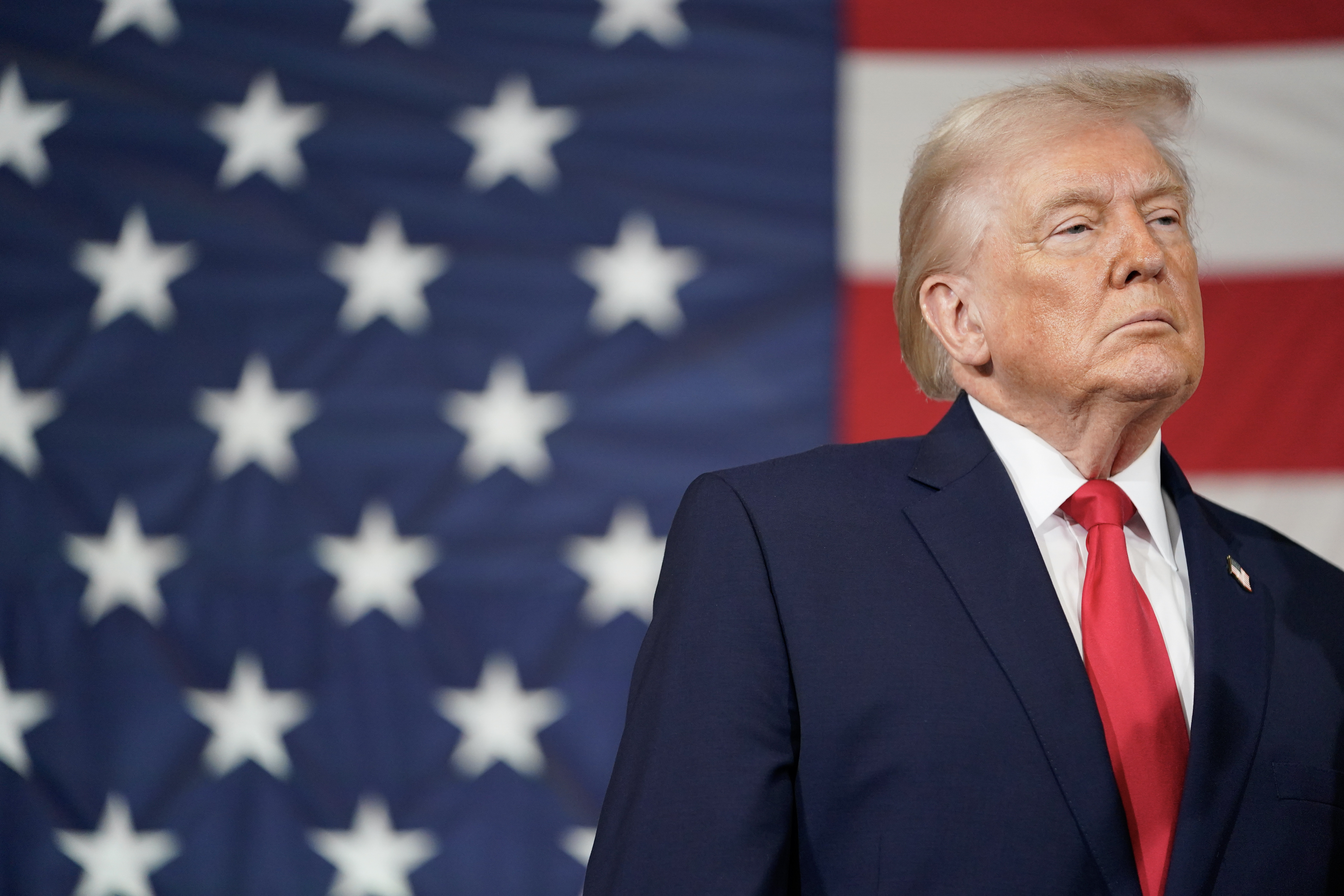
Donald Trump sat down for a "Storytime with the Second Lady" podcast episode with Usha Vance on 3 July 2026, reading a children's book on camera in what looked like a quiet interlude from his second term. The same day, his Truth Social account was still pulsing with tariff threats that move the S&P 500 within minutes, and the White House was finalising arrangements for a NATO summit where he had publicly described the alliance as "one sided" and "not reciprocal." Two registers, one man, the same trading week.
The contradiction is now structural. Trump claims his hands are off his own money while his policy decisions set the price of his disclosed assets. That is not a scandal in the cable-news sense; it is a disclosure regime designed for the insider-trading era being applied, unchanged, to a presidency whose decisions move the indices that determine the disclosed assets. The wire carried the two statements as parallel facts. Read them together and they describe a single arrangement.
The disclosure regime that never caught up
Financial disclosure law in the United States was written for the assumption that the president owns a few stocks and bonds, trades them a few times a year, and files a public report that journalists can read over morning coffee. The form is a list of holdings; the conflict-of-interest review is binary; the standard is whether a transaction is reported after the fact. None of those assumptions survive a presidency in which a single Truth Social post on tariffs can wipe a trillion dollars off large-cap technology and lift the dollar index by a full point before the New York open.
Trump's filings run into the same wall. The assets are disclosed. The mechanism by which presidential decisions transmit into their value is not. A tariff on Chinese semiconductors moves semiconductor ETFs. A thaw with Beijing moves them again. An executive order on sovereign wealth fund oversight moves defence primes. Each of those moves is, on paper, a public policy decision announced in advance; in practice it is a tradable signal that the disclosure form was never built to register. The form asks what you own. It does not ask what your next post will move.
"One sided" and the alliance market
The NATO line is the cleanest illustration. On 3 July, Trump's social channels were running criticism of allied burden-sharing in the run-up to the summit, and on Russian-aligned Telegram channels the line was being translated in real time: "To Russia, he's a gift." Treat that with the usual sourcing caveat for milblogger material, and treat the summit rhetoric itself as the dominant frame. The point is not the rhetoric; the point is what the rhetoric does to the defence order book. A credible threat to leave NATO compresses the spreads on European defence primes in seconds. European long-dated sovereign yields move the other way. None of this requires an illegal trade; it requires a published view and an attentive market.
The Polymarket prediction feeds that traders watch alongside Bloomberg reflect the same transmission in another register: contracts on whether Trump will attend, whether the communiqué will mention Ukraine by name, whether Article 5 will be reaffirmed, and whether a member state will announce a new defence-spending floor. Each is a binary that pays out on language. Position-building ahead of those contracts is itself a market.
The index that moves on a Truth Social post
The pattern repeats across desks. Unusual Whales, the retail-facing options flow tracker, runs a steady feed of positions sized to move on Trump-administration policy events, from tariff escalations to central-bank appointments. The numbers are small individually. The principle is what matters: a tradable signal is any decision that moves price, and a second-term presidency produces several a week. Disclosure tells the public what the president owns; the signal tells counterparties what the president will do next. The first is reported after the fact. The second is priced before.
This is the gap the current regime cannot bridge. The Stock Act, conflict-of-interest rules, the Ethics in Government Act, and the blind-trust guidance from the Office of Government Ethics were all drafted on the prior assumption: that policy and portfolio are separate compartments. The first term of the Trump era stretched that assumption. The second has retired it.
What would actually fix it
Two reforms would narrow the gap, neither sufficient on its own. The first is real-time disclosure of any presidential decision that moves an index, paired with a cooling-off window before the relevant trade can settle, modelled on the cooling-off rules that already exist for senior federal appointees under specific conditions. The second is a wider definition of a conflict for heads of state and their immediate family, replacing the binary "did you file?" with a continuous review of portfolio alignment with public decisions.
Both would be politically heavy. The first assumes the president's statements are policy announcements, which his administration has spent five years denying. The second would treat the portfolio as a quasi-fiduciary object, which no modern White House has accepted. Without one or the other, the disclosure regime is what it has always been: a public record of what a public official owned, filed by a public official whose job is to move the price of those things.
The hands-off myth
"Hands off my money" was always the rhetorical move, not the operational one. Trump posted tariff threats within hours of the podcast episode. The market priced them before lunch. The disclosed assets moved accordingly. None of that requires a single illegal trade. It requires only that the disclosure regime assume the official cannot move the index, and that the index be the asset.
Watch the NATO summit communiqué on 3 July for the language on Article 5. Watch the Polymarket contracts through the same window. Watch the Unusual Whales flow on European defence primes. The three will tell the same story on the same day, in three different registers, because they are listening to the same signal.
Sources
- OANN, Trump joins Second Lady Usha Vance for "Storytime" podcast episode, 3 July 2026. https://theepochtim.es/wzy8h3
- Unusual Whales (@unusual_whales), options flow tracker coverage of Trump-policy-adjacent positions. https://x.com/unusual_whales/status/1
- Unusual Whales (@unusual_whales), follow-up flow note. https://x.com/unusual_whales/status/2
- Polymarket (@polymarket), NATO-summit-related prediction markets coverage. https://x.com/polymarket/status/3
- WarMonitor / Telegram aggregator (osintlive), Trump on NATO "one sided" and "not reciprocal," 3 July 2026. https://telegram.me/osintlive
- Reuters via X (@Reuters), 3 July 2026 (contextual wire reference). https://x.com/reuters
Desk note: The wire carried Trump's "hands-off" posture and his market-moving policy statements on the same day as parallel facts. Monexus treats them as one arrangement: a disclosure regime built for the insider-trading era, applied to a presidency whose decisions move the indices that determine the disclosed assets.