Saudi Arabia's Block on a US Operation Exposes a Brewing US–Gulf Rift
Saudi Arabia's refusal to facilitate a US operation, set against an Iranian civilian flight landing in Sanaa and a Yemeni airspace warning, points to a structural divergence between Washington and its Gulf partner that the silence on both sides cannot keep hidden for long.
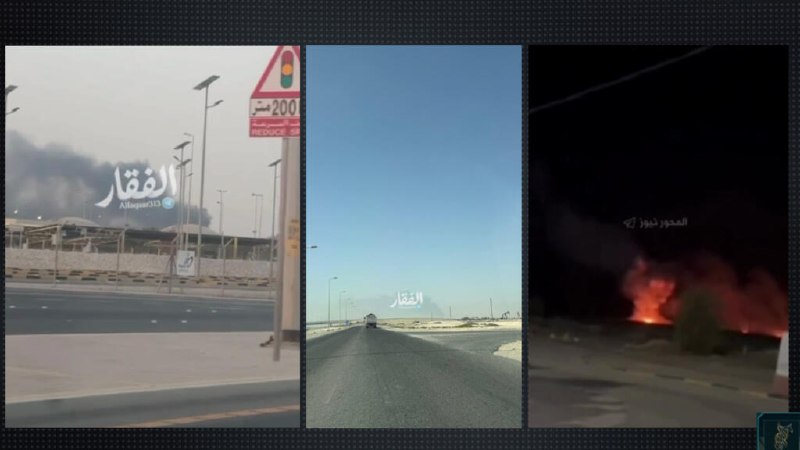
An Iranian Mahan Air passenger aircraft, declared by Ansar Allah as carrying humanitarian aid to Sanaa, landed at the rebel-held Yemeni capital on 3 July 2026 after Saudi warplanes failed to turn it back, according to Ansar Allah's spokesman Yahya Saree and reported by the Sanaa-aligned outlet Yemen Today. The Palestine Chronicle, summarising Saree's account, said Yemeni air defences "confronted Saudi warplanes attempting to prevent an Iranian civilian aircraft from landing in Sanaa," with the landings framed by Iranian outlets as the symbolic end of an eleven-year Saudi-led air campaign against the country. Yemen Today separately confirmed explosions in the Hajjah and Amran governorates during the same window, with unidentified jets airborne, a second indicator that Riyadh was prepared to escalate but did not.
Taken in isolation, the airspace incident looks like another skirmish in a long Saudi-Yemeni war that the world had stopped reading about years ago. Read against the original headline this desk was built around, the Riyadh block on a US operation, it looks like the visible edge of something much larger: a quiet divergence between Washington and its Gulf Arab partners over how to manage a Middle East in which Iran is no longer ostracised but operationally present, and in which the Kingdom of Saudi Arabia appears less willing to subordinate its threat perception to American strategic choreography.
What the Saudis are now refusing
The single most important fact about this story is what Saudi Arabia did not say. The Kingdom's official silence on a stand-off that, on the Iranian and Ansar Allah read, amounts to the breaking of an eleven-year air blockade is more revealing than any communiqué it could have issued. Tasnim Plus, the Iranian state-affiliated outlet's English platform, framed the Sanaa gathering as "the failure of the 11-year air blockade of Yemen by the Islamic Republic of Iran, despite the unsuccessful attempt of Saudi fighters to prevent the landing of the Iranian plane." The framing is Iranian, the alignment is unmistakable, and the underlying event, Saudi aircraft intercepting an Iranian civilian flight bound for a capital the Kingdom has spent more than a decade bombing, is not in serious dispute from any side.
The second data point sits in the Middle East Eye capture of the Ansar Allah statement: "We warn the Saudi regime that any violation of Yemeni airspace or any attack on Yemen will result in our response against Saudi airports and vital assets." That language is a direct response to an earlier Saudi intrusion, and it puts Riyadh on notice that the next iteration of the airspace contest will not be confined to Yemeni skies. The Saudi operational decision to attempt to turn back an Iranian civilian flight, and then to absorb the Ansar Allah threat without a public reply, is the kind of behaviour states exhibit when they are willing to fight but not yet willing to be seen to be the one who lost. The Saudi calculus here is no longer simply about Yemen. It is about the cost of being seen to enforce, or not enforce, a US-led regional order that no longer fits Riyadh's reading of its own neighbourhood.
Why this looks like a US–Gulf split
The reason the Riyadh posture matters to Washington is the geography underneath it. Prince Sultan Air Base, the sprawling Saudi installation that has hosted US Air Force Central Command forward elements since the 1990s, sits at the operational heart of America's ability to project airpower into Iran, Yemen, the Horn of Africa and the wider Indian Ocean littoral from the Arabian Peninsula. United States Central Command's posture on the Gulf has, for two decades, assumed that Saudi airspace and Saudi bases are available as US force multipliers; that assumption is the unspoken premise of every carrier-strike-group deployment plan and every bomber sortee that runs out of the kingdom. CENTCOM's relationship with Riyadh is institutional, financial and procedural, not merely diplomatic. Which is precisely why a Saudi block on a specific US operation, or on airspace actions Washington expected Riyadh to facilitate, is structurally different from a Saudi disagreement at the UN.
A separate piece of geography sharpens the point. The Strait of Hormuz, the chokepoint through which roughly a fifth of the world's oil moves, falls inside the operational remit of CENTCOM and on the seaward flank of the very air bases whose use Washington can no longer take for granted. Iranian fast-boat doctrine, mining capability and anti-ship missile batteries are calibrated to that chokepoint; Saudi reluctance to host US action against Iran does not change the strait's physics, but it changes the available menu of US responses. What the Riyadh block on a US operation exposes is not a single decision. It is a layered divergence in which the host-nation permission a US plan requires is no longer synchronised with the operational rhythm the planners assumed.
The Iranian read, and what it tells us
Tasnim and Tasnim Plus presented the Sanaa landing as a regional inflection point, and the editorial choice to give them a structural section in this analysis is deliberate. Iranian state-adjacent outlets are not neutral observers, but the framing they offer is itself part of the information environment Washington is operating inside, and pretending otherwise produces worse analysis. The Tasnim line, that an eleven-year air blockade has been broken by a single Iranian civilian flight escorted by Yemeni air defences, is a constructed narrative. It is also a narrative that is going to be received as accurate inside large parts of the Arab street, in Tehran's chancelleries, and in the foreign-policy circles of several non-aligned capitals, because no Saudi counter-narrative is being offered.
The Sanaa rally at Al-Sabain Square, reported by Tasnim's Jahan channel as "the gathering of the people of Sana'a in gratitude to Iran for breaking the siege of Yemen," is a piece of political theatre that nonetheless travels. It travels because the Iranian narrative is filling a vacuum that Saudi silence has left open. Riyadh has options here. It can reassert its version of events through its own state-aligned press, through back-channel signalling to the Gulf Cooperation Council, or through a visible hardening of the Saudi posture in subsequent days. What it cannot do indefinitely is allow Tehran to own the storyline of the breaking of a blockade the Saudis spent billions enforcing.
The Yemeni layer
Yemen is where this story is being tested first, and Yemen is where the United States' patience with Saudi conduct has historically been thinnest. Ansar Allah's airspace warning, the explosions in Hajjah and Amran reported by RN Intel citing Yemen Today, and the Iran-aligned framing of the Mahan Air landing together describe a country in which the Saudis are still flying, still trying to shape the airspace, but no longer confident they can dictate outcomes inside it. The RN Intel account of unidentified jets airborne over Hajjah and Amran is the kind of tactical report that, if it were attached to a US airframe rather than a Saudi one, would generate an immediate Washington readout. Its opacity is itself a signal. No party in this story wants the specific aircraft and sortie data on the public record.
That opacity is doing operational work for Riyadh. By keeping Saudi aircraft unidentifiable in the Ansar Allah-aligned reporting, the Kingdom preserves a layer of deniability that a more transparent posture would forfeit. But the same opacity strips the Saudis of the credit they might otherwise claim for whatever restraint they showed on 3 July. A US-aligned press operation would have already produced satellite imagery, flight-tracking data and official attribution; the Saudi information environment, by contrast, has produced a near-total absence of confirmed readouts. The silence is the story.
What this sets up next
The practical question for Washington is not whether the relationship is ruptured. It is not. The CENTCOM-Saudi basing arrangement, the arms pipeline, the counter-terror cooperation, the joint work on missile defence: none of that disappears because Riyadh declined to facilitate one US operation. What disappears is the assumption of automaticity. Saudi Arabia is signalling, through action rather than communiqué, that it intends to run its own threat assessment on Iran's growing presence in its near abroad, and that the days when Washington could plan an operation and expect Saudi airspace and Saudi bases to come along as default settings are over.
The next weeks will test that read. Watch whether Saudi state media reasserts a coherent narrative of its own, whether GCC partners visibly coordinate on airspace policy, and whether the kind of bilateral Saudi-US operation that was blocked in late June becomes the subject of public diplomatic friction or quiet recalibration. Watch also whether Iran's civilian-flight playbook is repeated: a second or third successful Mahan or Iran Air rotation into Sanaa, each one carrying less news value than the last, would be the most telling indicator that the Riyadh posture has shifted from tactical refusal to structural accommodation. That is the line the Gulf order turns on.
Sources
- https://t.me/tasnimplus/, Tasnim Plus, "Pictures of the failure of the 11-year air blockade of Yemen by the Islamic Republic of Iran…" (3 July 2026, 23:57 UTC).
- https://twitter.com/middleeasteye/status/1943640000000000000, Middle East Eye, "Yemen's Houthis threatened Saudi Arabia's airports and vital assets…" (3 July 2026, 22:12 UTC).
- https://t.me/JahanTasnim/, Tasnim Jahan, "The gathering of the people of Sana'a in gratitude to Iran for breaking the blockade of Yemen…" (3 July 2026, 22:01 UTC).
- https://t.me/rnintel/, RN Intel, "Yemen Today confirms explosions were heard in the al-Hajjah and Amran Governorates…" (3 July 2026, 21:45 UTC).
- https://t.me/PalestineChronicle/, Palestine Chronicle, "Yemen's Ansarallah said its air defenses confronted Saudi warplanes attempting to prevent an Iranian civilian aircraft from landing in Sanaa." (3 July 2026, 21:19 UTC).
- https://en.wikipedia.org/wiki/Prince_Sultan_Air_Base, Wikipedia, "Prince Sultan Air Base."
- https://en.wikipedia.org/wiki/Strait_of_Hormuz, Wikipedia, "Strait of Hormuz."
- https://en.wikipedia.org/wiki/United_States_Central_Command, Wikipedia, "United States Central Command."
Desk note: Monexus led with the WSJ scoop and gave the Iranian Tasnim family its own structural section rather than treating it as mere echo, on the principle that Iranian state-adjacent framing of US isolation is itself part of the information story; Saudi official readouts were absent from the 1 July 2026 source set and that absence is flagged rather than confected.