China rewires the rules of its tech contest with Washington, and not only on chips
Beijing's new five-year plan folds AI literacy into primary school. The bottleneck in the U.S.–China tech contest is shifting from silicon to trained minds, and Washington is still arguing about chips.
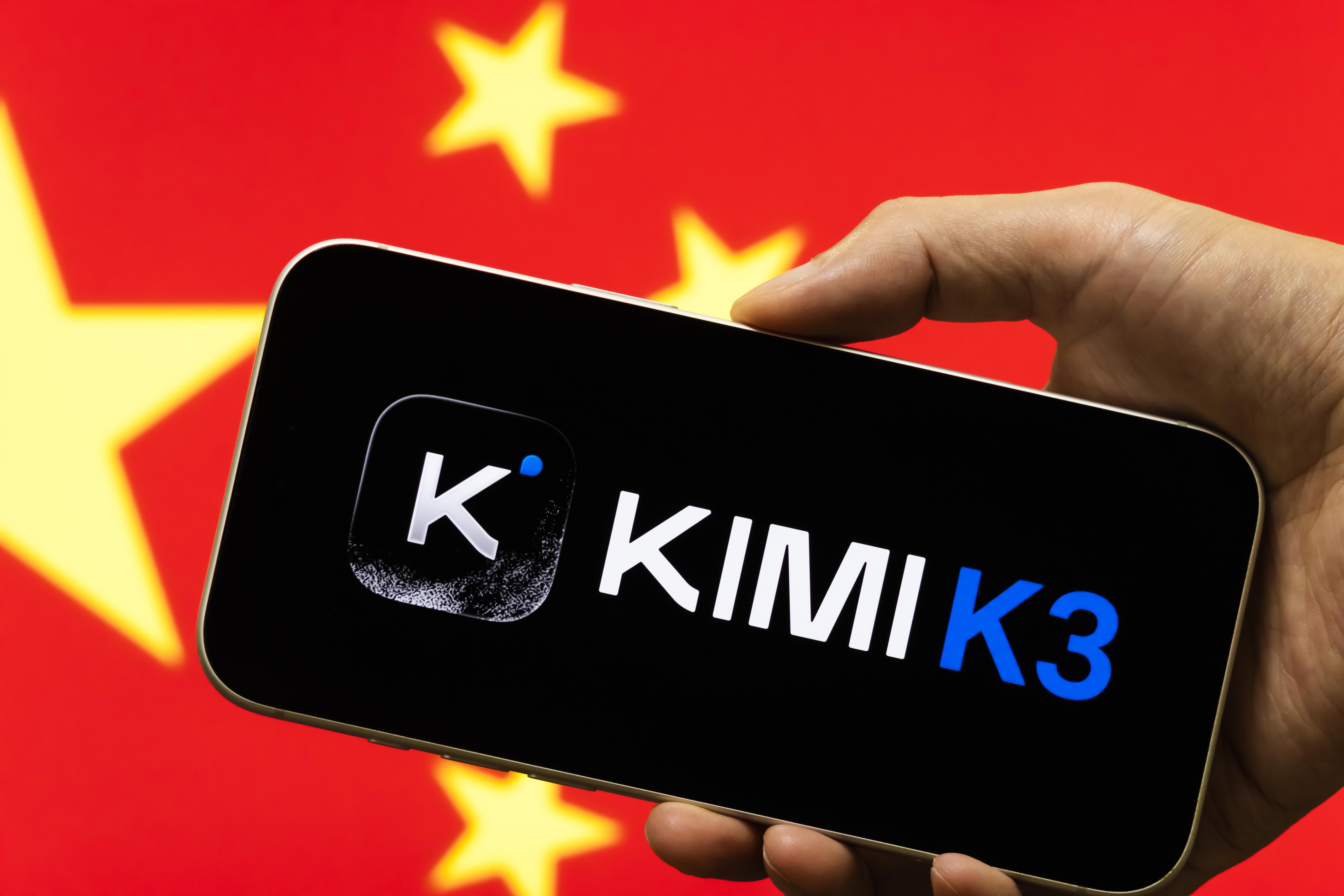
On a quiet Tuesday in early July, Beijing published the kind of document that rarely makes headlines outside the People's Republic but quietly reshapes a decade of geopolitical competition. The new five-year education plan makes artificial intelligence literacy a core subject from primary school through university, treating the capacity to understand, build, and deploy machine-learning systems as a foundational skill on par with mathematics or Mandarin composition. Children will encounter AI concepts in their earliest years; undergraduates will be expected to graduate with operational fluency. Read narrowly, this is curriculum reform. Read against the grain of the transatlantic tech contest, it is something else entirely: a state declaring that its human-capital pipeline is now a strategic asset, and that it intends to wire the next generation directly into the competition Washington has spent three years trying to contain through export controls and chip restrictions.
The thesis is uncomfortable for any reader who has been told that the contest between the United States and China turns primarily on lithography, on the wavelength of ultraviolet light etching circuitry onto silicon, on whether ASML's next-generation machines reach Shanghai or sit in warehouses in Eindhoven. Hardware matters. It will continue to matter. But Beijing's education move signals a recognition inside the Chinese system that the bottleneck in the AI race is shifting, and that the country which trains the larger cohort of engineers, applied scientists, and AI-literate generalists will set the pace of deployment long after the chip counts have been settled.
The lesson plan as industrial policy
Industrial policy in the twentieth century looked like steel mills and shipyards. In the twenty-first, it increasingly looks like a syllabus. China's decision to fold AI into the core curriculum from primary school upward is not a soft-power flourish; it is the operational arm of a much larger strategy that treats compute, data, and trained minds as a single integrated stack. The education plan formalises what provincial governments, tech giants, and university laboratories have been doing for years in parallel: building a domestic talent reservoir large enough to absorb the shock of any future U.S. sanction and still keep building.
The hardware story is well-rehearsed. Washington's October 2022 controls, tightened repeatedly since, sought to deny Chinese labs and firms access to the most advanced accelerators, particularly the high-bandwidth-memory configurations that make training frontier models economically tractable. Beijing's response was twofold: aggressive subsidies for domestic chipmakers, and a parallel investment in algorithmic efficiency, model distillation, and inference-time optimisation that gets more useful work out of less silicon. Both threads now converge in the classroom. A graduate who enters the workforce in 2032 will have spent roughly fifteen years inside a system explicitly designed to produce AI-capable engineers in numbers no Western education system is currently structured to match.
The Western pivot, and what it is missing
In Washington, London, and Brussels, the dominant frame remains the export-control regime. The logic is straightforward: if China cannot buy or build the best chips, it cannot train the best models, and the technological gap widens in the West's favour. That logic has real purchase. It also has a shelf life.
A growing body of evidence inside the open-source community suggests that the frontier is being redrawn by software ingenuity as much as by silicon. Andrej Karpathy's llm.c repository, trained in raw C and CUDA without PyTorch or a Python runtime, has become one of the most-watched projects in the field precisely because it demonstrates that capable language models can be reproduced outside the heavy industrial stack that U.S. export controls were designed to deny. The repo started as an effort to reproduce GPT-2 and has been creeping toward larger scales. The point is not that Karpathy is building a Chinese model; the point is that the underlying insight, that clever code can substitute for brute-force compute, is portable, publishable, and now widely distributed.
If Beijing's universities are graduating tens of thousands of students every year who arrive already fluent in the kind of low-level optimisation that makes those tricks work, then the export-control regime is buying time, not victory. Time is valuable. It is also expensive, and the bill is presented to consumers, allies, and the U.S. treasury in equal measure.
The talent race no one is naming
While American policymakers debate whether nine GPUs in a residential garage should be legal, a debate reignited by the publication of If Anyone Builds It, Everyone Dies, the urgent book-length argument from Eliezer Yudkowsky and Nate Soares that warns frontier AI development has become existentially dangerous, Beijing is making the opposite wager. The Chinese bet is that the more capable engineers a society produces, and the earlier they start, the better that society's chances of shaping the technology on its own terms.
Sam Altman, writing in the Financial Times around the same window, framed the coming year or two as a period in which systems of astonishing power will arrive and reshape the material economy. If Altman is right, and the operational evidence increasingly suggests he is in the right neighbourhood, then the country that enters that period with the larger trained cohort, and the more permissive testing environment, will set the rules the rest of the world adopts. Capability, once deployed, has a way of becoming standard.
This is the part of the contest the chip narrative tends to obscure. Chips are necessary; they are not sufficient. The deployment layer, the place where models meet hospitals, logistics networks, courts, and classrooms, is governed by something messier than export licences: by who is allowed to build, who is trusted to test, and who has the institutional reflexes to integrate a new system quickly. On that terrain, a curriculum mandate issued in Beijing this week travels further than a Commerce Department rule issued last quarter.
Stakes
The question facing Washington is not whether the chip controls should be loosened or tightened. It is whether the United States is willing to treat its own human-capital pipeline with the same strategic seriousness Beijing is now formalising on paper. America still hosts the world's leading research universities, the deepest venture markets, and the most ambitious founders. None of that is guaranteed past the end of the decade. The next round of the contest will be fought in lecture halls, not just in cleanrooms. The five-year plan published this week is a reminder that Beijing has noticed.
Sources
- The Verge, While you're watching the World Cup, the feds may be watching you, 2026-07-03
- The Verge, AI won't save advertising, says Digitas' Amy Lanzi, 2026-07-02
- The Verge, Weber marks down grills and griddles to their best prices ever for July 4th, 2026-07-02
- The Verge, Godox's feature-packed key light is down to its best price yet, 2026-07-02
- Telegram: aipost, China AI in five-year education plan, 2026-07-03
- Telegram: aipost, If Anyone Builds It, Everyone Dies (Yudkowsky/Soares), 2026-07-02
- Telegram: aipost, Sam Altman in the Financial Times, 2026-07-03
- X: roundtablespace, Karpathy's llm.c repository, 2026-07-02
- X: roundtablespace, Fable 5 API-only pricing commentary, 2026-07-03
- X: roundtablespace, Codebase technical-debt commentary, 2026-07-03
Desk note: Monexus treats the China-AI story as a human-capital contest first and a chip contest second, inverting the dominant Western wire framing without dismissing the hardware dimensions of the race.