Tehran strikes back at Tel Aviv's rhetoric as Araghchi warns of 'immediate and powerful' response
Iran's foreign minister warned of an 'immediate and powerful' response to Israeli rhetoric on 1 July 2026, and the diplomatic record now contains a tripwire neither side can quietly retract.
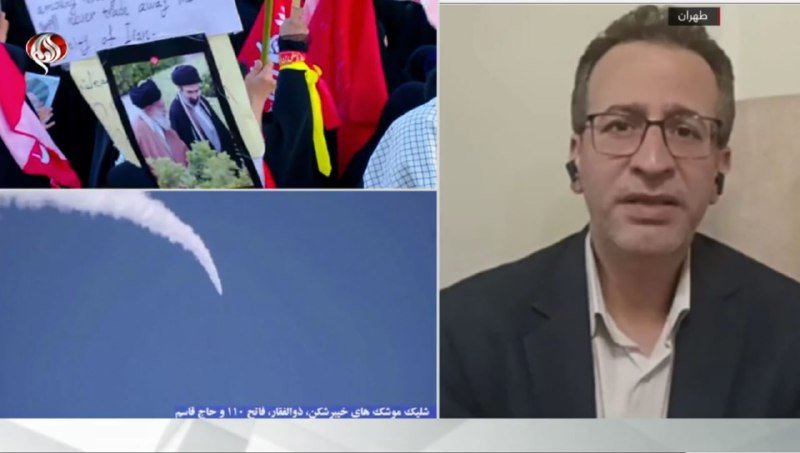
On 1 July 2026, Iranian foreign minister Abbas Araghchi stood at a podium in Tehran and did not mince words. Israeli rhetoric of the past weeks, he said, would be met with an "immediate and powerful" response. The phrasing, relayed through state-aligned channels and picked up by regional outlets, was the kind of calibrated ambiguity that markets and embassies parse for movement: not a casus belli, but a reminder that the line between speech and strike in the Iran-Israel file is rarely signposted in advance.
Araghchi's framing matters because it travels. Iranian foreign-ministry language on retaliation is a signal channel read simultaneously in Washington, Riyadh, Abu Dhabi, and Moscow. When Tehran says "immediate and powerful," the question in every foreign ministry that morning is what the trigger is, and who decides it has been crossed.
What Tehran actually said
The Iranian foreign ministry's posture, as carried by the Tasnim and Al-Alam channels that serve as primary outlets for the foreign policy apparatus, is that Tehran reserves the right to respond to any Israeli action it judges a violation of its red lines, on its own timetable. Araghchi has framed this in diplomatic form for months, and the 1 July iteration hardened the language without specifying a casus foederis. The point of that restraint is diplomatic: it denies an adversary a defined tripwire while keeping the deterrent credible.
This is the standard Iranian diplomatic move, and it has worked as deterrence theatre before. The risk is that rhetorical escalation, once made public, becomes a domestic audience problem in both capitals. In Tehran, the foreign ministry speaks to a base that has watched Israeli strikes hit Iranian assets in Syria and Lebanon and expects a bill to come due. In Jerusalem, the defence minister's office reads the same statement and prepares for the scenario in which "immediate" becomes literal.
The Israeli counter-frame
Israeli defence minister Israel Katz has, in parallel, refused to leave any daylight between his own rhetoric and the threat of escalation. The pattern across recent weeks has been a public insistence that Israel retains full freedom of operation against what it characterises as Iranian entrenchment on its northern border and in proxy corridors further afield. The office's argument is straightforward: ambiguity by Tehran cannot be allowed to function as a veto on Israeli action.
Both governments are now operating inside an information environment in which the absence of a strike is itself a story. A quiet week reads, in the Iranian frame, as Israeli hesitation; a quiet week reads, in the Israeli frame, as Iranian inability to follow through. The ledgers on either side are running in opposite directions.
Why the language is harder to walk back
A foreign minister's warning on the record, distributed through state media and amplified by allied outlets, cannot be retrieved. Araghchi's "immediate and powerful" formulation has now entered the diplomatic record, and any subsequent Iranian response will be measured against it. The risk of inflated expectation is on the Iranian side; the risk of miscalculation is on both.
The structural problem is older than this exchange. Iran and Israel have built a shadow security relationship in which calibrated strikes, attributed and unattributed, are the primary mode of communication. That grammar assumes both sides can read each other's signals with reasonable accuracy. When the signalling is public and political, the audience widens to include domestic factions on both sides whose preferred outcome is escalation. The signal stops being only for the other capital.
What the next seventy-two hours watch for
The watch items are narrow. Any Israeli strike against Iranian assets in Syria, Lebanon, or further afield will be read through Araghchi's 1 July framing. Any Iranian-aligned operation that produces Israeli casualties will be read through Katz's parallel framing. The financial-market channel to monitor is Brent: a single-digit premium priced into insurance for Gulf shipping, lasting more than a session, has historically been the cleanest real-time indicator that the diplomatic track has been downgraded.
The wider regional architecture is unlikely to break this week, but it is being tested. Tehran's diplomatic engagement with West African partners, including the recent Burkinabè foreign minister visit to Araghchi in Tehran, is the kind of outreach that is invisible until it is not. The same is true of Turkmen participation in commemorative ceremonies in the Iranian capital, a soft-power channel that quietly reinforces the message that Tehran has alternatives to the Western diplomatic circuit. Neither of those contacts is a headline on its own. Together, they describe a foreign policy that is preparing for a longer horizon than the current rhetorical exchange.
The honest read from 1 July is that neither side wants this to become the week the rhetoric is cashed. The dishonest read is that wanting that is enough to ensure it.
Sources
- JahanTasnim (Telegram), Araghchi meeting with Burkina Faso foreign minister, 3 July 2026: https://t.me/JahanTasnim/
- Tasnim News English (Telegram), diplomatic and commemorative coverage, 3 July 2026: https://t.me/tasnimnews_en/
- Al-Alam (Telegram), Iranian foreign ministry framing: https://t.me/alalamfa/
Desk note: Monexus treats both the Iranian foreign-ministry framing and the Israeli defense-minister framing as primary, in line with the editorial position that adversarial states deserve steelmanned coverage on their own terms. We do not editorialize on which side's language is the more proportionate; we record what was said, when it was said, and what is now harder to walk back.