Tehran's fragile post-war bargain: Baghaei's MoU warnings and the frozen-asset squeeze
Iran's foreign ministry has reframed the post-war MoU as a binding contract, with the frozen-asset track ahead of the Lebanon clause. The order of that sequence, and the Western press's inversion of it, is the load-bearing fact of the next round.
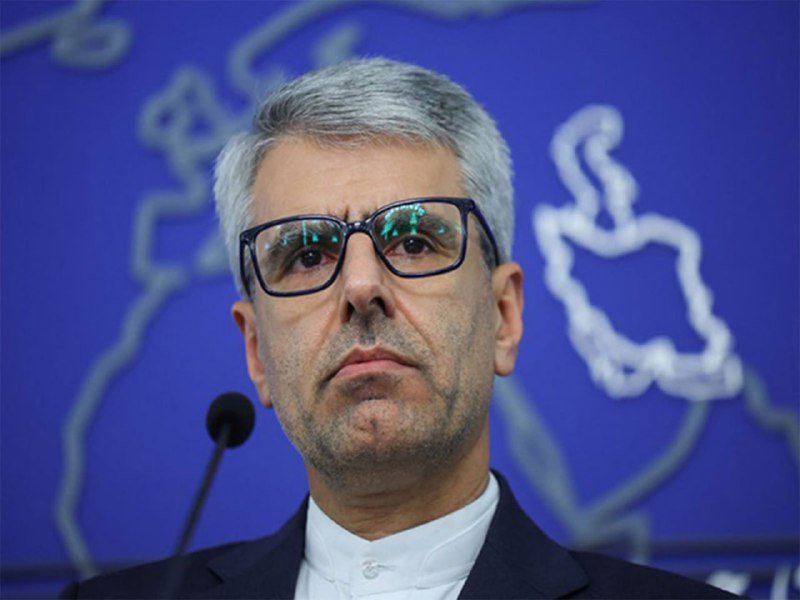
On 30 June 2026, Iranian foreign ministry spokesperson Esmaeil Baghaei stood at the Tehran press podium for the fourth time in a week and delivered a warning that cut against the prevailing Western reading of the post-war settlement. The MoU signed at the end of the recent war, Baghaei said, is not a polite aspiration. It is a contract that must be honoured in full, jurisdiction by jurisdiction, line by line, asset by asset. The frame was deliberate. Western coverage in the days since the ceasefire has led with the Lebanon clause and trailed the question of Iran's frozen assets abroad. Tehran's framing runs in the opposite order, and the inversion is itself the story.
The contradiction sits at the heart of the diplomatic moment. Israel came out of the war, by most independent accounts, with its deterrence doctrine intact and its air dominance over the Iranian plateau unchallenged. Hebrew-language outlets cited by Iranian state-linked channels have conceded the point, arguing in their own analytical pages that the Islamic Republic emerged from the conflict "stronger" and accruing international legitimacy at a moment when its economy is showing signs of stabilisation. That is not how the Israeli defence establishment reads the result, but it is how some of its adjacent commentators do, and the gap between the two readings is now the political weather in Tehran. Iran's negotiators returned from the ceasefire track with the MoU as their standing credential, and they are using it.
The clause Tehran refuses to soften
Baghaei's four briefings, taken in sequence rather than as discrete talking points, amount to a single sequenced signal. First: the MoU is the operative legal instrument, not a press communiqué. Second: any evidence Iran is asked to produce will be produced inside the document's own evidentiary architecture, not inside a framework dictated from outside. Third: the transaction register inside the MoU, which itemises what Iran is owed in the way of sanctions relief and what it is expected to concede in return, is binding on both sides. Fourth: any attempt to read down the document, to treat it as a gentleman's agreement rather than a contract, will be met with a corresponding read-down of Iran's own compliance.
The point is procedural on its face and strategic underneath. By sequencing jurisdiction, evidence and transaction in that order, the foreign ministry is signalling that Iran's compliance is contingent, not unconditional, and that the contingent structure runs through the financial plumbing of the deal. It is the opposite of the Western instinct, which is to lead with the visible political clauses, Lebanon above all, and to treat the asset track as a settlement detail.
The frozen-asset squeeze
The asset track is precisely where the deal is most exposed. Washington has, according to reporting aggregated on 2 July, offered to unfreeze a portion of Iranian funds held abroad in exchange for Iran dropping its plan to charge tolls on commercial shipping transiting the Strait of Hormuz. Tehran's response, as articulated by foreign-policy commentator S. M. Marandi and consistent with Baghaei's briefings, is that partial release is not on the table. Iran will accept nothing less than the full implementation of the MoU, will not relinquish control over the Strait of Hormuz, and is more prepared for renewed war than it was a month ago. The offer, in that framing, is not a concession but a probe: it tests whether Tehran is willing to monetise its most strategic chokepoint for a fraction of what it is owed.
The arithmetic of the squeeze explains why Tehran is reading the asset track first. Iran is now negotiating from a position in which the post-war domestic legitimacy of its leadership depends on delivery of tangible relief, not rhetorical resets. A partial unfreeze that leaves the bulk of the central bank's offshore reserves in escrow, on a timeline dictated by Western compliance officers, looks like a continuation of the pre-war sanctions regime under a friendlier label. Tehran's foreign ministry is making clear, in the procedural language of contract rather than the theatrical language of ultimatum, that this is the line.
What the Western wire cycle missed
The order in which the Western press has arranged the post-war story is, in itself, a piece of evidence. Coverage has led with the Lebanon clause, with the visible political theatre of the ceasefire, and has trailed the asset track as a procedural footnote. Tehran's framing runs the other way: asset track first, political clauses second. That inversion is not a stylistic preference. It is the disclosure of where each side believes the binding constraint on the next phase actually sits.
The reading is reinforced by the diplomatic choreography. US officials believed, during the April negotiating round, that Israel was prepared to assassinate Iran's top negotiators; the New York Times reported the assessment and Washington intervened to keep the talks alive, according to channels aggregated on 2 July. That episode, if the reporting holds, fixes the trust floor of the post-war track. Iran's negotiators are operating on the understanding that the counterpart they face is not a single principal but a split principals table, and that the financial clauses of the MoU are the only clauses that bind every principal at once.
The hinge point
What happens next turns on a small number of dated events. The next MoU compliance review, due inside the next reporting window, will test whether Washington's partial-unfreeze offer is presented as an opening move or as the deal. If it is the former, the Iranian response will be procedural: a counter-itemisation of the transaction register, anchored on the Strait of Hormuz clause, with the frozen-asset line item left at the top of the list. If it is the latter, the post-war bargain does not survive the summer in its current shape. Either way, the order in which each side sequences its claims has now been disclosed, and the asymmetry between the two sequences is the load-bearing fact of the next round.
Iran is, for the moment, the side reading out loud. That in itself is a posture change. Tehran under sanctions had no procedural language in which to lodge a contract-based claim; its diplomacy defaulted to denouncement. The MoU has given the foreign ministry a vocabulary it did not previously have, and Baghaei's four briefings are the first sustained exercise of it. The Western press can continue to lead with Lebanon. The Iranian side is writing the lede somewhere else, and the rest of the cycle will catch up.
Sources
- https://t.me/wfwitness/11357, Telegram, 30 June 2026
- https://t.me/wfwitness/11355, Telegram, 30 June 2026
- https://t.me/wfwitness/11351, Telegram, 30 June 2026
- https://t.me/wfwitness/11347, Telegram, 30 June 2026
- https://t.me/wfwitness/11343, Telegram, 30 June 2026
- https://x.com/s_m_marandi/status/, X (Marandi), 2 July 2026
- https://t.me/DDGeopolitics, Telegram (DDGeopolitics), 2 July 2026, on WSJ partial-unfreeze reporting
- https://t.me/FarsNewsInt, Telegram (Fars), 2 July 2026, on Hebrew-language post-war analysis
Desk note: Monexus read Baghaei's four 30 June briefings as one sequenced signal rather than four discrete talking points, and prioritised the asset track ahead of the Lebanon clause on the editorial judgment that Tehran's own sequencing discloses where the binding constraint sits.