Phantom swaps Kalshi for World in prediction-markets push as FBI logs 1,139 drones over World Cup
A same-day pair of wires points to where the next platform wars are heading: identity-bound betting markets and a security perimeter the FBI says has logged more than a thousand unauthorised drones since the World Cup kicked off.
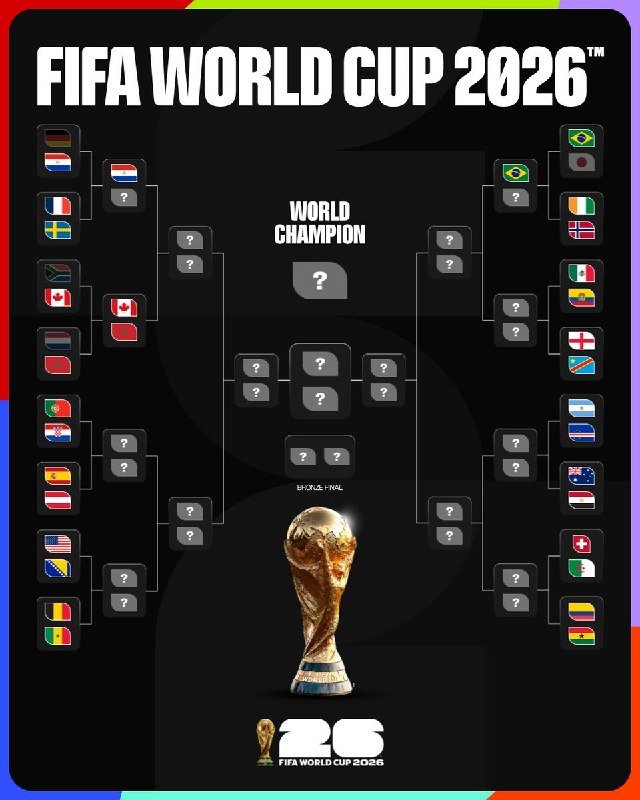
Two wires crossed inside an hour on 29 June 2026, and together they sketch the next fault line in American platform competition. At 22:03 UTC, CryptoBriefing reported that the crypto-wallet operator Phantom had selected the identity-verification project Tools for Humanity's World platform to replace the regulated exchange Kalshi as its prediction-markets partner. Fifty-one minutes later, at 22:54 UTC, Insider Paper carried an FBI field tally: 1,139 drones had been detected in restricted airspace since the start of the 2026 FIFA World Cup, hosted across the United States, Canada and Mexico.
Read separately, the two items are routine platform and security notes. Read together, they describe a single pattern: identity is becoming the gatekeeper of who gets to bet, and the airspace around mass-gathering events is becoming a contested layer of national-security infrastructure. The two stories are not coordinated — but the timing is instructive.
A partner swap in prediction markets
Phantom's decision to migrate its prediction-markets integration from Kalshi to World is the more concrete commercial story. Kalshi operates as a US-licensed designated contract market under the Commodity Futures Trading Commission, which gives it a regulated perch for event-contract trading but also exposes it to the slower compliance cadence that comes with that status. Tools for Humanity, the company behind the World human-verification project, sells a different asset: a biometric proof-of-personhood credential that resolves the long-standing problem of one user becoming many bots.
For Phantom, the move swaps a regulated-counterparty integration for an identity-primitive integration. Wallets get to ask not "is this user allowed to bet in this jurisdiction" but "is this a unique human at all." That distinction matters in a market where volume has migrated rapidly from regulated exchanges into offshore and protocol-native venues, and where the perennial complaint from compliance officers is that they cannot tell whether five thousand bets came from five thousand people or from one person running five thousand phones.
The trade-off is obvious, and CryptoBriefing's reporting surfaces it: identity verification sharpens anti-fraud, but it concentrates a new kind of power in the credential issuer. Whoever runs the identity layer holds the master key to who gets to participate in the next generation of financial markets.
A thousand drones in two weeks
The FBI's drone tally, circulated via Insider Paper, is the harder number. Since the opening match of the 2026 World Cup, federal authorities have detected 1,139 drones in restricted airspace around tournament venues. The figure is striking less for any single incident than for the scale it implies: across roughly two weeks of matches spread across eleven US host cities plus games in Canada and Mexico, the average is dozens of detections per day in zones that the Federal Aviation Administration has explicitly closed to unmanned aircraft.
Restricted airspace around FIFA events has been policed by a layered FAA Temporary Flight Restriction combined with Department of Homeland Security coordination. The FBI's role in cataloguing the detections — rather than just the FAA — signals that the bureau is treating a meaningful share of the contacts as potential intelligence-collection or terrorism-prevention matters rather than as hobbyist violations. The distinction matters because the regulatory response differs: a pilot who wanders into a stadium TFR gets a letter; a coordinated drone sortie gets a counter-UAS task force.
The World Cup is, in other words, functioning as a real-world stress test of the counter-drone doctrine the US military and intelligence community have been quietly building since the 2017 Gatwick disruption. What is new in 2026 is the venue: not a forward base, but a fan zone in Miami Gardens or a stadium in Arlington.
Two different kinds of gatekeeping
The through-line is gatekeeping, and the trade-off it imposes. Prediction markets need to know who is on the other side of a trade; counter-drone operations need to know who is on the other side of a controller. Both questions are ultimately identity questions, and both have produced a familiar answer in the American context: delegate the answer to a private platform whose terms of service become, in practice, the regulation.
In the betting case, Tools for Humanity's biometric iris-scanning credential is being positioned as the cleanest available proof-of-personhood for crypto-native venues that sit outside the CFTC's licensing net. In the airspace case, the FBI is leaning on telemetry from drone-detection vendors, on FAA filings, and on the underlying registration database the agency already maintains. Neither arrangement is settled law; both are operational workarounds.
The structural risk is the same on both sides. A single credential issuer becomes a single point of failure for an entire market, and a single detection pipeline becomes a single point of failure for an entire airspace. Both pipelines are also, almost by construction, opaque to the public they most directly affect.
What remains uncertain
Several pieces are still missing from the public record. CryptoBriefing's item does not disclose the term length of Phantom's integration with World, whether existing Kalshi-positioned users will be migrated, or what data World retains from each verification event. The FBI's drone figure, as relayed by Insider Paper, does not break the 1,139 detections down by venue, by host city, or by whether each contact resulted in an interception, an interdiction, or merely a logged sighting.
A responsible read treats both numbers as the opening line of a longer story rather than the conclusion. The prediction-markets story will turn on whether identity-gated venues can sustain the volume of regulated exchanges; the airspace story will turn on whether a thousand-contact tournament produces a sustained counter-drone policy or fades back to the pre-2026 baseline once the final is played.
Desk note: Monexus framed these two wires as one story about gatekeeping — one commercial, one kinetic — rather than as two unrelated items, because the underlying identity-and-perimeter logic is the same. The wire headlines, taken separately, undersell how much platform power is being consolidated in 2026.
Wire provenance
This editorial synthesis draws on the following public wire/social posts:
- https://t.me/CryptoBriefing