How Israel announced the killing of Ismail Masri, and what the announcement does and does not tell us
Israel announced through its official channels that Ismail Masri, a senior commander in the Rafah-area militant network, has been killed. The announcement is consistent; the independent verification is not yet visible. That gap is the story.
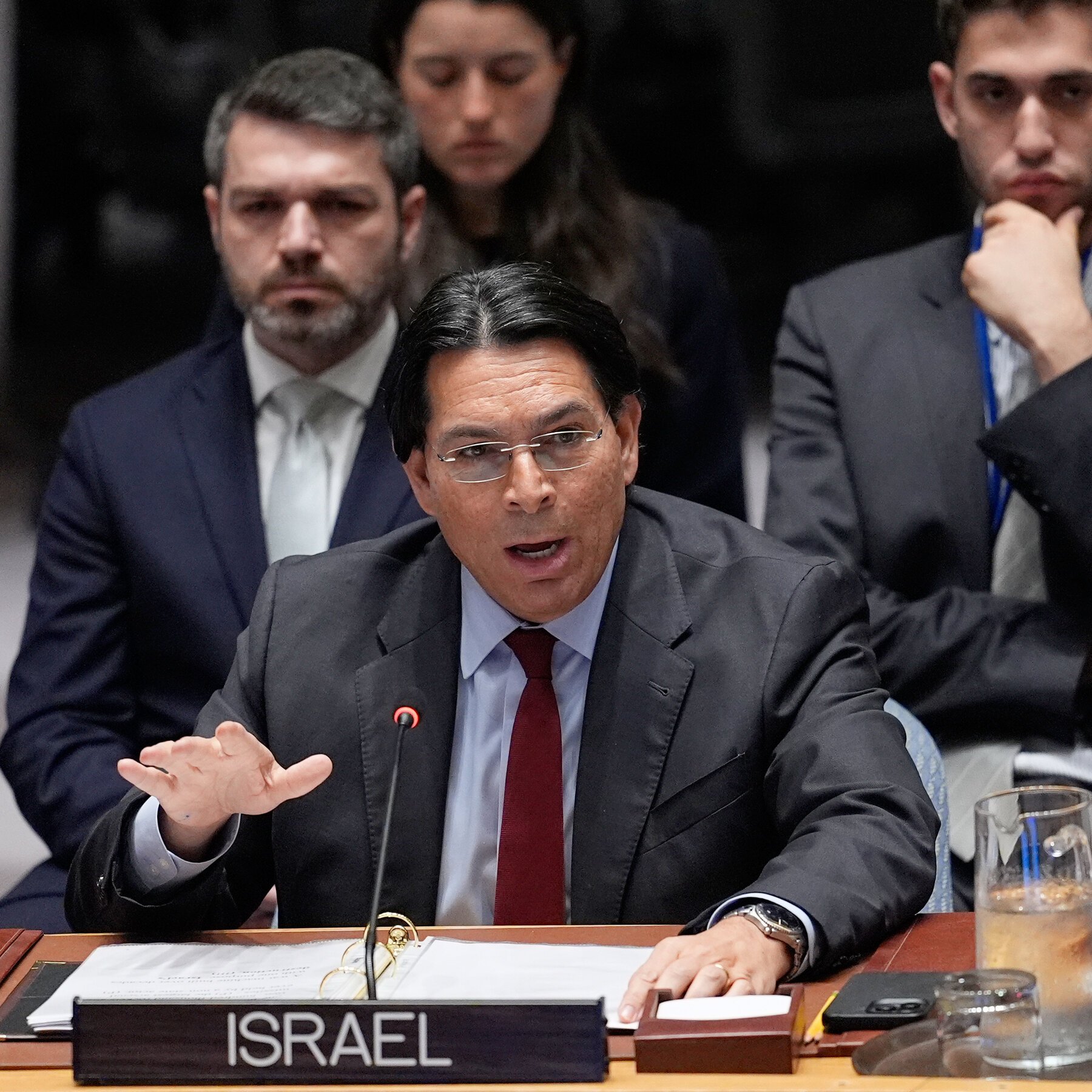
The Israeli security apparatus has spent the past week asserting, in an unusual public cadence, that Ismail Masri, a senior commander of the local militant network in Rafah, has been killed. The announcements arrived through the official Telegram channels of the Israel Defense Forces and Shin Bet, and were then picked up by the Telegram channel @osintlive, which functions as a wire service for open-source analysts tracking the Gaza war. The pattern of disclosure, more than the killing itself, is the news.
What Israel says it has done is straightforward. Israeli forces conducted a strike in the Rafah area, the southernmost governorate of the Gaza Strip on the Egyptian border. Israel announced the result through its own channels. The announcements have then propagated through accounts that translate, summarise, and contextualise the Israeli English-language feed for a wider open-source audience. The announcements have not, however, propagated through the kind of independent reporting that lets an outside reader triangulate the claim against Palestinian medical sources, on-the-ground journalists, or footage that can be geolocated to a precise building, street, or compound. That gap is the subject of this article.
The Israeli disclosure of an assassination in Rafah follows a familiar script. The IDF spokesperson's office and Shin Bet, the domestic security service whose remit extends into the occupied territories, coordinate on operations against senior militant figures, then release a joint statement that names the target, ranks them inside a specific organisation, and occasionally publishes an accompanying video still or aerial image. The format is institutional, and it has been refined across decades of targeted killings, from the Second Intifada to the post-October 7 campaign in Gaza. The channels through which this news travels, the IDF's official Telegram feed and @osintlive's translations, are the same ones that carried previous announcements of senior commanders removed from the battlefield.
What the announcement does not yet do is verify itself. A kill claim becomes established when three things line up: independent confirmation of the target's death from a non-party source, forensic or visual evidence that can be matched to the named individual, and corroboration from the targeted organisation that the figure is in fact dead. On the morning of 29 June, none of those three legs is publicly visible. The IDF has not, in the material available in the public record, released a date of strike, the specific compound targeted, the munition used, or the operational unit involved. Shin Bet has not, in the available record, released a biographical summary of Masri beyond his organisational affiliation. The Palestinian health authorities in Rafah, who have functioned throughout the war as the de facto civilian-casualty registry, have not been quoted in the materials accessible to this desk confirming a strike on the relevant date or the recovery of remains.
A neutral reading of the public record therefore yields a single sentence: Israel says it killed Ismail Masri in Rafah. The sentence is not a verdict. It is an attribution. Until independent reporting catches up, readers are looking at a claim made by a party to the conflict, transmitted through channels that the party controls or directly feeds. The killing may well have happened. Senior militant figures in Rafah have been killed in similar operations across the war. But the announcement is not the verification; the announcement is the first move in a verification process that other journalists, and ultimately the historical record, will have to complete.
There is also a question about what the announcement is for, beyond its face-value military function. Targeted-killing statements serve three audiences simultaneously. The first is the domestic Israeli audience, which is given a discrete piece of progress in a war that has dragged on without a clear end-state. The second is the residual militant network, which is meant to understand that no figure, however senior or however well-hidden in Rafah's dense urban fabric, is permanently beyond reach. The third is the diplomatic and intelligence apparatus abroad, where a steady cadence of named killings is read as evidence of operational reach. The Masri announcement lands in all three lanes at once. Treating it as a simple factual disclosure, as opposed to a piece of strategic communication, would be a category error.
What the Israeli channels actually said
The IDF's official Telegram feed carried the announcement in the days preceding 29 June, with Shin Bet jointly cited as the originating service. The framing followed the institutional template: Masri was described as a senior figure in the Rafah-area militant network, with specific operational responsibility attributed to him. The accompanying materials released through the channel included the standard combination of photograph and aerial imagery used in past operations, intended to identify the target to readers. The announcements were then amplified in English by accounts such as @osintlive, which translated and contextualised the Hebrew and Arabic originals for an international open-source audience. Across those channels, the claim is consistent in its core elements.
What is conspicuously thin is the granularity. The IDF's past communications on similar strikes have, in many cases, specified the date of the strike, the neighbourhood within Rafah, and the unit credited with the operation. The Masri announcement, in the material publicly available, does not. That absence is not proof of anything in itself; operational security around specific units and methods is a long-standing Israeli practice. But it does slow the independent verification process, because the journalists who would normally move to triangulate such a claim do not yet have a date, a place, and a munition profile to work with.
What independent reporting would look like
The standard verification sequence for an Israeli kill claim runs through three checkpoints. First, Palestinian medical and civil-defence sources in the relevant governorate would be expected to confirm a strike and to recover remains. Second, independent journalists on the ground in Rafah, an increasingly constrained category given Israeli restrictions on press access to the southern Gaza Strip, would be asked to film the site and, where possible, the surrounding damage pattern. Third, the targeted organisation would, in many cases, eventually acknowledge the loss, either through a formal obituary or through euphemistic language in subsequent communiqués. None of those three legs is, in the public record available on 29 June, visibly complete.
The absence is structural, not necessarily suspicious. Israeli strikes in Rafah have, throughout the war, been followed by reporting delays measured in days rather than hours, particularly when access to the strike site is restricted and when the immediate aftermath is dominated by search-and-rescue operations. The pattern means that the public record on 29 June is, by design, a partial record. The right editorial posture is to treat the Israeli claim as an Israeli claim, to flag what would constitute confirmation, and to update when the missing legs appear.
Why the cadence matters
The Masri announcement lands in a wider sequence. Across the spring and early summer of 2026, Israeli forces have conducted a series of named operations against senior figures in the Rafah-area militant network, with the pattern of disclosure accelerating as diplomatic negotiations over the war's endgame have sputtered. Each announcement is a discrete piece of operational communication, but together they form a signal: that Israel retains the capacity to identify and remove senior figures inside the southernmost governorate, and that it intends the international audience to know it. The Masri announcement is part of that signal, not separate from it.
That framing is not a debunking. Senior commanders in Rafah have been killed in the war, and the Israeli security services have demonstrated a real capacity to locate them. The framing is, rather, a warning against treating the announcement itself as the conclusion of the story. The conclusion arrives when the independent record catches up. Until it does, the right line for a careful reader is: Israel says it killed Ismail Masri, and the public record available on 29 June does not yet say more.