Iran rejects Doha talks but technical teams land in Qatar, a fractured US-Iran channel keeps moving
Tehran publicly denies Doha talks while confirming a US-Iran breach channel: a half-settlement both governments can live with, until they cannot.
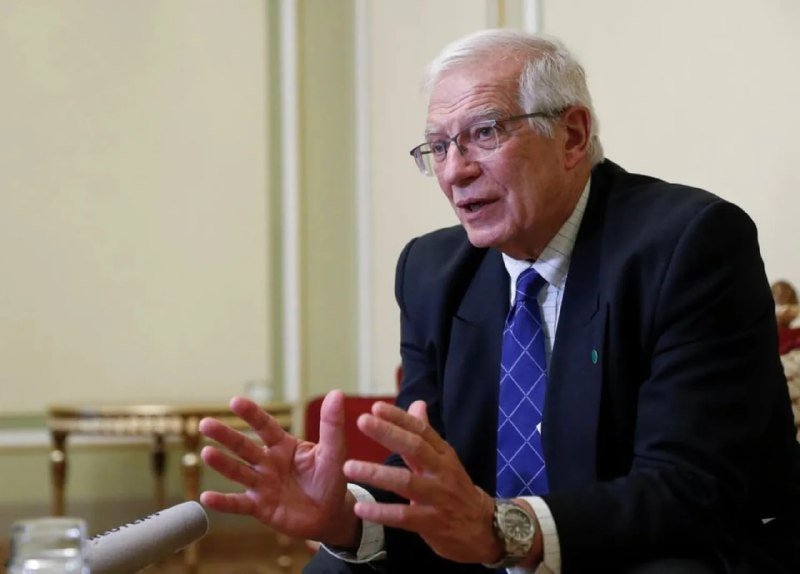
On the eve of a planned Friday signing in Geneva, Iranian negotiators in Doha insisted publicly that the technical meetings they joined this week were trilateral affairs held with Qatari and Pakistani counterparts, not bilateral talks with the United States. The framing from Tehran came on the same July morning that Qatar's foreign ministry announced "positive progress" in separate meetings with the American and Iranian delegations, and that Iran's deputy foreign minister confirmed a channel is being set up to handle breaches of the memorandum of understanding.
That contradiction is the story. It explains why the day began with an apparent US-Iran channel of communication ratcheting up a gear, and ended with Iranian officials working hard to publicly deny the very channel they had just used.
Two statements, one channel
The split-screen is unusually clean. Iran's Deputy Foreign Minister Kazem Gharibabadi told reporters in Doha on Thursday that "no meeting was held with the American delegation," and that the Doha sessions were "solely trilateral meetings with Qatari and Pakistani" interlocutors (Press TV, 1 July 2026, 22:00 UTC). Hours earlier, the same Doha track produced a Qatari foreign ministry statement declaring "positive progress" in "separate meetings" with both the American and Iranian delegations (Tasnim/Press TV wires, 1 July 2026, 22:25–22:26 UTC; Fars News, 22:13 UTC).\n The technical fix was already in motion. Gharibabadi separately acknowledged that Iran and the US had agreed to establish a dedicated channel to handle alleged violations of the memorandum of understanding, an admission relayed by Middle East Eye's live coverage of the Geneva-bound negotiations (Middle East Eye, 1 July 2026, 23:17 UTC). Parliament Speaker Mohammad Bagher Ghalibaf, briefing lawmakers in Tehran, framed the week differently: "The release of frozen assets was expedited and sanctions were suspended during the Zurich talks," he said, adding that Iran's adversaries "understand only the language of strength" (Press TV wire, 1 July 2026, 22:25 UTC).
A second, quieter signal made the channel harder to deny. According to Axios, citing officials with knowledge of the back-channel, Washington and Tehran have agreed to "keep things quiet" in the coming weeks in an effort to realise some level of success within the memorandum's 60-day window (OSINTdefender summary of Axios, 1 July 2026, 22:48 UTC).
Why Tehran denies what it is doing
The denial is not a contradiction in the usual sense. It is a familiar feature of Iranian negotiating doctrine: concede the substance, deny the label. Two-track diplomacy, with technical delegations doing real work while principals insist nothing is happening, has been Iran's preferred posture since at least the 2015 Joint Plan of Action phase and across the subsequent prisoner-swap and frozen-funds arrangements. A public claim of "no meeting" protects the political space of a leadership that has invested heavily in a "no direct talks with America" line, while leaving the actual channel intact.
Speaker Ghalibaf's reference to Zurich is the giveaway. He placed the asset release and sanctions suspension at the Zurich talks, not in Doha, which positions the Doha track as a follow-on technical exercise rather than a fresh bilateral negotiation. That sequencing lets Iran's political class continue to tell two audiences two things: one, that the previous round (Zurich) was the breakthrough; two, that the current round (Doha) was never really a US-Iran meeting at all.
The Qatari read-out complicates that narrative. Qatar's ministry called the meetings "separate," a word that, in the Gulf-host diplomatic vocabulary, almost always means the host shuttled between two delegations in different rooms rather than convened one plenary. That format is, technically, bilateral by outcome and multilateral by optics. It is also the standard shape of every Gulf-hosted US-Iran track since 2012.
The back-channel moves from offstage to on
The most consequential line of the day was not the denial but the breach channel. Gharibabadi's confirmation that Tehran and Washington are setting up a mechanism to flag and resolve alleged MOU violations signals something governments traditionally resist: an enduring, structured contact point that survives beyond a single signing ceremony. Two-month memoranda of this kind typically die when one party disputes an obligation; institutionalising a breach channel means both sides are pricing in the likelihood of disputes, which is itself an acknowledgment that some level of friction is expected.
Axios's reporting, that both governments have agreed to a quiet period through the memorandum's 60-day implementation window, fits that picture. Quiet periods in US-Iran dealings are not unusual; what is unusual is the willingness of officials to brief the media about them, which is what gives the arrangement its particular shape in 2026. American leaks of off-record understandings with Tehran serve two purposes. They reassure Gulf and Israeli audiences that the channel is being monitored. They also create a public record that any future Iranian walkback from the arrangement will have to navigate.
For Iran's side, the structural gain is the same as it was after the 2015 deal: sanctions relief and unfrozen assets delivered against non-nuclear concessions. Ghalibaf's claim that the Zurich talks already produced both outcomes is a political claim that Tehran's economy is, in fact, receiving the relief being reported.
What is actually on the table in Geneva
Friday's scheduled signing in Geneva is being framed in Tehran's messaging as the conclusion of a process that began in Zurich, with Doha a continuation. In Washington's frame, it is the operationalisation of the memorandum of understanding that was reportedly concluded earlier and that Axios's sources say has a 60-day implementation horizon. Middle East Eye's live blog carries the working assumption that both sides are on track to sign (Middle East Eye, 1 July 2026, 23:17 UTC), which positions Geneva as a confirmation ceremony rather than a negotiation.
What is genuinely new is not the signing but the architecture around it: a breach channel, a quiet period, and an explicit sequencing in which technical teams do the work and principals retain deniability. Each of those is a small object on its own. Together they are the standard infrastructure of an arrangement that both governments expect to last longer than a news cycle.
The 60-day clock, once Friday's text is signed, will be the operative variable. A breach channel with a deadline-driven MOU is, structurally, a probationary arrangement rather than a treaty. It can be renewed, expanded, or allowed to lapse. Tehran's domestic political risk is that an unsigned arrangement is more easily disowned by hardliners than a signed one; Washington's is that any visible concession will draw the same domestic review that JCPOA concessions did a decade ago.
Stakes for August
The architecture being assembled this week is best read as a holding pattern, not a settlement. Tehran wants movement on assets and sanctions in real time, not on paper. Washington wants the Strait of Hormuz traffic, the regional de-escalation that Gulf capitals are quietly underwriting, and an arrangement that prevents a return to the 2019 escalation spiral. A memorandum with a 60-day review and a standing breach channel, signed after a week of Gulf-mediated shuttle diplomacy and backed by an Iranian and American press strategy of mutually contradictory statements, is exactly the kind of half-settlement both sides can live with until they cannot.
The next two tests will both be operational. The first is whether the breach channel is used publicly within the first fortnight, which would mean a dispute fast. The second is whether the asset release Ghalibaf described as already underway at Zurich is visible in Iran's banking system within the same fortnight. If either of those is yes, the Doha “no meeting” framing will be a footnote. If both are no, the denial will start to look less like negotiating doctrine and more like a contested arrangement struggling to hold.
Sources
- OSINTdefender (Telegram), citing Axios: https://t.me/OSINTlive/...
- Press TV (Telegram), Gharibabadi "no meeting" denial: https://t.me/PressTV/...
- Tasnim (Telegram), Qatar foreign ministry progress statement: https://t.me/Tasnimplus/...
- Fars News (Telegram), Qatar foreign ministry progress statement: https://t.me/FarsNewsInt/...
- Press TV (Telegram), Ghalibaf Zurich briefing: https://t.me/PressTV/...
- Middle East Eye live coverage: https://www.middleeasteye.net/live/live-us-and-iran-confirm-peace-accord-signing-set-friday-geneva
Desk note
Where Western wires led Thursday with the announcement of the envoy travel and the Friday Geneva signing, Monexus read the day against itself: the Iranian denial and the Iranian confirmation, set down side by side, because the gap between them is the operative fact of the week.