Canada meet South Africa in World Cup knockout as group stage reshapes the bracket
A first World Cup knockout meeting between Canada and South Africa kicks off the last 32 on 28 June 2026, with both federations treating the tie as a referendum on years of patient qualifying work.
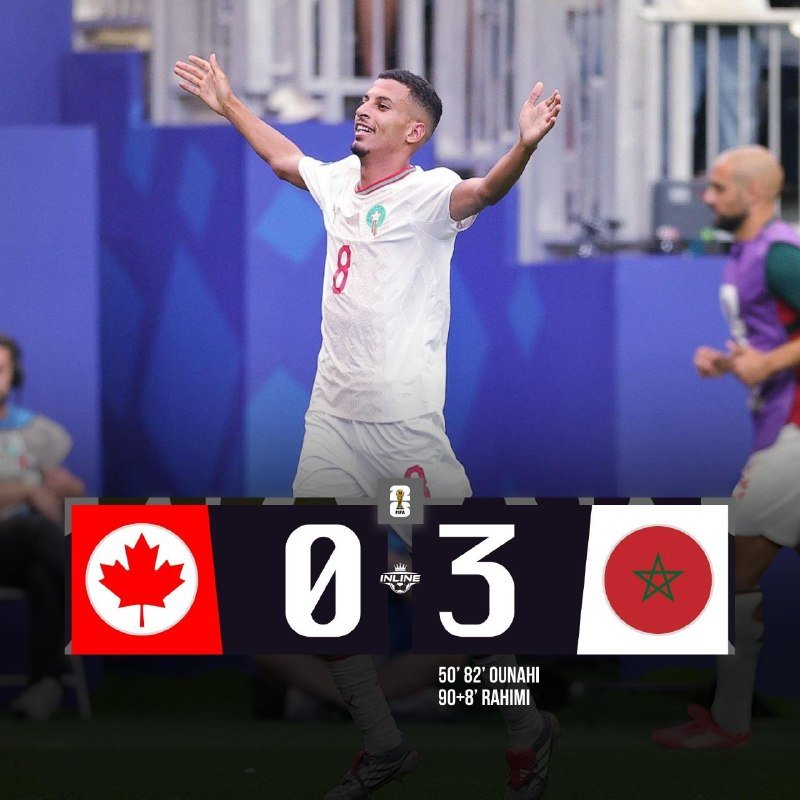
The last 32 of the 2026 World Cup opened on 28 June 2026 with a fixture that, on paper at least, was not on anyone's bingo card twelve months ago. Canada and South Africa met in a knockout game for the first time at a men's World Cup, with kick-off scheduled for 20:00 BST / 15:00 EDT / 05:00 AEST on 29 June, as the Guardian's live match blog confirmed on 28 June at 17:00 UTC. The result carries less obvious narrative weight than the day's other ties — England had already booked their place in the next round earlier the same afternoon — but the structural question it poses is sharper than the scoreline suggests.
For the Canadian federation, the match is the second knockout appearance at a men's World Cup in the modern era and a stress test of the player-development pipeline that took two decades to assemble. For South Africa, Bafana Bafana, it is the first knockout outing since the 2002 tournament — a generation ago in footballing terms. Both programmes reached this stage through different routes: Canada through the expanded 48-team format that gives Concacaf an extra slot, and South Africa by finishing above Tunisia in their group to claim one of the African confederation's qualifying berths.
How the bracket built
The 2026 bracket, as visualised by the Guardian's tournament bracketology page on 28 June, places the Canada–South Africa winner against the survivor of another opening-round tie in the round of 16. The expanded format, agreed by FIFA's council in 2023, added eight knockout places and pushed the field from 32 to 48 national teams. That arithmetic change is the single most important reason both sides are still in the tournament at this stage.
Canada did not need a result in their final group game to reach the knockouts, according to the live blog. South Africa, by contrast, went into their last group fixture needing at least a draw against a European side to advance. The Guardian's coverage on 28 June notes that the South Africans finished the group phase as one of the four best third-placed teams, the new mechanism introduced precisely to accommodate confederations whose third-ranked sides now qualify automatically.
A different kind of African representative
South Africa's path is unusual. Of the African sides that reached the 2022 World Cup in Qatar, only Senegal and Morocco advanced from the group; Cameroon, Ghana, Tunisia and Morocco's group-stage opponents all went home early. South Africa's reappearance in the knockouts, after a 24-year absence, marks a return to the form Hugo Broos's side showed in qualifying, when they finished above continental heavyweights.
The Guardian's tournament pages on 28 June frame the tie as an early test of whether African football's expanded presence at the finals — the continent now fields nine sides — translates into deeper runs. Nigeria, the Democratic Republic of the Congo, Senegal, Morocco, Egypt and the hosts' other African representatives were all still active in the group stage; South Africa was the first of the confederation's teams confirmed into the knockouts in this cycle, per the same coverage. That places extra weight on a result that, in any other World Cup, would have been a footnote.
What Canada brings to the pitch
Canada's preparations have been steadier than their tournament history suggests. The Guardian's player guide, updated on 28 June, lists a squad anchored by Alphonso Davies and Jonathan David, with the bulk of the first-choice XI drawn from clubs in the top five European leagues. The federation's decision to retain head coach Jesse Marsch through a difficult 2025 qualifying window — when Canada lost twice to the United States — was widely questioned at the time but produced the result the federation wanted at the 2026 tournament.
For South Africa, the tactical plan is built around the compact 4-4-2 that Broos has used throughout qualifying. The Guardian's pre-match notes on 28 June flagged Percy Tau and Evidence Makgopa as the two players most likely to threaten a Canadian back line that conceded twice in its final group outing. Discipline will be a factor: South Africa picked up four bookings in three group games, and the suspensions threshold is lower at this World Cup than at previous editions.
Stakes beyond the scoreline
The result will reshape both federations' commercial and developmental roadmaps. A round-of-16 place for Canada would extend a tournament that has already exceeded the federation's own internal projections and would give Major League Soccer's broadcast partners a fourth week of Canadian national-team storylines to sell to a domestic audience that, outside the Euros and the Premier League, has historically been thin on the ground. A win for South Africa would push Broos's side into a bracket that, on current form, they could plausibly advance through — and would represent the deepest run by an African side outside Senegal's 2002 quarter-final and Morocco's 2022 run.
The Guardian's coverage on 28 June notes that the expanded format has produced 24 matches in the round of 32 — eight more than at any previous World Cup — and the timing of this tie, late in the day's programme, gives both federations a slot in the prime broadcast window in North America. That scheduling is itself a measure of how seriously FIFA and its commercial partners are treating the new structure.
What remains uncertain
The live blog on 28 June does not specify either side's likely starting XI in detail, and the tactical notes lean heavily on group-phase numbers rather than knockout form. South Africa's injury list — three first-choice starters reported as doubts in the days before the tie — was not fully resolved at the time of writing. The Guardian's reporter on site also flagged the difficulty of comparing the two squads across confederations, since they have not played a senior international against each other since 2008.
Neither federation has been drawn on whether this tournament counts as a successful qualifying cycle regardless of the result, though Canada's chief soccer officer has previously said publicly that the bar was a round-of-32 exit and a competitive showing in the group. South Africa's federation has been quieter. The shape of the conversation in both capitals will depend on what happens over the next 180 minutes.
This article draws on the Guardian's live coverage and tournament pages published on 28 June 2026. Where the wire report cites group-phase statistics, those numbers reflect the three group games played by each side and have not been adjusted for knockout-stage context.