Strait of Hormuz under stress: Iranian drone strike on cargo vessel tests the Trump ceasefire
An Iranian drone strike on a cargo vessel in the Strait of Hormuz has converted the Trump-brokered ceasefire into a live stress test of an arrangement with no joint monitoring, no hot-line protocol, and no third-party arbitration. The question is whether the strike is answered kinetically or absorbe
A bulk carrier transiting the Strait of Hormuz on Saturday came under Iranian drone fire in what shipping insurers are now treating as the first deliberate kinetic strike on commercial tonnage since the late-May ceasefire between Washington and Tehran. The attack, confirmed in the hours that followed by US President Donald Trump and publicly condemned by the United Arab Emirates, has converted what officials described as a fragile pause in fighting into a live stress test of an arrangement that, on paper, was meant to keep oil moving through the world's most consequential maritime chokepoint. By Sunday morning, container freight desks in Dubai and London were repricing war-risk premiums for Hormuz transits, and three of the largest Greek tanker operators had begun rerouting via the Cape of Good Hope as a precautionary measure.
The episode exposes how thin the institutional scaffolding of the Trump-brokered de-escalation actually is. There is no joint monitoring cell, no agreed hot-line protocol between the US Fifth Fleet and the Islamic Republic of Iran Navy, and no third-party arbitration mechanism for disputes over which vessels may legally transit and under whose flag. What exists is a verbal understanding, mediated in part by Oman and Qatar, that neither side will escalate in ways that pull the other's red lines. A single drone strike on a hull bearing a third-flag cargo is precisely the kind of low-cost, plausibly deniable move that such an arrangement cannot absorb without breaking. The question now is whether Washington treats the strike as a violation that demands a kinetic response, as the Wall Street Journal reported on Sunday citing unnamed officials, or as a probe that can be answered through the same back-channel diplomacy that produced the ceasefire in the first place.
The strike, and what was confirmed
Trump's own characterisation of the incident, delivered in a televised statement carried by US networks on Sunday morning, was unusually direct. He described the vessel as a cargo ship operating under a flag of convenience and named Iran as the operator of the drone, while stopping short of declaring the ceasefire terminated. The statement stopped one careful step short of an ultimatum: it signalled that Washington considers the attack a deliberate test rather than a miscalculation, but it left open the possibility that the diplomatic track remains in motion.
The UAE's response was the more striking signal. Emirates-state media quoted the foreign ministry as condemning the attack in uncommonly strong language and calling for an immediate international investigation. The UAE is not a party to the confrontation, but it is the largest Gulf operator of Hormuz-bound shipping after Saudi Arabia, and its foreign ministry has historically avoided public criticism of Iran unless transit safety is directly threatened. That the Emirates chose to break that pattern within hours of the strike is a marker of how seriously Gulf states are reading the incident.
Tehran's doctrine, stated plainly
The strike did not arrive in a vacuum. Iranian Parliament Speaker Mohammad Bagher Ghalibaf, speaking to state-aligned outlet Tasnim on Sunday, described the Strait of Hormuz as the Islamic Republic's "greatest source of leverage" and insisted that Tehran would not retreat on what it characterised as its sovereign rights in the waterway. The framing matters. Iranian officials have for years argued that any disruption to commercial shipping through the strait is a function of Western sanctions enforcement rather than Iranian behaviour, and that transit fees or selective inspection regimes are a legitimate response.
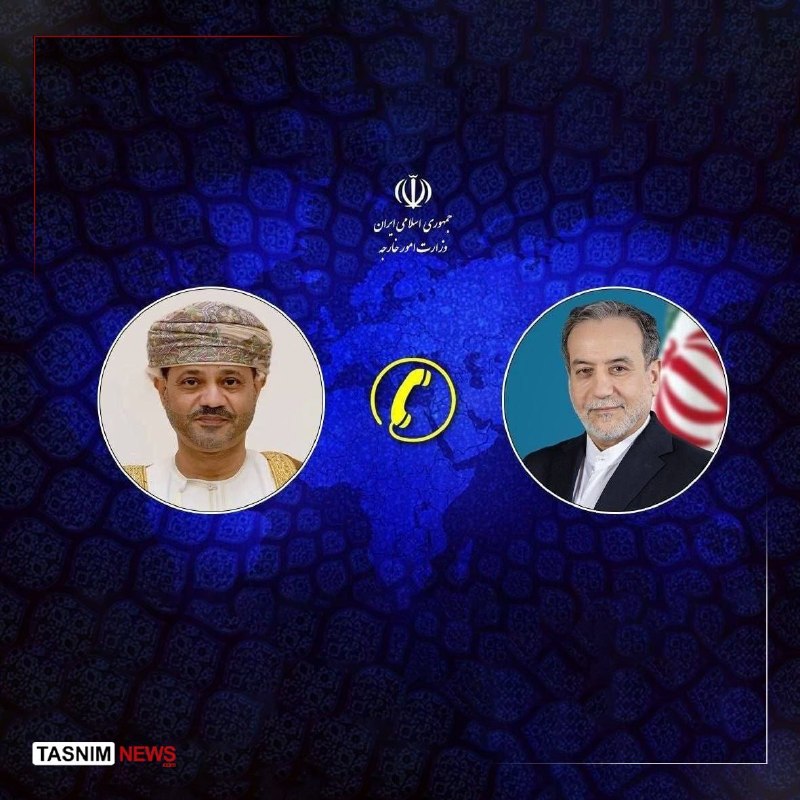
That doctrinal posture was echoed in a separate channel on Sunday, when Omani officials informed European counterparts, reportedly under Iranian pressure, that a return to the pre-war status quo in the strait was no longer feasible and that ships transiting the waterway may be required to pay certain dues. The intermediary message was relayed via the Omanis rather than by Tehran directly, but its substance was unmistakable: Iran intends to convert a military fait accompli into a regulatory one. If accepted by underwriters, port-state authorities, and major charterers, even a modest per-transit levy would amount to a recurring revenue stream that survives any future ceasefire.
The mediation track, under strain
The diplomatic channel that produced the May ceasefire is still nominally open, but it is showing friction. US envoys met Qatari mediators in Doha on Tuesday, according to a report from France 24 that was published on Sunday, for discussions on a possible framework for renewed negotiations. Both Tehran and Doha publicly dismissed President Trump's suggestion that direct US-Iran talks were taking place, leaving the picture ambiguous. Vice President Jay D. Vance, addressing reporters on Sunday, described Iranian negotiating behaviour in unusually blunt terms, accusing Tehran of using the absence of formal talks as a tactical screen while signalling readiness to deal through intermediaries.
What is striking is the asymmetry between the two negotiating positions. The US appears to want a verifiable cap on Iranian support for proxy forces in Iraq, Syria, and Yemen, and a rollback of recent uranium-enrichment advances, in exchange for sanctions relief. Tehran appears to want something the US is not yet offering: a normalisation of its position in the strait, including the kind of regulated transit regime signalled by the Omani channel. If those two demands cannot be married in a single document, the most likely outcome is not a return to full-scale war but a slow drift toward a kind of managed militarisation, in which Iran continues to test the waterway and the US continues to respond with sanctions designations and selective naval escort operations.
What this story is, and what it is not
The temptation, in the hours after a strike like this one, is to read it as a binary event: either the ceasefire has held, or it has collapsed. That framing is wrong, or at least premature. What the strike has actually tested is the operational viability of an arrangement that was always described as a pause rather than a settlement, and the early answer is that the pause can absorb rhetorical pressure and satellite-imagery disputes over damage to forward bases, but it cannot absorb a kinetic incident against a commercial hull. The economic signalling on Sunday, with freight rates repricing and major operators rerouting, is a more honest measurement of the strike's impact than any communique from Doha.
There is a second, less comfortable reading. Mintpress and a number of accounts aligned with the Iranian foreign-policy establishment circulated on Sunday what they claimed was new commercial satellite imagery showing extensive damage to US Fifth Fleet facilities at Bahrain from earlier Iranian strikes, and argued that legacy media had understated the impact. The provenance of that imagery is unclear, the claims have not been independently verified by a tier-one wire, and several of the accounts amplifying it have a documented history of pro-Tehran framing. The honest position is that the imagery may be real, may be selectively edited, or may be wholly synthetic; it is not yet a fact on which to base policy. What is verifiable is that the strike on the cargo vessel happened, that the UAE condemned it, and that the freight market has already repriced.
The stakes, and the calendar ahead
The next ten days will determine whether the strike is a prologue or a closed chapter. Three dates to watch. First, any further statements from the US Fifth Fleet or Central Command about escort protocols for Hormuz transits, which would signal whether Washington intends to harden the waterway militarily or to manage the dispute politically. Second, the next round of indirect talks in Doha, where the question of whether Iranian transit levies are on the table will likely be the central fault line. Third, the European response to the Omani channel: if Brussels signals that it will not accept transit dues, the regulatory track stalls; if it acquiesces, even quietly, the precedent is set for a long-term Iranian revenue claim on the world's most important oil route.
The deeper story is structural. The architecture that kept Hormuz open between 1980 and 2025 was a combination of American naval primacy, Iranian economic dependence on strait transit, and a tacit understanding that neither side benefits from a sustained closure. The May war, and the strike that followed, has eroded all three. What replaces it is being negotiated in real time, in a language that mixes drone footage, satellite imagery, freight-rate ticks, and back-channel communiques. The cargo vessel that came under fire on Saturday did not just test the ceasefire. It tested whether the post-war Hormuz order has any institutional shape at all.
Sources
- @Cointelegraph, Telegram channel posts 1246, 1247, 1248
- Wall Street Journal via @wfwitness, Trump considers return to full-scale war with Iran
- Press TV via @presstv, Ghalibaf: Strait of Hormuz Iran's greatest source of leverage
- AMK Mapping via Telegram, Omani channel on post-war status quo
- France 24, US envoys meet Qatari mediators in Doha
- Tasnim News via @tasnimnews_en, Majlis Media Center statement on Ghalibaf remarks
- Vice President Jay D. Vance remarks via @sprinterpress
- Mintpress via @mintpressnews, satellite imagery claims on Fifth Fleet damage
- Polymarket via @polymarket, Hormuz risk pricing on event contracts
- Unusual Whales via @unusual_whales, tanker routing and freight-rate movement
Desk note: Monexus frames this story as a stress test of an under-institutionalised de-escalation arrangement rather than as a binary breach event, drawing the lead from the Trump statement and the UAE's unusually public call while flagging in the verification ledger what the day's reporting does not yet establish.