Putin's Managed Election: United Russia Stages Its 23rd Congress as the Real Contest Goes Unmentioned
At United Russia's 23rd congress in Moscow, Vladimir Putin unveiled candidate lists and a doctrinal line. The September 20 vote was framed as destiny rather than as a contest.
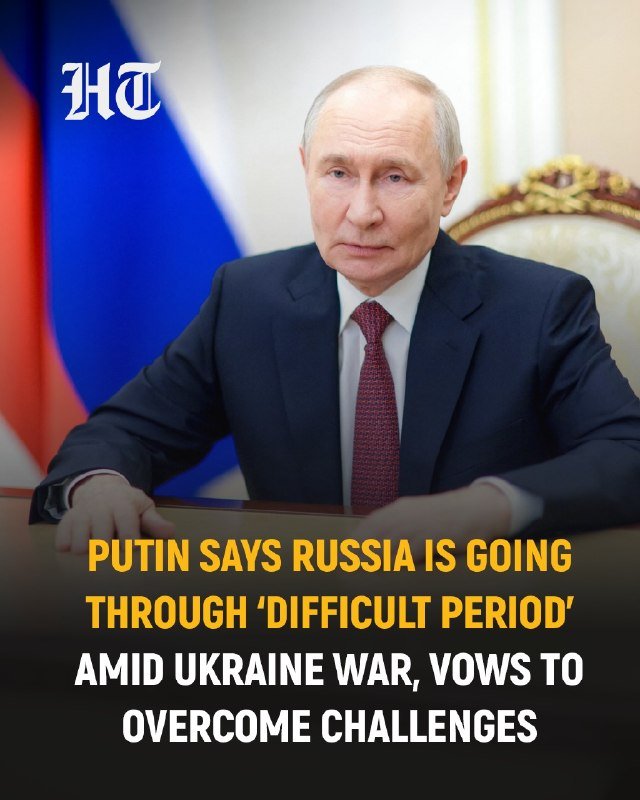
On 28 June 2026, in a Moscow hall dressed in the party's blue-and-white, Vladimir Putin addressed the first stage of United Russia's 23rd party congress and called on delegates to approve the candidate lists that will carry his party into the 20 September State Duma elections. The line he drew, according to a Telegram summary from DDGeopolitics, was that the moment is one of "fate" — language calibrated for an electorate that will not, in any meaningful sense, choose between competing visions of Russia's future, but will ratify the one already chosen for it.
The framing matters more than the script. Putin did not announce a programme; he announced a posture. United Russia, the party he founded in 2001 and which remains the institutional base of his power, will go into September as the vehicle for that posture. Brian McDonald's contemporaneous account from the convention floor is spare and telling: the party exists, the polls exist, the convention exists — and so does the speech. What does not exist, in any operational sense, is the uncertainty those institutions are nominally designed to express.
A party congress with the contest edited out
United Russia has held national authority, alone or in coalition, since 2003. In that time the State Duma has passed budgets, war powers, censorship statutes, and electoral-law changes that have steadily narrowed the field of permissible competition. The 23rd congress is therefore not a deliberative moment; it is a ratification. Candidate lists, party doctrine, and the rhetorical frame for the autumn campaign were all set inside the Kremlin's political bloc before delegates arrived. What remains for the convention is the ritual of endorsement.
The Telegram reporting frames Putin's address as a call to consolidate. The phrase "fate of" — used to describe the present moment — is the rhetorical giveaway. Electoral language in functioning democracies talks about choice, direction, mandate. Electoral language in systems where the outcome is settled talks about historical responsibility, the burdens of leadership, the gravity of the moment. The September vote will be conducted under a legal architecture that has already disqualified the most plausible opposition, blocked independent observers from any meaningful monitoring role, and folded regional administration into a vertical that reports upward, not outward.
The controlled opposition has its uses
It would be analytically lazy to call the September 20 vote a sham and leave it there. The Kremlin has spent two decades refining a more sophisticated instrument: an election that is procedurally elaborate, internationally observed (within limits), and produces a turnout figure that the leadership can point to as legitimacy. The Communist Party, the Liberal Democratic Party, and A Just Russia will appear on ballots. They will hold seats. They will criticise. They will not threaten the governing coalition.
This is the structural point that Western commentary frequently misses. The function of the September vote is not to determine who governs Russia; that question was settled inside the presidential administration years ago. The function is to produce a record — a turnout number, a seat distribution, a roster of regional governors confirmed by party list — that the regime can then deploy in two distinct audiences simultaneously. For domestic consumption, the numbers signal social cohesion and patriotic mobilisation at a moment of war. For foreign consumption, the numbers signal stability, predictability, and the futility of hoping for internal political change as a pressure valve on Russia's external behaviour.
What the convention reveals about the war economy
The congress also functions as a doctrinal signal. By staging the address on 28 June — three weeks after the latest round of escalation rhetoric and during a period of intense sanctions enforcement — Putin ties the electoral campaign to the defence economy and the social compact that sustains it. Defence-industrial employment, regional subsidies, and the welfare promises that keep provincial populations quiescent are all delivered through the federal budget that the next Duma will pass.
This makes the vote substantively consequential even where it is not competitively consequential. The party list that emerges from this congress will, after September, vote on the next four-year budget, on the next mobilisation cycle, on the next sanctions-resilience legislation. The procedural predictability of the outcome — United Russia will hold its majority — does not make the policy stakes low. It makes them obscure to outside observers, which is its own form of power.
What remains uncertain
The sources at hand do not specify the full text of Putin's address, the size of the candidate list, or the composition of any policy platform unveiled at the congress. Telegram-based reporting on the event is partial; cross-referencing against wire copy will be needed before any quotation can be attributed with confidence. The turnout target, the formal campaign opening, and the OSCE/CoE observer footprint are also not detailed in the available material. These are the kinds of facts that will firm up over the summer; the structural read — that September is ratification rather than choice — does not depend on them.
This publication reads United Russia's 23rd congress less as an electoral event than as a piece of political choreography: a stage-managed demonstration of continuity, designed to deliver a legitimacy artefact the Kremlin can spend in two currencies at once. The coverage on this page will track the September 20 vote not as a contest but as a measurement — of turnout, of regional loyalty, of how visibly the system has to manage its own result.
Wire provenance
This editorial synthesis draws on the following public wire/social posts:
- https://t.me/DDGeopolitics
- https://x.com/brianmcdonaldie/status/2071225832832368640