Putin's Donbas maximalism is a negotiating posture, not a war aim
The public record does not support either the Kremlin maximalist line or the Western cable-news 'Putin wants peace' line. It supports a more uncomfortable reading: that the demands are a negotiating posture, and the Donbas grind is the policy.
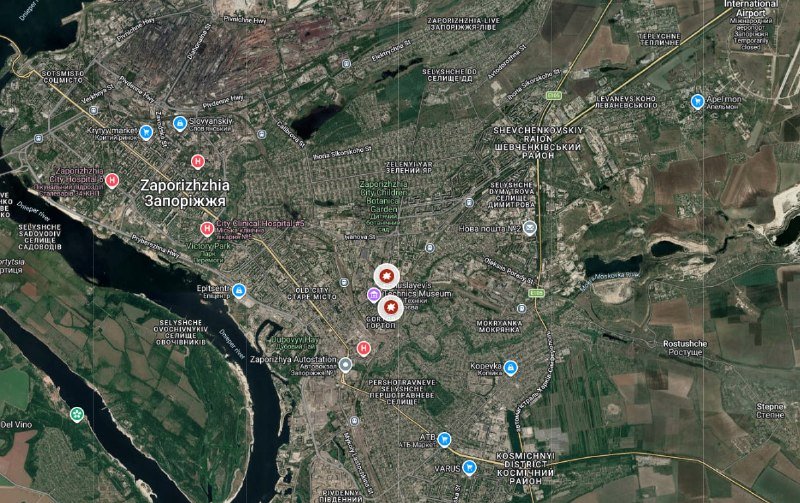
On 28 June 2026, Russian forces are still grinding forward through the Donbas village belt, kilometre by kilometre, the way they have done since Bakhmut fell. The shelling is audible from Pokrovsk. Western commentators keep two contradictory scripts in rotation: that Vladimir Putin is a maximalist who wants all of Ukraine, and that he is a tired autocrat ready to settle. The first reading treats his demands as a description of intent. The second treats them as a description of fatigue. Neither is a description of how this war is actually being fought, and that gap is where the serious analysis has to live.
The maximalist claim is the older and more familiar one. Igor Girkin, the former Russian Federal Security Service officer who helped organise the annexation of Crimea in 2014 and was later tried and imprisoned in Russia for his own public criticisms of the war's conduct, is its most literate Western-adjacent advocate. Reporting circulated this week on the Telegram channel OSINTdefender noted Girkin's continued insistence that the operation's logical endpoint is the full subordination of the Ukrainian state, not a frozen line on a map. The maximalist case rests on a simple inference: Russia has paid too much in men, money and equipment to accept anything less than the original political objectives, and those objectives, as articulated in the pre-war draft "treaties" and in the constitutional changes of 2022, were maximalist. The Kremlin's own language supports this reading. There is no public Russian statement that retreats from the language of "denazification" or the four annexed oblasts.
The case against maximalism-as-intent is also empirical. Russia is fighting an industrial war of attrition in 2026 with an economy running close to its capacity ceiling, a labour shortage that the war itself has deepened, and a sanctions regime that has been costly to circumvent without being decisive. Russian-aligned commentary on Telegram channels monitored this week by outlets including ClashReport has shifted over the past year from confident annexation talk to operational concerns about supply lines through the Donbas rail hub at Horlivka and the slow Ukrainian penetration of Russian rear areas in Kursk. The fighting around the city of Pokrovsk, the longest-running grinding engagement of the war, is not the kind of operation you run when you are preparing to absorb a population of millions. It is the kind of operation you run when you are preparing to make a deal that requires a certain amount of frozen ground.
What this suggests, and what most of the cable-news conversation misses, is that the public Russian demands function less as a war aim and more as a negotiating posture. The point of declaring maximalist objectives in public is to compress the bargaining range on the other side of the table, not to commit the regime to the costly act of actually achieving them. Putin does not need to want all of Ukraine for the maximalist line to be useful to him at a negotiating table. He needs Kyiv, and the European capitals underwriting its defence, to believe he might want all of Ukraine. The distinction matters because it changes what an outside actor should be willing to offer, and what they should refuse to.
A useful counter comes from looking at how the same logic has played out in the parallel Middle East track. Reporting this week from France 24 and the Middle East Eye described Iranian foreign ministry warnings that Tehran "will respond" to any US violation of the memorandum of understanding aimed at ending the war, alongside parallel reporting from PressTV and Tasnim about a trilateral Iran–Lebanon–US committee to monitor the Lebanese agreement. The pattern is familiar. Public maximalist language, paired with quiet institutional architecture designed to manage violations. Tehran has spent the same week assuring domestic audiences that the Hormuz strait cannot return to the pre-war status quo, per the AMK Mapping summary of Omani communications with European counterparts, while Iranian negotiators sit in Doha. Maximum demands at home. Managed negotiations abroad. The Russia file reads the same way once you stop treating the Kremlin's public framing as a confession.
The Western "Putin wants peace" narrative is the mirror image and equally lazy. It is anchored in two soft signals: a small uptick in Russian commentary about the cost of the war, and the political visibility of figures in Moscow who would benefit from a settlement. Neither signal is evidence of intent. Cost complaints inside a war economy are not the same thing as a decision to stop fighting; they are the background noise of any prolonged campaign. And the visibility of doves inside the Russian elite tells the outside world very little about the balance of forces inside the Kremlin, which is opaque by design. The honest reading of the public record is that Russia wants a settlement on terms that would amount to a strategic defeat for Ukraine, and is willing to keep paying for the war as long as the West's willingness to keep paying for Ukraine looks uncertain. That is not the same as wanting peace. It is the same as being willing to settle, eventually, from a position of relative strength, if the other side cracks first.
The practical lesson for Kyiv's partners is to stop calibrating policy around either of the two caricatures. A negotiator who assumes Putin is a maximalist will over-deliver at the table out of fear. A negotiator who assumes he is a tired peacemaker will under-deliver and discover the difference too late. The harder, more honest position is that the public demands are not the war aim. They are the price of admission to a negotiation that the Kremlin intends to enter only when the ratio of Western aid to Russian cost starts to move in Moscow's favour. The war aim is whatever produces that movement. Right now, in late June, the grinding in the Donbas is the policy.
Sources
- OSINTdefender via OSINTlive Telegram, Igor Girkin profile and public positions, 30 June 2026
- France 24, US envoys met with mediators in Qatar; talks with Iran up in the air, 30 June 2026
- Middle East Eye (X post), Iran foreign ministry on MoU enforcement, 30 June 2026
- AMK Mapping (Telegram), Hormuz transit posture post-war, 30 June 2026
- PressTV (Telegram), Ghalibaf on trilateral Iran–Lebanon–US monitoring committee, 30 June 2026
- ClashReport (Telegram), Donbas operational updates, June 2026
Desk note: Monexus framed this against both the Kremlin maximalist line and the Western cable-news "Putin wants peace" line, treating the public record as a posture rather than a confession of intent.