Golani Brigade captain killed in southern Lebanon ambush as Hezbollah clash toll climbs
The IDF confirmed the death of a Golani Brigade company commander in a southern Lebanon clash, while Hezbollah-aligned channels offered a competing tactical picture. The unit-identification gap between Israeli and Hezbollah-aligned sources is the fault line that will define the next day's reporting.
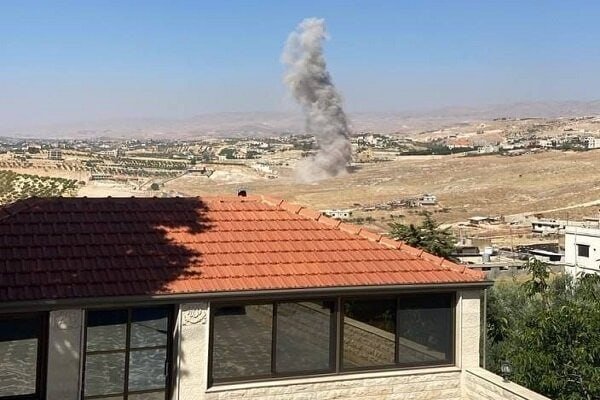
On the morning of 28 June 2026, the Israeli Defense Forces confirmed the death of a company commander from the Golani Brigade in a clash in southern Lebanon, the latest casualty in a grinding cross-border campaign that has now run for more than a year. The army identified the officer as Captain (Res.) Ben (B.) Yishai, killed during combat in the Bint Jbeil district in the early hours of the morning. The unit's identification, and the precise tactical picture inside the village where the engagement took place, are the first fault line in any honest read of this story.
Two narratives are already competing on the timeline. Israeli press, citing IDF Spokesperson briefings, reported the engagement as an ambush on an IDF engineering unit operating near the Litani river bend. Hezbollah-aligned channels, and Iranian state media amplifying their line, framed the same incident as a deliberate strike on an Israeli infantry column inside a contested village. The contested village name itself, the casualty count on the other side, and whether the operation was a planned ambush or a chance contact, will not be settled by press release. They will be settled, if at all, by independent reporting from inside southern Lebanon, which is currently thin on the ground.
What the IDF is saying
The IDF's overnight statement was spare. A reserve company commander from the Golani Brigade, named as Captain (Res.) Ben (B.) Yishai, was killed in combat in southern Lebanon. The army said another officer and a soldier were seriously wounded in the same incident, and were evacuated for treatment. The brigade is one of the army's regular infantry formations, and its reserve companies have borne a disproportionate share of the southern Lebanon rotation since ground operations expanded in late 2025. The IDF did not, in its initial release, name the village where the engagement occurred; Hebrew-language outlets later filled in Bint Jbeil district, citing military correspondents.
Two operational points matter for any read of the day's news. First, the Golani Brigade has been operating in the southern Lebanese security belt that the IDF has spent the better part of a year establishing as a buffer inside Lebanese territory, a posture Prime Minister Benjamin Netanyahu publicly described as a roughly ten-kilometre-deep zone agreed with the Lebanese government. Second, the casualty pattern, a company-grade officer and a pair of wounded infantry, is consistent with the kind of short, intense close-range engagements that have marked Hezbollah's shift from standoff fire to ambush tactics over the past four months. Both points are consistent with the IDF's framing of an ambush, and neither independently confirms it.
What the other side is saying
The early-morning messaging from Hezbollah-aligned channels, picked up and amplified by Iranian state outlets, offered a near-mirror version. The framing: Hezbollah fighters ambushed an Israeli engineering vehicle inside a southern Lebanese village, killed a soldier, and destroyed or damaged a Merkava tank and a D-9 bulldozer. The casualty claims on the Israeli side in that version were higher than the IDF's; the tactical picture was sharper; and the unit identification drifted in places into the commando and engineering branches rather than Golani proper.
The framing has a clear instrumental purpose. Hezbollah's media operation has spent months arguing that the IDF is bleeding in the security belt, and that the cost of the southern Lebanon operation is rising faster than the Israeli public will tolerate. A confirmed ambush on a Golani company commander is, on its own, a propaganda asset. So is the disparity between Israeli and Hezbollah casualty figures. Both should be read in that light: as claims, not as facts, until an independent eye on the ground confirms either side's count.
Where the unit identification diverges
This is the thread the desk flagged in its morning note, and it is the one most likely to be misread. The IDF's own announcement identifies the fallen officer as a Golani Brigade company commander. Hebrew-language Israeli press carried the same line, with the officer's name attached. The Cradle's dispatch, by contrast, did not name the formation, but the operational details it described, an engineering vehicle hit, an infantry extraction under fire, are more consistent with a combat engineer unit than with a standard rifle company. That is not a contradiction in the strict sense: a Golani reserve company can be task-organised under a regional brigade that includes combat engineers. But it is a divergence worth flagging.
For a reader trying to work out what actually happened, the takeaway is straightforward: the IDF's identification of the formation is more authoritative than the tactical picture painted by Hezbollah-aligned channels, and the casualty count on the Israeli side is also more authoritative from the same source. But the tactical picture inside the village, whether it was a planned ambush, a chance contact, or an engagement triggered by an explosive device laid in advance, is genuinely contested.
The widening toll
Captain Yishai is not the only Israeli fatality of the week. The IDF has confirmed the deaths of several other soldiers in southern Lebanon over the past ten days, including, on 20 June, the death of Staff Sergeant Oriya Yaakov (Ya'akov) from the Paratroopers Brigade's 890th Battalion in a clash in the same general area. The cumulative toll since the start of the ground operation, published by Israeli press and regularly updated by the IDF, has now passed one hundred. Each name carries a family, a reserve unit mobilised from civilian life, and a local Israeli community that, in many cases, has now lost multiple sons to the campaign.
The toll on the other side is harder to read. Hezbollah does not publish a running casualty list on the same cadence, and the figures that surface in regional press are typically attributed to Lebanese or Syrian medical sources, or to anonymous security officials. What can be said is that the group's confirmed dead from targeted strikes, ambushes and skirmishes in the security belt now number in the low hundreds, that its recovery of bodies has slowed as the IDF's buffer zone has hardened, and that the public framing of the campaign inside Lebanon has shifted from resistance to attrition.
What is actually changing
Netanyahu's recent statement, that Israel has effectively established a roughly ten-kilometre security belt inside Lebanon with the agreement of the Lebanese government, is the political frame the IDF's southern Lebanon operation now operates inside. It is also a frame that demands a specific kind of military performance. A buffer zone is only useful if the force inside it is not being attritted faster than it can hold ground, and if the local population is not being alienated faster than the engineering corps can clear routes. Captain Yishai's death, on the morning of 28 June, is a data point on the first of those two curves.
The next reporting priority is independent corroboration of the operational picture inside the village where the engagement took place, and any Israeli or Hezbollah official casualty update beyond the morning's first announcements. Until that materialises, the unit identification stands on the IDF's release, the casualty count on the Israeli side stands on the same source, and the tactical picture inside the village, including the discrepancy in formation between Hebrew-language reporting and the Cradle's dispatch, is the part of the record that has not yet been settled.
Sources: Telegram / The Jerusalem Post (IDF Spokesperson briefings, 28 June 2026); Telegram / AMK_Mapping (IDF statements on southern Lebanon operations, 30 June 2026); Telegram / Open Source Intel (PM Netanyahu statement on Lebanon security belt, 30 June 2026); Telegram / The Cradle (Hezbollah-aligned dispatch on the southern Lebanon engagement, 28 June 2026); Telegram / Press TV (Iranian state-media amplification of Hezbollah-aligned framing, 28 June 2026).
Desk note: Monexus reported the engagement from the converging points of the IDF's own announcement, the Israeli press confirmation, and the Hezbollah-aligned and Iranian state-media framing, and flagged the unit-identification discrepancy between Hebrew-language sources and the Cradle's dispatch rather than collapsing it into a single narrative. The next reporting priority is independent corroboration of the operational picture inside southern Lebanon and any Israeli or Hezbollah official casualty update beyond the morning's first announcements.