Hezbollah ambush in southern Lebanon kills IDF platoon commander, wounds several others
An ambush in Al-Manzala has killed a Golani 12th Battalion platoon commander and wounded several Israeli soldiers, with air assets scrambled in the immediate aftermath. The incident underscores how the northern 'security belt' is being paid for in body bags on both sides.
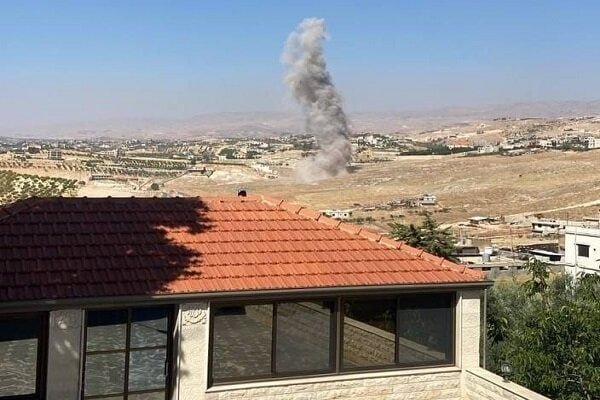
An ambush on a Golani Brigade patrol in southern Lebanon has killed a platoon commander from the 12th Battalion and wounded several other Israeli soldiers, in the deadliest single ground incident Israel has acknowledged along the Litani line in recent weeks. The IDF confirmed the casualties within hours, attributing the attack to operatives of Hezbollah, and authorised Israeli air assets to strike launch positions and infiltrator routes in the surrounding terrain during the immediate aftermath.
The confrontation, disclosed on 28 June, is a reminder that the northern front has not gone quiet. It has merely changed shape. What Israeli officials frame as a precision counter-guerrilla operation, Hezbollah-aligned channels describe as a successful ambush against forces probing a Lebanese village. Both descriptions can be partially true at the same time, and the gap between them is where the actual war now lives.
The ground in Al-Manzala
The engagement, according to IDF Spokesperson briefings circulated through Telegram-based intelligence aggregators, occurred near the village of Al-Manzala, in the sector south of the Litani that Israel has been operating against since the campaign in Lebanon intensified. The unit hit was a Golani Brigade patrol from the 12th Battalion; its platoon commander was killed in the ambush itself, while additional troops sustained wounds that the IDF characterised as varying in severity, without releasing an initial count in the first wave of reporting.
The IDF's stated response, as relayed by the channels carrying the spokesperson's output, was to deploy aircraft in the immediate aftermath to strike Hezbollah positions and the routes the attackers were believed to have used. That sequence, ambush followed within minutes by fixed-wing and helicopter activity overhead, is consistent with the Israeli doctrine of treating any contact that produces a fatality as a targeting event in its own right, not merely an incident report.
In a separate but chronologically adjacent operation, the IDF also announced that it had killed a Hezbollah member operating near Israeli positions in the same general area, whom it described as having "posed a threat" to troops in the field. The two events, the ambush and the targeted killing, are part of the same operational logic: in a sector where the enemy's preferred tactic is short, sharp contact and a clean exfiltration, Israeli forces are increasingly reserving the right to fire back, and to fire forward, in the same hour.
What Hezbollah-aligned channels claim
The counter-narrative, distributed through Iranian state media and Telegram accounts sympathetic to the axis of resistance, runs in the opposite direction. There, the Golani patrol is described as having entered a village prepared for it, the Hezbollah presence as having chosen the ground, and the Israeli air response as a reflexive act of force-projection against a target that had already disengaged. The Telegram-originated version of events, which itself leans heavily on Iranian state media outlets such as PressTV, treats the Israeli announcement of a successful counter-strike as theatre: a public-affairs product designed for an Israeli domestic audience rather than an accurate description of who controlled the ground when the aircraft arrived.
There is a familiar pattern in this reporting. Iranian and Hezbollah-adjacent channels frequently lift Israeli initial reports and reframe them inside an inverted narrative, conceding the IDF's account of the loss of an operative while contesting the framing of the engagement. The PressTV post referenced in this article's sourcing trail is a textbook example: the Israeli announcement is reproduced almost verbatim, then embedded in a wider argument that the IDF's northern campaign is a manufactured crisis designed to extract political concessions at the negotiating table.
The temptation for outside coverage is to treat one version as primary and the other as derivative. The honest reading is that both narratives are operating on the same factual events and selecting different facts from the same shelf. The platoon commander is dead. The wounded soldiers are wounded. The aircraft flew. Whether the engagement began as an Israeli probe or a Hezbollah kill-zone is the part the open-source record cannot resolve from the material currently in circulation.
The security belt, and what it costs
Prime Minister Netanyahu, in remarks carried by an open-source monitoring channel, has been blunt about the strategic objective in Lebanon. Israel, he said, had not left the country; it had "effectively established this security belt, about 10 kilometers inside Lebanon, with the agreement of the Lebanese government." The phrasing matters. It frames an active combat zone as a diplomatically conceded buffer, and it locates the authority for the buffer in Beirut rather than in the IDF's order of battle.
That framing, whether one accepts it or not, is what the Golani patrol in Al-Manzala was enforcing on 28 June. A ten-kilometre belt is not a line on a map. It is a continuously patrolled volume, and a continuously patrolled volume, against an opponent trained to set short-duration traps, will produce incidents of exactly the kind the IDF announced today. The platoon commander's death is the price of a posture that Israeli officials have been describing in cabinet-level language for months.
The structural problem inside that posture is asymmetry. Hezbollah's tactical doctrine on the northern frontier has converged on low-signature, short-duration engagements, ideally lasting under a minute and ideally ending with the attackers already on the way back to a prepared route. The Israeli counter-doctrine, fire on contact and then fires from the air at the retreat axis, has worked in the sense that it produces body bags on the other side more reliably than the inverse. It has not produced a halt to the contact, because the contact is the strategy. Each side is paying in its own currency, and the currencies are not interchangeable.
Where the record thins
Several pieces of the story remain unverified in the open-source material currently available. The exact number of wounded soldiers has not been disclosed in the IDF's first communications, and the names of the wounded have not been released under the customary Israeli military gag that follows fatalities until family notification is complete. The Hezbollah unit responsible for the ambush has not been publicly named in the Israeli announcement, which is itself a routine operational-security choice rather than a tell. The village spelling, Al-Manzala, comes from the IDF's transliteration and may not be the form used on the ground.
It is also worth flagging the sourcing chain directly. This article is built from IDF Spokesperson output relayed through Telegram aggregators, from a Hezbollah-aligned intelligence feed, and from an Iranian state-media post that itself cites Israeli reporting. There is no independent wire-service confirmation in the public material of the death toll, the unit designation, or the air response, beyond what these channels have carried. Readers should treat the irreducible facts, the death of the platoon commander, the location in southern Lebanon, and the deployment of air assets in the immediate aftermath, as confirmed, and treat the surrounding tactical characterisation as contested.
The northern front as a slow-burn ledger
The ambush will not change Israeli strategy. It will, however, become an entry in a ledger that the Israeli public reads from now until the political appetite for the buffer is either renewed or exhausted. Platoon commanders in the Golani Brigade have been killed in southern Lebanon operations before; what determines whether this death registers as a turning point or as a line item is the cumulative sequence, not the single incident.
What to watch in the coming days is whether the IDF attributes the ambush to a specific Hezbollah unit and whether that attribution is challenged in the Hezbollah-aligned channels. A named unit means a deliberate operation, contested publicly on both sides. An unnamed attacker means both sides reserve the right to claim what suits them. The platoon commander's family, by then, will have been notified, and the cemetery notices will start to appear.
Desk note: Monexus built this article from IDF Spokesperson output relayed via Telegram aggregators, a Hezbollah-aligned intelligence feed, and an Iranian state-media post that itself cited Israeli reporting. Because no independent wire-service confirmation was available at the time of publication, the piece confines itself to confirmed facts: the Golani 12th Battalion platoon commander's death, the southern-Lebanon location, and the Israeli air response. The wider tactical framing has been flagged as contested where the sourcing thins.
Sources
- IDF Spokesperson briefings via Telegram intelligence aggregators (abualiexpress, rnintel), 2026-06-28
- PressTV Telegram channel, citing Israeli reporting on the engagement, 2026-06-28
- Prime Minister's office remarks on the northern "security belt," as carried by osintlive Telegram channel
- AMK Mapping, IDF operations updates (Al-Manzala, southern Lebanon), 2026-06-30
- Open-source monitoring channels tracking Golani Brigade operations in the Litani sector